Ukraine Reports 21,500 Ground-Robot Missions as Use Spreads to 167 Units
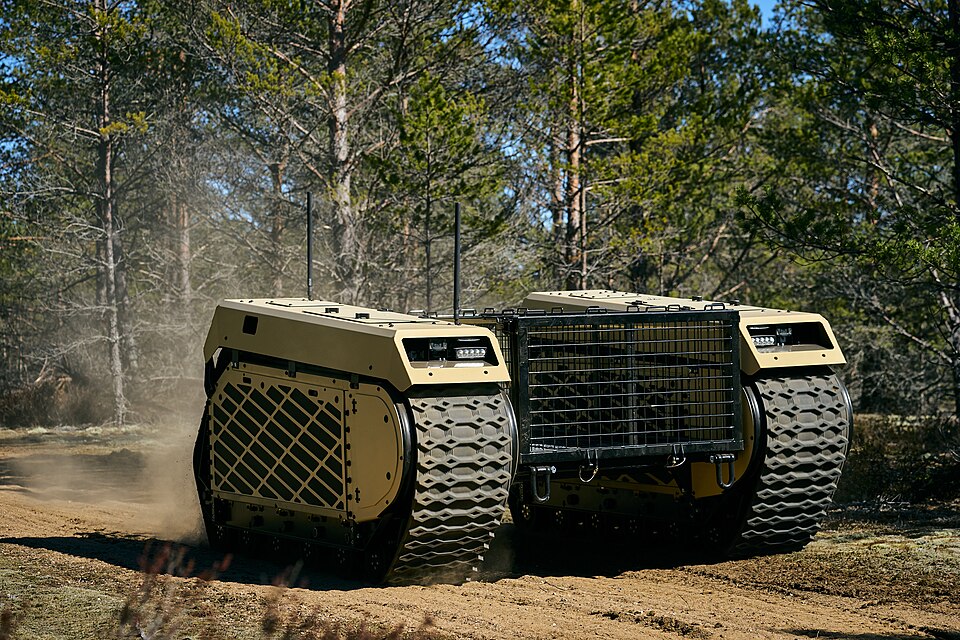
Ukraine’s Ministry of Defense reported in 2026 that its forces completed more than 21,500 uncrewed ground-vehicle missions during the first quarter, as use spread to 167 Defense Forces units in March. The ministry said the remotely operated robots handled hazardous combat-support and logistics work, including supply transport, mine-clearing and casualty evacuation tasks that can reduce personnel exposure on dangerous front lines.

The March figures show how quickly the equipment is being distributed. Ukrainian forces conducted more than 9,000 ground-robot missions that month, compared with more than 2,900 in November 2025. The number of units using the machines rose from 67 to 167 over the same period.
Those totals indicate broader fielding rather than a collection of isolated demonstrations. Four of the five leading users recorded in Ukraine’s DELTA battle-management system were combat brigades operating on eastern and northeastern fronts, according to the ministry. The fifth was the 1st Separate Medical Battalion, which has used ground vehicles to evacuate wounded personnel.
Mission count measures activity, not effectiveness
The headline number needs a firm boundary: 21,500 missions do not necessarily mean 21,500 successful missions, soldiers replaced or separate robots deployed. Ukraine has not disclosed the relevant fleet size, mission-completion rate, vehicle losses, reliability, autonomy levels or the share of tasks that otherwise would have required personnel.
Mission counting can also combine jobs with substantially different mechanical and control demands. Moving cargo, clearing mines, evacuating a casualty and supporting a fortified position may all be logged as ground-vehicle missions, but they impose different requirements for payload, traction, sensing, communications, operator workload and maintainability. Some vehicles also carry remotely controlled weapons, although the aggregate figures do not divide missions by role.
Most of these systems are remotely piloted wheeled or tracked platforms rather than independent robots making their own operational decisions. Their practical performance depends on the complete control chain: onboard cameras and sensors, vehicle actuation, communications, operator interfaces, power supply and the ability to repair damaged mechanical or electronic components. A high mission tempo is therefore evidence of operational use, but not by itself proof that the underlying systems are dependable or highly autonomous.
Production has moved beyond experimental quantities
The reported operating scale is consistent with a sharp manufacturing increase. A 2026 analysis from the Modern War Institute at West Point said Ukrainian industry delivered 15,000 uncrewed ground vehicles to frontline units in 2025, up from 2,000 in 2024. That growth helps explain how many more units could begin using the machines, but deliveries still do not reveal how many vehicles remain serviceable or how frequently each platform operates.
Ground robots also remain far less prevalent than aerial drones. Ukraine’s commander in chief, Oleksandr Syrskyi, said Ukrainian forces completed more than 304,000 uncrewed aerial-vehicle missions in November alone. Against that benchmark, more than 21,500 ground missions across an entire quarter represent meaningful growth from a much smaller base, not parity between the two categories.
The difference reflects basic engineering constraints. Ground vehicles must negotiate mud, ruts, debris and other obstacles while carrying their own weight and payload through continuous contact with the terrain. Remote operators need sufficient sensing to judge clearance and wheel or track placement, while the vehicle must maintain control links and withstand repeated mechanical loads. These conditions make ground mobility, repair and communications central deployment limits rather than secondary details.
For U.S. military robotics programs, the useful lesson is not simply to purchase more vehicles. Ukraine’s expansion shows that adoption depends on manufacturing volume, unit-level integration and sustainment capacity as much as on a robot’s advertised specifications. The unanswered measures successful completion, operator demand, repair time and vehicle availability are the ones needed to determine whether rising activity becomes durable capability.
Ukraine’s figures confirm that ground robots are moving into routine hazardous work across a growing number of units. They do not yet establish how reliably those robots complete it. The next meaningful readiness update will require performance and sustainment data, not mission volume alone.
By Jonathan Barrett — Editor for AMI’s future mobility and autonomous systems section, with two decades covering robotics, e-mobility, drone-vehicle convergence, and transport mechanical systems.