Boeing’s Air Force One Losses Hit $3.1 Billion as Delivery Slips
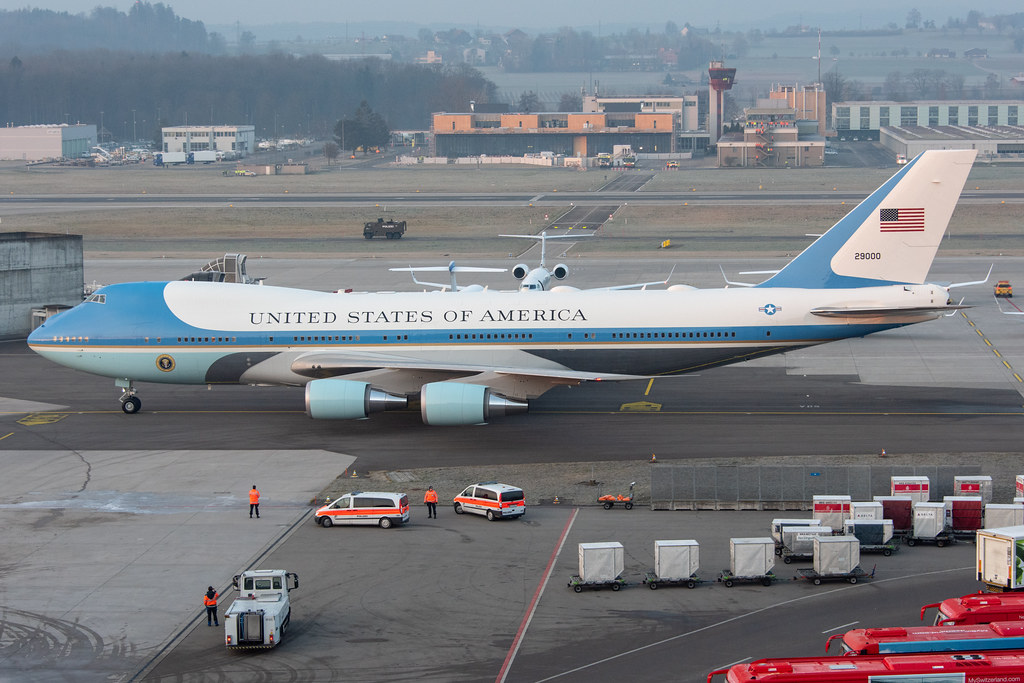
$3.1 billion: That is Boeing’s reported cumulative loss on the program building the next two Air Force One aircraft after the company recorded another $280 million charge in its second-quarter results. The latest charge reflects higher estimated costs for structural and wiring installation, added production resources and the work required to satisfy airworthiness certification requirements.

The financial burden falls primarily on Boeing because the company accepted a $3.9 billion fixed-price agreement in 2018 to develop and certify two heavily modified 747-8 aircraft. The schedule burden does not. The first replacement was originally expected in 2024, while Boeing is now working toward delivery in 2028. That leaves the Air Force managing a longer transition from the two aging VC-25A aircraft currently assigned to the presidential mission.
A fixed price contains cost, not schedule risk
A fixed-price development contract gives the government substantial protection against direct contractor overruns. If Boeing needs more labor, engineering effort or testing than it priced into the agreement, the company generally absorbs those costs rather than automatically passing them to the government. Boeing has also warned that it could record additional losses as work continues.
That structure explains how cumulative losses can approach the original contract value without producing an equivalent new bill for taxpayers. It does not mean the government escapes every consequence. Delayed delivery extends reliance on the existing fleet, complicates transition planning and forces the Air Force to maintain training, support and operational continuity while waiting for the permanent replacements.
The distinction is important in aircraft procurement. Cost risk and schedule risk can be allocated differently. A contract ceiling can limit what the government pays Boeing for defined work, but it cannot make a late aircraft available sooner. Nor does it eliminate separate government costs associated with sustaining the current fleet or establishing an interim capability.
These are conversions, not ordinary 747 deliveries
The VC-25B effort starts with the recognizable shape of a Boeing 747-8, but the work is closer to developing and certifying a specialized aircraft system than furnishing a commercial jet. The program includes structural modification, extensive wiring, additional electrical-power capability, military avionics, mission communications and a purpose-built interior. Those systems must be integrated, tested and certified as a complete aircraft.
Wiring and structural installation are particularly consequential because they touch many later production and test activities. Incomplete designs or changes can disrupt work already underway, while specialized labor and supplier transitions can constrain how quickly additional staffing translates into finished aircraft. Reported program difficulties have included engineering changes, production problems, supplier issues and shortages of qualified workers.
Certification is another hard boundary. Adding people and money can support a more aggressive build-and-test schedule, but it does not remove the requirement to demonstrate airworthiness. Boeing has said the latest investment is intended to support delivery in 2028, with the company’s defense leadership identifying final assembly, wiring, structures and certification as remaining sources of cost growth.
An interim aircraft addresses the gap, not the underlying delay
The Air Force has separately moved forward with a modified 747-8 intended to bridge the period before Boeing’s permanent VC-25Bs arrive. According to an official Air Force update, that aircraft completed modification and flight testing and was being painted ahead of a planned summer rollout. The service has also used other 747-8 aircraft to support pilot qualification, maintenance training and parts planning.
Those measures can reduce pressure on the existing fleet and allow the Air Force to begin building experience with the newer 747-8 platform. They do not make the bridge aircraft equivalent to the two permanent VC-25Bs, and they do not erase the conversion and certification work Boeing must complete. Security, communications, support and operational requirements remain central to any presidential aircraft, limiting how far schedule acceleration can rely on simply deleting difficult work.
The program’s central tradeoff is therefore intact: the fixed-price contract has made Boeing responsible for billions of dollars in reported overruns, but it cannot insulate the government from time. Until the permanent aircraft finish production, testing and certification, the Air Force must carry the fleet transition across a delivery gap that has grown from an original 2024 target to Boeing’s current 2028 objective.
By David Whitaker — Associate editor for AMI’s aerospace and drone systems desk, translating flight systems, aircraft programs, spaceflight, and UAV developments into accessible technical stories.