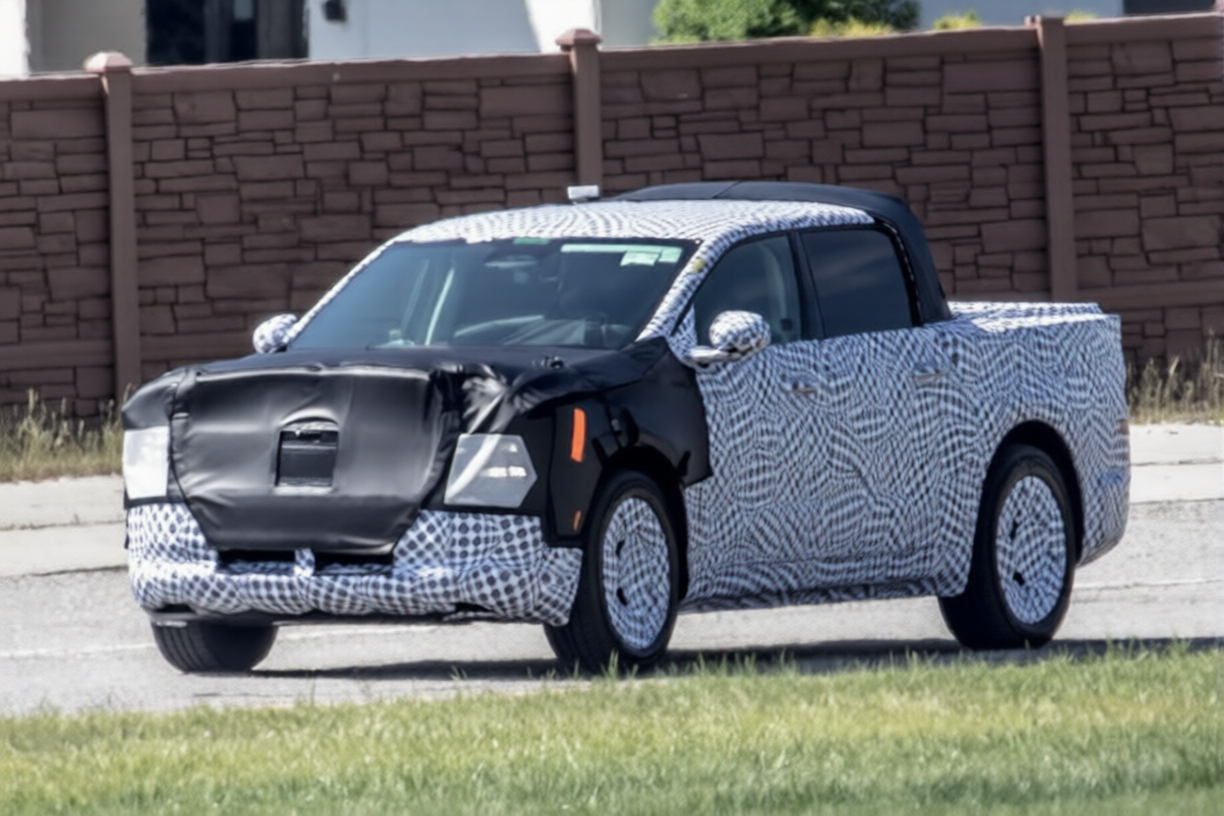
Ford Fathom’s $28,350 Base Model Won’t Deliver 300 Miles of Range
Ford has separated the Fathom electric pickup’s most attractive price from its most discussed range figure. The Ford Fathom will start at $28,350 before destination charges, but that standard-range version is not expected to provide approximately 300 miles of EPA-estimated driving range.
Ford says buyers seeking around 300 miles will have another configuration available, and the company confirmed that it is safe to assume this option will cost more. The consequential figures remain undisclosed: Ford has not announced the base truck’s expected range, the battery capacity of either configuration or the price of the longer-range model.
The advertised price is only one part of the cost equation
The $28,350 figure is the manufacturer’s suggested retail price and excludes destination and delivery charges, taxes, registration and dealer documentation fees. With the $1,595 destination fee cited for the truck, the calculated starting price becomes $29,945.
That still places the Fathom below $30,000 as announced, but buyers cannot yet associate that amount with a defined driving distance. Until Ford releases the standard-range truck’s EPA estimate, the entry price cannot be evaluated as a complete price-and-range proposition.
This distinction matters because the battery is both an energy-storage system and a major cost, mass and packaging element in an electric pickup. More usable battery capacity can support more range, but it generally adds material and weight. Added mass can then increase the energy required to move the vehicle, making efficiency important alongside battery size.
Ford has said its strategy is to pursue roughly 300 miles for customers who want it through aerodynamics, weight reduction and energy management rather than relying solely on a larger, more expensive battery. That is a meaningful engineering objective, but it does not establish what Ford has achieved in the Fathom’s base configuration. The EPA estimate, battery capacity and final production specifications will be needed to judge the result.
Efficiency determines how much range each battery buys
Battery capacity and vehicle efficiency work together. A truck that consumes less energy per mile can travel farther with a given amount of stored energy, potentially reducing the battery capacity needed for a target range. Aerodynamic drag, curb weight, rolling resistance, thermal management, accessory loads and control software all contribute to that outcome.
A pickup also presents constraints that a passenger car does not necessarily share to the same degree. Its cargo function, cabin space, structure and expected operating loads must coexist with battery packaging and efficiency targets. Ford projects that the five-seat Fathom will provide more passenger volume than a Toyota RAV4, although independent measurements are not yet available. It will also include a front trunk and cargo bed, placing additional demands on how the platform allocates space.
The Fathom is the first vehicle based on Ford’s Universal Electric Platform. Listed equipment includes a large high-resolution touchscreen, bidirectional power capability and a digital key. Every truck will be BlueCruise-capable, and Ford says Apple CarPlay and Android Auto compatibility will be standard. Those features help define the product beyond range, but they do not resolve the central battery-and-price tradeoff.
The next disclosure will determine what $28,350 buys
A useful price comparison is the Slate electric truck, listed at $24,950 before destination and $26,400 after it, with 205 miles of range. That provides a market reference rather than a direct verdict: equipment, dimensions and intended use can differ, and Ford has not supplied enough Fathom specifications for a complete comparison.
Ford plans to open Fathom preorders in early 2027. Before buyers can assess whether the truck meets their daily driving and charging requirements, the company will need to disclose the base model’s EPA-estimated range and the cost of the approximately 300-mile option. Those two numbers will show whether Ford’s efficiency work has narrowed the usual tradeoff between affordable batteries and longer driving range or merely divided the two benefits between different versions.
By Thomas Caldwell — AMI’s senior editor for mechanical and mobility engineering, covering vehicle electronics, systems integration, electrification, chassis systems, propulsion, and safety policy.