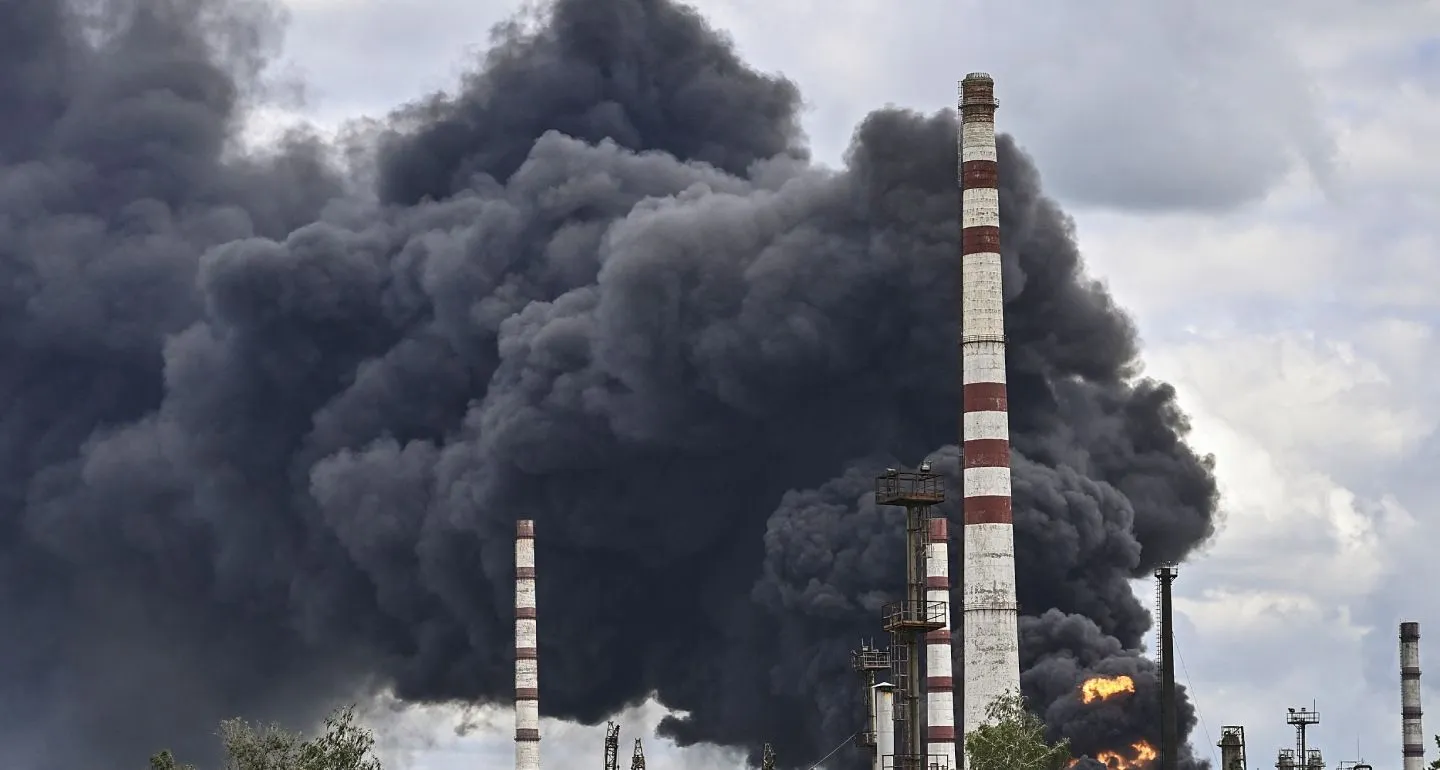
Ukrainian Drone Strike Disables Wildberries’ Tula Hub, Forcing Shipment Rerouting
A Ukrainian drone strike put a major Wildberries logistics hub in Russia’s Tula region out of action, forcing the online retailer to redirect shipments through other facilities. Tula regional governor Dmitry Milyayev said at least one person was injured, while Wildberries said it evacuated employees and rerouted delivery flows, according to reporting published August 5.
The immediate commercial consequence is clear even though the full damage is not: a large distribution node is unavailable, and its workload must move elsewhere. Wildberries has not disclosed the hub’s lost processing capacity, expected downtime, inventory condition or the volume of shipments being redirected. That leaves delivery delays and wider customer effects unconfirmed.
Rerouting is the first test, not proof of continuity
Redirecting shipments is the standard network-level response when a distribution site cannot operate. It can preserve movement by sending inbound goods, sorting work and outbound orders to other facilities. But a rerouting announcement alone does not show whether those facilities have enough unused capacity, labor, transport access and storage space to absorb the displaced volume without creating new bottlenecks.
For a retailer, redundancy is therefore more than having multiple buildings. The substitute sites must be able to perform the required work, accept additional inventory and connect it to the appropriate delivery areas. A network can remain operational while still suffering slower processing, longer transport paths or uneven service. None of those effects has yet been quantified in Tula, so they remain operating questions rather than established consequences.
Wildberries’ scale gives it options that a smaller logistics operator might not have. Company founder Tatyana Kim previously said the retailer had more than 200 logistics facilities totaling over 5.2 million square meters, or about 55 million square feet. That broad footprint creates potential alternatives, but raw facility count does not reveal how much spare capacity exists at the right locations or how quickly freight can be reassigned.
Repeated disruptions raise the capacity burden
The Tula shutdown comes amid a broader series of strikes on Wildberries facilities. Published accounts differ by timing and scope: Reuters described more than a dozen recently damaged facilities, while an Associated Press account counted 16 sites struck in under two weeks. A broader claim of nearly two dozen warehouses and logistics centers has also circulated, but the available information does not establish the dates, damage or operating status of every location.
That uncertainty matters because a network can usually absorb the isolated loss of one node more easily than several overlapping outages. Each unavailable facility reduces the number of alternatives and can consume spare capacity that would otherwise serve as a buffer for demand swings, maintenance or local disruptions. Repeated evacuations also introduce a worker-safety and restart burden even when structural damage or inventory losses are limited.
Earlier Wildberries disruptions illustrate why site status cannot be inferred from the fact of a strike alone. The company said a fire at its Elektrostal distribution hub took three days to extinguish, while a facility in the Tambov region resumed operations after five days. It also said most goods were saved following a strike in Ryazan. Those different outcomes show that incident counts are not equivalent to a verified count of disabled warehouses.
Commercial sites add another readiness demand
At the campaign level, the reported shift from oil infrastructure toward retail logistics broadens the types of facilities facing disruption. Unlike a refinery strike, the confirmed consequence in Tula is not an energy-supply loss. There is also no reported airport interruption. The measurable effect is the temporary removal of commercial distribution capacity and the need to move consumer shipments around it.
A dispersed drone campaign can place continuing pressure on regional warning, emergency response and protective resources because authorities and operators must account for more than traditional military or energy sites. That does not establish how the Tula strike reached the facility, how defenses performed or whether any specific readiness failure occurred. Those questions cannot be answered from the available public information.
For Wildberries, the next meaningful indicators are operational: when the Tula hub can reopen, how much volume other sites are carrying, whether redirected flows remain stable and whether sellers or customers receive revised service information. Until those figures emerge, the confirmed result is narrower but consequential a major hub is unavailable, and the resilience of the retailer’s network now depends on how much usable capacity remains elsewhere.
By Stephen Wallace — Editor for AMI’s aerospace integration and unmanned mobility coverage, focused on drone manufacturing, VTOL systems, autonomous networks, and air-ground mobility links.