Ukraine Says Starshield’s 100-Mph Limit Is Hindering Drone Interceptors
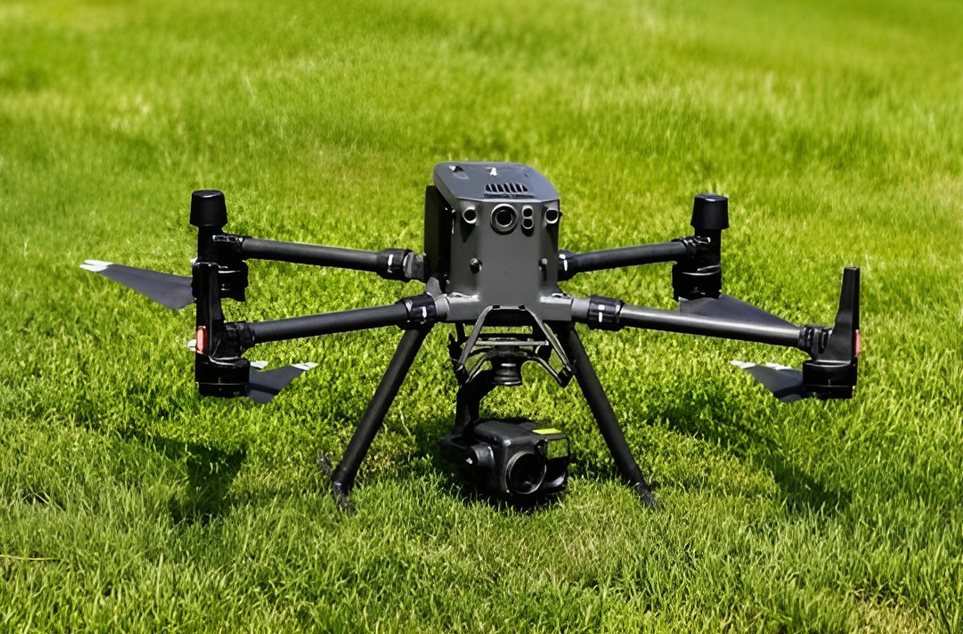
A drone can have the propulsion, structure and flight controls to exceed 100 mph yet still be unusable at that speed if its communications service stops supporting the aircraft. Ukraine says that is now happening with SpaceX’s Starshield satellite network, preventing some connected interceptor drones from operating effectively against faster jet-powered drones.
On November 13, Ukrainian President Volodymyr Zelenskyy said Starshield connectivity was being limited on drones traveling faster than 161 kilometers per hour, or 100 mph, across the front line and Russian-occupied Ukrainian territory. “We still have no clear explanations,” he said. Ukrainian officials have asked the U.S. State Department, the Pentagon and SpaceX to clarify and resolve the reported restriction.
SpaceX disputes the description. Asked about Zelenskyy’s statement, the company told Ars Technica, “This is false. There has been no change.” No public technical explanation was provided for the difference between Ukraine’s reported operational experience and SpaceX’s denial.
Aircraft performance now depends on service permission
Starshield is the military-focused counterpart to SpaceX’s Starlink satellite internet service. In this application, it is part of the aircraft system rather than an accessory. A connected unmanned aircraft depends on the combined performance of its airframe, propulsion, onboard electronics, terminal, satellite constellation and the policies governing network access.
That creates a distinction between physical speed and usable speed. The airframe may remain mechanically capable of flying faster than 100 mph, but losing or degrading its required communications link at that threshold can impose an operational ceiling. Ukraine’s complaint therefore concerns a network-level restriction, not a reported aerodynamic, propulsion or structural defect in the drones.
The same systems principle applies well beyond this specific dispute. NASA has assessed communications used for unmanned-aircraft command and control as a distinct part of the aircraft architecture. When a mission requires a continuous link, communications availability, integrity and coverage become performance requirements alongside range, payload and endurance.
For procurement and readiness, that means evaluating a drone by its standalone specifications can produce an incomplete picture. Maximum airspeed on a data sheet does not guarantee that the complete connected system can sustain that speed under the applicable service configuration. Testing has to cover the aircraft, terminal, network and access conditions as one integrated capability.
A repeated disruption raises integration questions
Ukraine reported similar Starshield limits in October. Musk acknowledged that service had been throttled for about a week, saying it could not be used for offensive strikes against Russia. Accounts of who controlled that earlier decision have differed: Musk said Starshield restrictions were determined by the U.S. government, while other reporting attributed a decision to him. The renewed complaint concerns interceptor availability, and the responsible party has not been publicly established.
The issue also arrives as Ukraine approaches another dependency milestone. Its U.S. government contract for Starshield access expires in the middle of 2027, according to a Ukrainian diplomat cited by Reuters. Kyiv is seeking early talks on a successor agreement after saying the October disruption hampered interceptions and forced some operations to be canceled.
Commercial satellite services can provide coverage and deployment speed that would be difficult to reproduce quickly with dedicated government systems. They also add contractual and governance dependencies to the engineering chain. Access permissions, service definitions and responsibility for configuration changes can determine whether installed hardware produces an available capability.
A 2025 Government Accountability Office review found that the Defense Department’s broader effort to combine government and commercial satellite communications still faced challenges involving access, permissions, integration and acquisition speed. The planned architecture is intended to provide multiple communications paths, but the harder integration work remained ahead.
For Ukraine, the immediate question is whether the reported 100-mph behavior will be removed, explained or formally defined as a service boundary. Until that is settled, the drones’ relevant maximum speed is not merely what their propulsion systems can deliver. It is the speed at which the entire aircraft-and-network system remains available.
| More aerospace and engineering stories, right in your MSN feed. Follow AMI on MSN |
By Stephen Wallace — Editor for AMI’s aerospace integration and unmanned mobility coverage, focused on drone manufacturing, VTOL systems, autonomous networks, and air-ground mobility links.