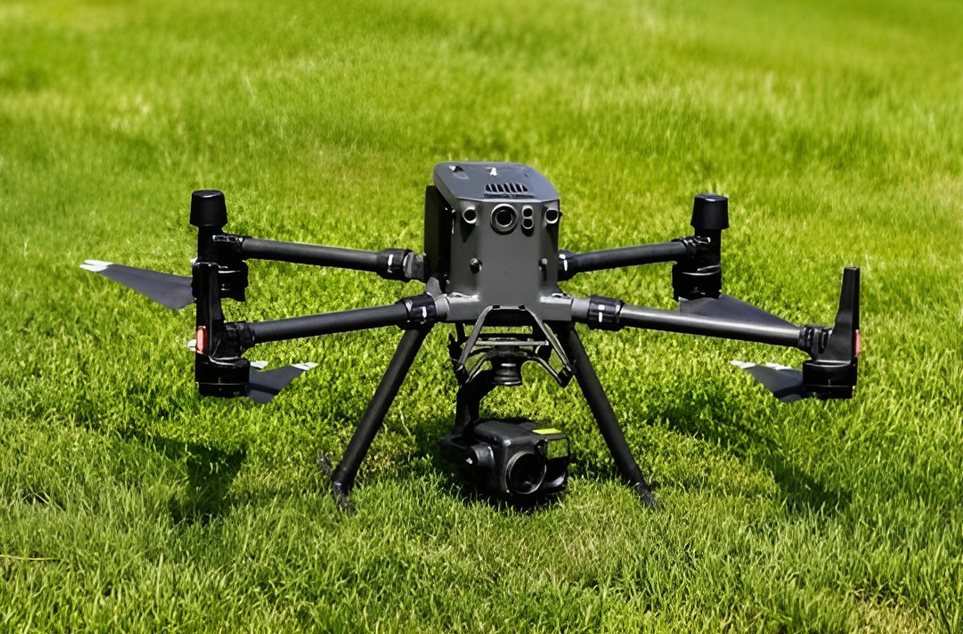
Police DJI M300 Fell 380 Feet, Prompting Enhanced Safety Checks
A Nottinghamshire Police DJI M300 fell about 380 feet onto a residential road after losing control over West Bridgford. Nobody was injured, but the UK Air Accidents Investigation Branch found that the impact speed could have caused fatal injuries. The force subsequently introduced enhanced pre-flight checks.
The accident began as a routine operational deployment. Two police drones were sent out at 03:20 BST on 1 June to search for suspects, with the M300 launching from an Asda car park. About four minutes later, a warning instructed the remote pilot to land the aircraft and check its motor arms. Further warnings followed before the drone spun uncontrollably, descended rapidly and struck Kingswood Road. The aircraft was damaged beyond repair.
A folding arm became a flight-control problem
The M300 is a quadcopter, so its four motors must work together to maintain lift, attitude and directional control. Manufacturer analysis indicated that the rear-right motor arm folded inward because it had not been installed correctly. Once the arm moved from its intended flight position, the aircraft no longer had the normal geometry required for its control system to balance motor thrust.
That finding explains why a mechanical locking issue can become more than a component problem. A multirotor’s controller can continuously vary motor speeds to reject ordinary disturbances, but it depends on each motor remaining in its designed position. A displaced arm changes where thrust is produced and can place the resulting motion outside what the controller can correct. In this accident, the aircraft began spinning while descending rapidly.
The arm issue and the procedural findings must be kept separate. The AAIB found that the remote pilot had not conducted pre-flight checks and had not watched the takeoff through body-worn video as recommended. The investigation did not establish that either omission caused the arm to be installed incorrectly or caused the loss of control.
Checks provide a separate layer of defense
The motor arms had been moved into their flight positions at the beginning of the pilot’s shift, but the operator did not require their security to be checked again before every flight. Takeoff and initial control checks appeared normal. That sequence illustrates the operating gap addressed by the subsequent changes: a component can appear ready at the start of a shift yet still warrant verification immediately before another launch.
A pre-flight inspection is therefore a procedural defense rather than a substitute for sound hardware. Its value lies in providing another opportunity to identify an insecure locking mechanism before the aircraft leaves the ground. Requiring the check before each flight also places it closer in time to the condition it is intended to verify, reducing reliance on an inspection completed earlier in the shift.
Takeoff observation provides a different safeguard. Watching the aircraft as it lifts off can help the pilot assess its initial behavior and physical configuration while it remains nearby. In this case, however, the reported takeoff and control checks appeared normal, so takeoff observation cannot be presented as a confirmed way the accident would have been prevented.
The warning sequence supplied another layer, directing the pilot to land and inspect the arms. The aircraft nevertheless became uncontrollable shortly afterward. For operators, that short interval highlights the importance of defenses applied before launch: an airborne alert may identify a developing condition, but the time available to respond can be limited.
The ground hazard shaped the response
Police drones can operate close to homes, streets and people who are not involved in the flight. That environment makes ground risk central to reliability planning. The absence of injuries in West Bridgford avoided the most serious outcome, but the aircraft still reached a road with enough speed for investigators to identify the potential for fatal harm.
Nottinghamshire Police conducted an internal safety investigation to identify contributing factors and opportunities for organizational learning. Sgt Vince Saunders said it produced immediate mitigation measures, including enhanced pre-flight checks. The operator also issued a safety notice making checks of the motor-arm locking mechanism mandatory, while the National Police Chiefs’ Council circulated a safety notice and made two recommendations.
The response focuses on a narrow but consequential dependency: a foldable arm must be correctly positioned and secured for the flight-control system to function as designed. For an unmanned aircraft working above a community, confirming that locked state before every launch adds a direct barrier between an installation problem and an uncontrolled descent onto a public road.
| More aerospace and engineering stories, right in your MSN feed. Follow AMI on MSN |
By Stephen Wallace — Editor for AMI’s aerospace integration and unmanned mobility coverage, focused on drone manufacturing, VTOL systems, autonomous networks, and air-ground mobility links.