FAA Clears Heart Aerospace X1 for Limited Electric Flight Tests
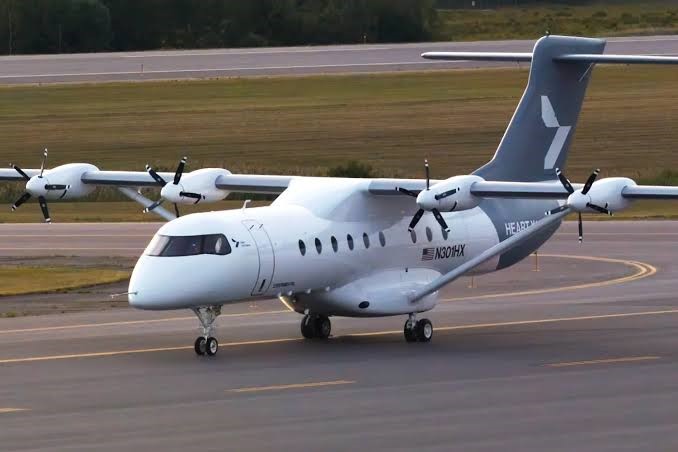
Heart Aerospace can move its full-scale X1 demonstrator from ground validation into piloted flight testing, but the initial campaign will operate inside deliberately narrow limits. The Federal Aviation Administration has issued a Special Airworthiness Certificate in the Experimental Category after inspecting the aircraft, reviewing technical documentation and assessing the proposed test operation at Plattsburgh International Airport in New York.
The authorization removes the regulatory barrier to beginning flight tests; it does not mean the X1 has flown or that Heart’s planned ES-30 airliner is certified. Heart expects the demonstrator to make its first flight in 2026, although it has not set a date. Final technical checks, weather and the flight-test team’s readiness assessment still govern when the aircraft leaves the runway.
Ground work preceded the flight authorization
The certificate follows a ground campaign covering structural, electric-propulsion and aircraft-systems testing. Heart also completed low and high-speed taxi trials, which let engineers examine braking, steering, control response and propulsion behavior while keeping the aircraft on the runway.
The FAA’s review and coordination with Heart’s engineering and flight-test teams lasted more than a year. That sequence matters for an aircraft of this scale because the X1 combines a large airframe with a battery-only propulsion system: four wing-mounted electric motors draw all energy required for flight from onboard batteries.
The demonstrator spans 32.3 meters, or 106 feet, and has a fuselage approximately 23.2 meters, or 76 feet, long. Its takeoff weight exceeds 11.3 tonnes, or 25,000 pounds. Heart says the X1 would become the largest fully electric aircraft yet flown once airborne, but that remains a manufacturer expectation rather than a completed record.
Initial flights will stay low, slow and local
The first phase calls for a single pilot and operations inside a controlled area around Plattsburgh. Planned limits are approximately 110 knots and 2,000 feet above ground level. Within that envelope, the team intends to expand the aircraft’s demonstrated behavior progressively rather than attempt broad performance objectives immediately.
Early sorties will examine handling, stability, propulsion performance and general in-flight behavior. Flight data can reveal interactions that ground rigs and taxi tests cannot fully reproduce, including how aerodynamic loads, control inputs and electric propulsion respond together across changing flight conditions.
The bounded envelope also puts the schedule in perspective. Heart previously expected the X1 to fly in 2025, initially targeting a window between April and July. The revised 2026 expectation shows that receiving an experimental certificate is a transition point, not a guarantee of immediate flight.
X1 data must transfer to a different propulsion architecture
Heart is using the X1 as a development platform for the ES-30, a proposed 30-seat regional aircraft targeted for certification in 2031. Data from the demonstrator is intended to inform the production program’s aerodynamics, structures, flight controls and electric-propulsion development.
There is an important design boundary: the X1 is fully electric, while the ES-30 is planned as a hybrid-electric aircraft. Heart publishes an estimated battery-electric range of roughly 200 kilometers for the ES-30 and a hybrid range around 800 kilometers with fewer passengers. X1 testing can therefore validate major elements of the electric system and full-scale airframe behavior, but it does not by itself validate the complete hybrid production configuration.
That split reflects the energy demands of regional aircraft. A separate NASA and GE Aerospace demonstration used a modified Saab 340B to test a megawatt-class system combining electric motors, energy storage and a gas turbine. The program illustrates why hybrid architectures remain prominent at larger aircraft sizes: developers can evaluate electric power while retaining another energy source for missions beyond a battery-only envelope.
For Heart, the next consequential result is not the certificate already in hand but a controlled first flight that begins producing usable full-scale data. Until that occurs, the X1 remains at the threshold between a ground-tested electric aircraft and a flying development tool for the ES-30.
By David Whitaker — Associate editor for AMI’s aerospace and drone systems desk, translating flight systems, aircraft programs, spaceflight, and UAV developments into accessible technical stories.