NASA Power Swap Keeps Voyager 2’s Last 3 Instruments Running Longer
Voyager 2 has been living on borrowed watts for years. NASA’s latest fix does not change the spacecraft’s basic problem its plutonium-powered electrical supply keeps shrinking but it does buy time. Engineers at NASA’s Jet Propulsion Laboratory have completed a coordinated power-saving change on Voyager 2 that is expected to keep its three remaining science instruments operating for at least one more year.

The maneuver matters because another shutdown was already approaching. Without it, mission controllers would have needed to turn off one more Voyager 2 instrument before the end of 2026, according to NASA’s Voyager mission update. Instead, the spacecraft gets additional operating margin at a point when even small power savings have direct science consequences.
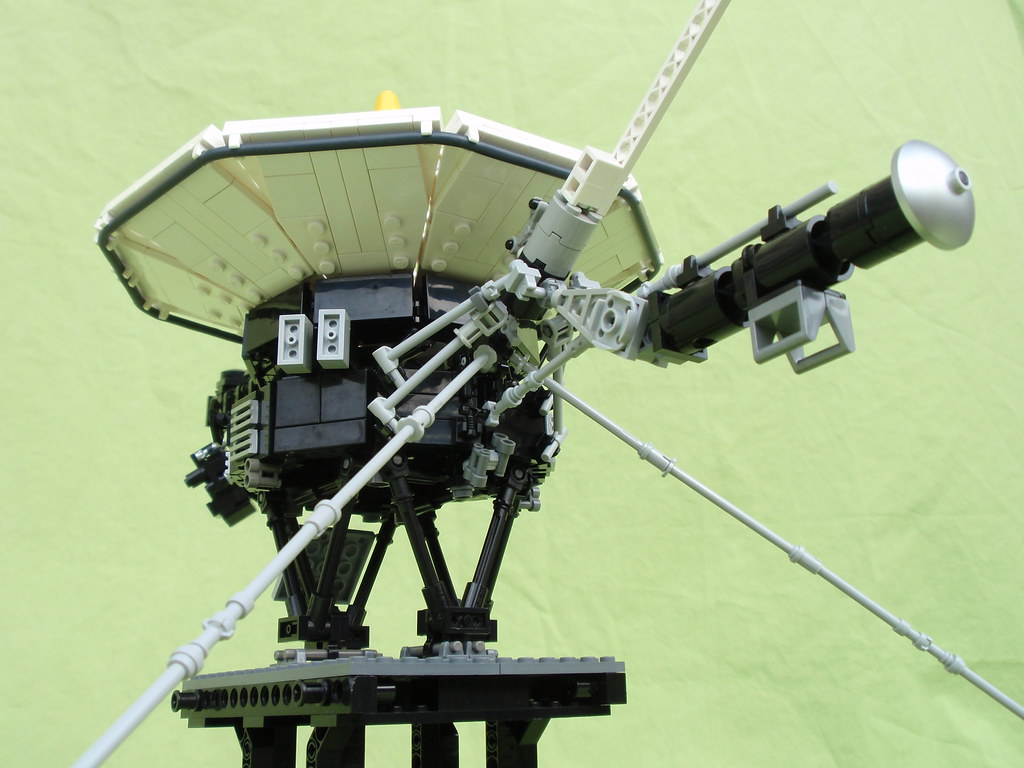
The engineering challenge is unusually tight. Voyager 2 and Voyager 1 generate electricity with radioisotope thermoelectric generators, which turn heat from decaying plutonium into electrical power. As that fuel output declines, each spacecraft loses about 4 watts of available power every year. That is a small number in household terms, but on a nearly 50-year-old deep-space probe running with almost no margin left, it is enough to force repeated tradeoffs between heat, basic spacecraft functions, and science instruments.
NASA calls the latest Voyager 2 effort the “Big Bang.” The job was not simply to switch things off. Engineers shut down certain powered components and replaced them with lower-energy options while making sure the spacecraft stayed warm enough to keep functioning. That heat balance is the real constraint: saving electricity is useful only if the spacecraft can still maintain temperatures needed for continued operation.
That distinction helps explain why this is more meaningful than a routine power-down. The mission has already been trimming for years. Since 2024, declining power levels have forced the team to turn off two science instruments on each Voyager spacecraft. Each probe originally carried 10 instruments, although some had been shut down much earlier because they were intended for the planetary flyby phase, not the long interstellar mission that followed.
So the current result is narrow but important. NASA did not restore lost capability or reset the clock on the Voyagers’ aging power systems. What it did accomplish was a better internal power arrangement that delays the next science loss on Voyager 2. For a mission this old, that is a real systems-engineering win: preserving measurement capability without crossing the thermal limits that could threaten spacecraft health.
The move also says something about how the Voyager mission now operates. Early in the program, the spacecraft’s main job was planetary exploration. Today, the surviving instruments are being kept alive in interstellar space under constraints the original designers never expected to manage for this long. At this stage, mission operations are less about adding capability than about carefully reallocating dwindling resources so the spacecraft can continue returning data at all.
NASA plans to carry out the same power-saving swap on Voyager 1 in the coming months. That spacecraft is farther from Earth than Voyager 2, which makes command timing and operational patience even more important, though NASA has not presented the change as anything other than the same basic effort now proven on Voyager 2.
The broader tension has not gone away. Both Voyagers will keep losing roughly 4 watts of power per year, and controllers have already shown they are willing to shut down instruments one by one to extend the mission. The latest adjustment simply postpones the next cut. For a spacecraft launched in 1977, that extra year for all three remaining Voyager 2 instruments is the kind of gain that still counts.
By David Whitaker — Associate editor for AMI’s aerospace and drone systems desk, translating flight systems, aircraft programs, spaceflight, and UAV developments into accessible technical stories.