USAF C-17 Flew With ISF Nose Panel After One-Off Supply Failure
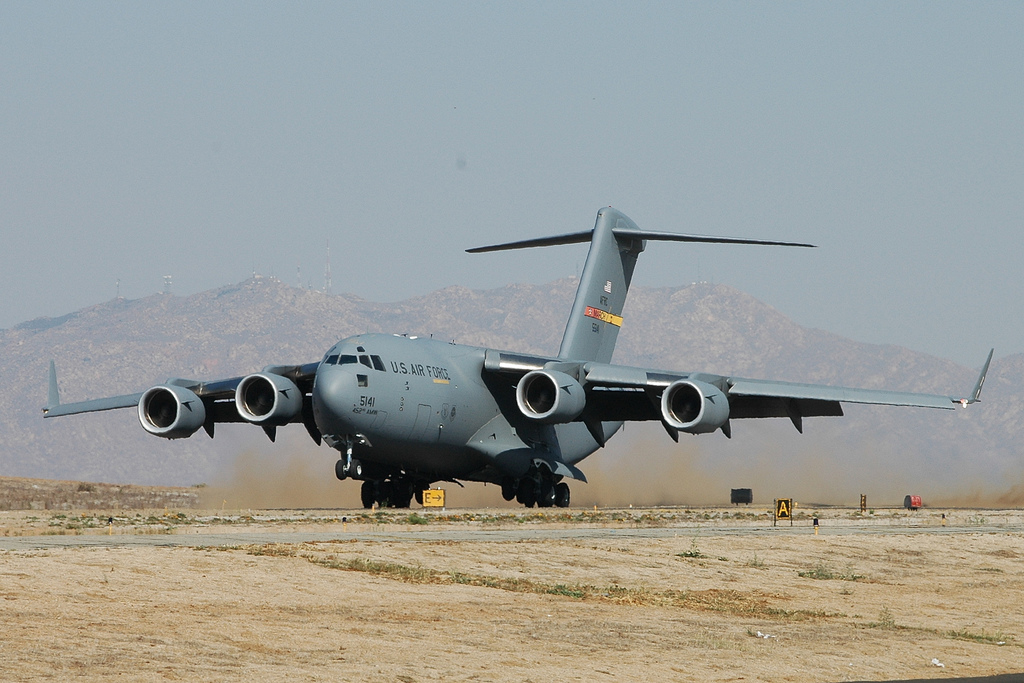
The immediate problem was not damage assessment. It was manufacturing economics. A storm-damaged C-17 needed a replacement left nose panel, Boeing said the part was unavailable, and no supplier would invest in tooling and machining for a single isolated component. That is the sustainment gap the Air Force says it just closed: a grounded airlifter returned to flight after the service used robotic incremental sheet forming to make the panel itself.

According to the Air Force Life Cycle Management Center, the aircraft was C-17 tail 0194 from the 445th Airlift Wing at Wright-Patterson Air Force Base. It had been grounded since March 2025, after severe weather at Perot Field Fort Worth Alliance Airport in Texas blew two private Bombardier Challenger jets into it. The impact damaged panels on the left side door, fuselage, and nose area. The 445th Maintenance Group repaired the door and fuselage after the aircraft returned to Ohio, but the left nose panel still had to be replaced.
That is where conventional sustainment stalled. The aircraft had already made it back to Wright-Patterson with a Boeing-qualified, Air Force-approved temporary repair on the left nose panel and with its landing gear down throughout the flight. But after an unsuccessful repair attempt on the permanent fix, the outlook was severe: at least a year in storage, followed by another year of repair work. For a mission aircraft, that is not a paperwork delay. It is lost availability caused by a low-volume part that no longer fits normal supplier economics.
The Air Force Rapid Sustainment Office’s Automation and Robotics team treated the panel as a candidate for Incremental Sheet Forming, or ISF. AFLCMC describes ISF as a robotic process that progressively deforms sheet metal into a functional part. The key manufacturing advantage in this case is straightforward: the geometry is created by a programmed forming path rather than dedicated hard tooling. For a one-off structural skin panel, that removes the cost barrier that kept vendors out of the job in the first place.
Working with engineers from the University of Dayton Research Institute, the team began producing the panel in January 2026. An initial fit check took place on April 20 at Wright-Patterson, followed by a final fit check later that month. Boeing and the 445th Maintenance Group installed the completed panel in July 2026. Final validation included a front landing gear test and minor nose-area adjustments before the aircraft flew again on July 30.
The timeline matters because it shows where ISF has practical value. Mary Schuler, the Rapid Sustainment Office’s Automation and Robotics lead program manager, said the approach cut the repair process “from years to only a few months.” Col. Karen Gharst, commander of the 445th Maintenance Group, said the office delivered a part for fit check in just over a month and called the panel “otherwise unobtainable.” That does not make ISF a blanket replacement for conventional production. It does show that for legacy aircraft with closed production lines and very low demand quantities, digital forming can be the difference between a recoverable aircraft and a long-term hangar occupant.
This was also a certification and confidence milestone, not just a shop-floor experiment. AFLCMC said the panel is the first part produced via ISF to be flown on an Air Force platform. That matters because flight use is a much higher threshold than simply demonstrating that a robot can shape sheet metal. The part had to move through fit checks, testing, installation with Boeing involvement, and ground validation before the aircraft returned to service.
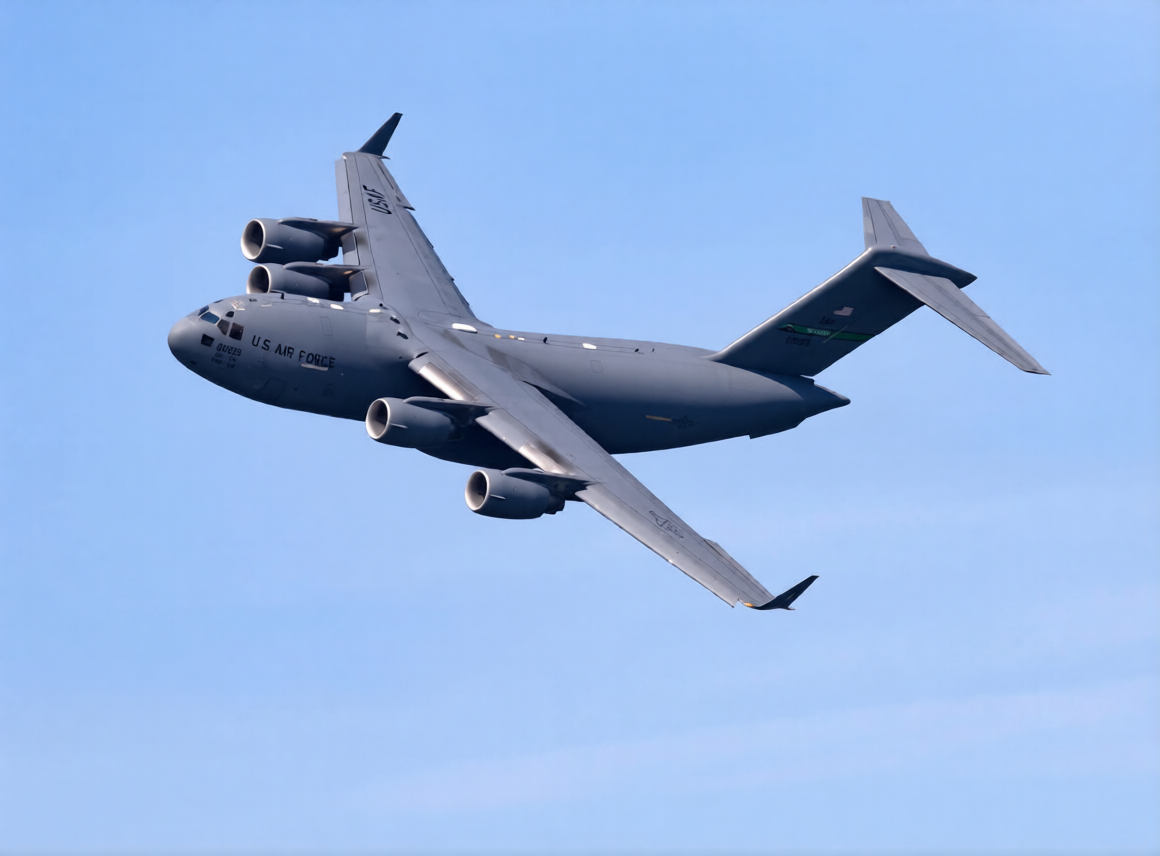
The broader sustainment case is easy to see on the C-17 alone. Boeing closed the Globemaster III production line in Long Beach in 2015 after completing the 279th aircraft, and the Air Force has roughly 220 C-17s in service. As fleets age, the engineering problem shifts from original manufacture to repeatable recovery of small-batch or one-off parts whose original tooling base no longer makes commercial sense. In that environment, manufacturing flexibility becomes a readiness tool.
The Air Force is already signaling that this was not a one-aircraft exception. AFLCMC said the Rapid Sustainment Office is now working on parts for a KC-135 and an F-15. That is the strongest indicator of where this goes next: not toward mass production, but toward targeted sustainment of legacy platforms where geometry is complex, demand is sparse, and waiting for a supplier to resurrect tooling is slower than forming the metal in-house.
By Edward Collins — Senior editor for AMI’s performance systems and mechanical design coverage, focused on powertrains, drivetrain systems, manufacturing precision, materials, and high-performance engineering.