Air Force Says OA-1K Was Lost After Fuel Control Mistake
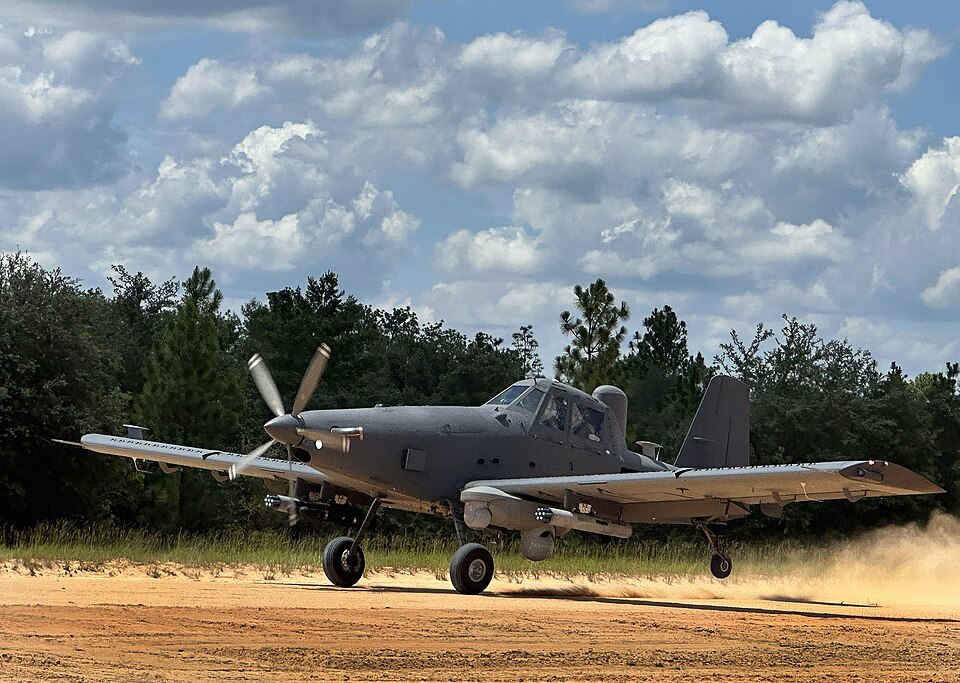
An Air Force Special Operations Command investigation says an OA-1K Skyraider II was destroyed after a trainee pilot selected the wrong fuel control during a training flight, shutting off fuel to the aircraft’s only engine. The 23 October 2025 forced landing near Oklahoma City left both crew members unhurt, but the aircraft was a total loss valued at $17.9 million, according to AFSOC’s release on the Accident Investigation Board report.

The official finding is narrow but important. The board said the mishap was caused by the pilot’s unintended activation of the fuel shutoff valve rather than the fuselage tank valve during a checklist action. It also identified three substantial contributing factors: task saturation, communication challenges with ineffective crew resource management, and ineffective task prioritization. What it did not do, based on the available summary, was formally assign the crash to cockpit design alone.
That distinction matters because the most visible detail in the case is the control layout. The two fuel controls were reported to be about five inches apart. One was a red rotating fuel-shutoff crank; the other was a silver pull lever for the fuselage tank. On the Block 1 aircraft involved here, that panel was also partially obscured by a larger power lever. Those are exactly the kinds of human-factors conditions that can increase selection risk, especially in a new cockpit during training, but the board stopped short of naming layout as the formal cause.
Instead, the safety lesson sits in the interaction between cockpit arrangement, workload, and crew coordination. The trainee pilot had more than 2,300 flight hours overall, but only about 37 hours in the OA-1K and roughly three hours in the Block 1 variant. That is a classic transition environment: a highly experienced aviator, but still relatively new to a specific aircraft and even newer to a changed cockpit configuration. In practical terms, total flight time does not erase variant-specific habit patterns, particularly when a routine checklist item depends on finding and correctly identifying nearby controls.
The sequence the board described shows how quickly a simple selection error can outrun a crew in a single-engine aircraft. The trainee was told to open the tank valve, but instead twisted the fuel shutoff control, which isolated fuel flow and caused the engine to quit. The mistake was recognized about 20 seconds later and the valve was reopened, yet the turboprop did not recover power before the forced landing roughly two minutes after the emergency began.
For a twin-engine platform, a wrong control input may still leave propulsion margin. In an aircraft like the OA-1K, there is no such buffer. Once fuel is cut off to the sole engine, the event immediately becomes a time-and-altitude problem. That is why the board’s contributing factors are as important as the mistaken control selection itself. Task saturation and communication breakdowns are not side notes here; they explain why a recoverable upset can become an unrecoverable landing sequence.
The report summary also underscores a recurring training truth: crews do not manage emergencies as isolated technical events. They manage them while also dealing with checklist flow, cockpit communication, aircraft control, and prioritization under time pressure. The board’s focus on ineffective crew resource management and ineffective prioritization suggests the central safety issue was not simply that one control was mistaken for another, but that the crew never rebuilt a clear shared picture quickly enough after the engine failure began.
There is also a boundary worth keeping clear. The available findings do not point to a mechanical malfunction, and they do not support broader claims about the OA-1K program being halted or fundamentally compromised by this accident. The aircraft involved was an OA-1K Skyraider II Block 1, AFSOC’s turboprop armed-overwatch platform built by L3Harris on the Air Tractor AT-802 airframe, and the program continues after the loss. That makes this less a story about fleet viability than one about how new-aircraft training exposes the seams between cockpit familiarity, procedural discipline, and human factors.
The Oklahoma City crash also illustrates why official accident reports matter more than early assumptions. A $17.9 million aircraft was lost after a wrong valve selection only inches from the intended control, but the Air Force’s own findings place the strongest weight on the crew’s control identification, workload, communication, and prioritization rather than declaring the Block 1 cockpit itself defective. For operators bringing a new variant into service, that is the real warning: small interface differences can matter most when they meet a busy training cockpit and a single engine that leaves very little time to recover.
By David Whitaker — Associate editor for AMI’s aerospace and drone systems desk, translating flight systems, aircraft programs, spaceflight, and UAV developments into accessible technical stories.