India Opens Rs 1 Lakh Crore Contest for 60 Transport Aircraft
India has reportedly opened bidding for 60 military transport aircraft in a program valued at nearly Rs 1 lakh crore, or INR 1 trillion. The request for proposals puts aircraft associated with Embraer, Lockheed Martin and Airbus into a consequential comparison of payload, operating fit and how much manufacturing and long-term support work will be established in India.

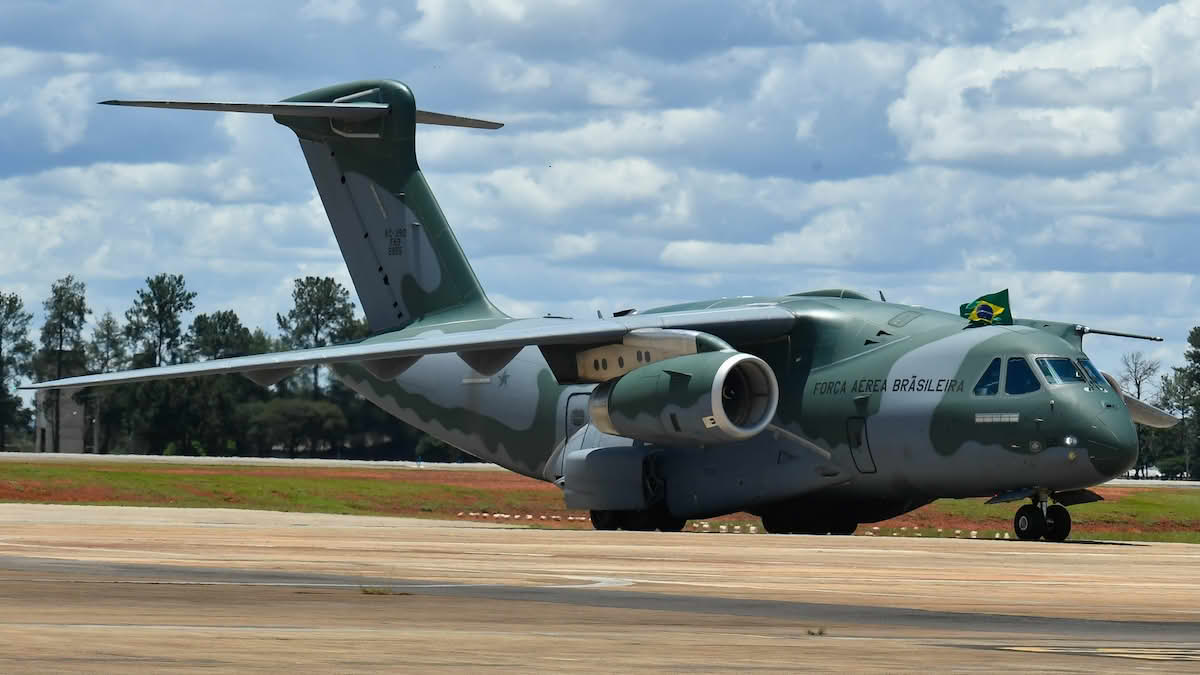
No aircraft has been selected and no final production contract has been awarded. Technical evaluation, field trials, commercial negotiations and contract finalization remain ahead. The reported field includes Embraer’s C-390 Millennium, Lockheed Martin’s C-130J Super Hercules and Airbus’ A400M Atlas, although their different sizes mean this is not a simple like-for-like contest.
Three aircraft present three different propositions
The A400M supplies the largest headline number: roughly 37 tonnes of payload. That capacity could accommodate heavier or bulkier loads, but it also places the aircraft above the reported 18-to-30-tonne requirement. Greater lift is valuable only if India is prepared to accept the associated acquisition, operating and infrastructure costs of a larger platform. The tender process will have to determine whether that extra capacity answers the stated medium-transport requirement or moves too far toward the heavy-lift category.
The C-390 sits closer to the upper end of the specified class, with a payload of about 26 tonnes. Its jet-powered configuration presents a different operating model from the turboprop alternatives, pairing medium-lift capacity with relatively high cruise speed. More payload per flight can reduce the number of sorties needed for some logistics movements, but field trials and cost analysis still must establish how the aircraft performs against India’s full runway, altitude and support requirements.
Lockheed Martin’s C-130J carries less about 19 to 20 tonnes but enters with an advantage that cannot be measured by payload alone. The Indian Air Force already operates 12 C-130J-30 aircraft and has training, maintenance and operational infrastructure associated with the type. Fleet familiarity can reduce the amount of new equipment, instruction and maintenance knowledge needed to introduce another batch, although the value of that commonality will depend on the configuration India requests and the support terms offered.
For Lockheed Martin and its U.S. supply base, the contest tests whether an established platform and existing Indian industrial relationship can outweigh the capacity offered by a newer, larger design. Tata and Lockheed Martin already have an Indian manufacturing connection through C-130J empennage assemblies, giving their proposal a more mature starting point than a partnership that must build its processes from scratch.
Local production changes the procurement equation
The planned aircraft would fill the broad space between India’s lighter C-295 and its heavy C-17 Globemaster III. It is intended to help replace ageing An-32 transports while moving personnel, vehicles, artillery and supplies from relatively austere airfields. Those missions make usable payload, runway performance and dispatch availability more important than a single maximum-capacity figure.
Industrial terms could be just as decisive. The reported structure calls for 12 aircraft to arrive in flyaway condition and the remaining 48 to be manufactured in India. Locally produced aircraft would begin with at least 40% indigenous content, rising toward 60% in phases. Indian companies would lead the bids and work with foreign aircraft manufacturers to establish final assembly and maintenance, repair and overhaul capabilities.
That structure spreads the program’s consequences beyond the Air Force. Indian taxpayers will fund not only aircraft deliveries but also tooling, training and support capacity intended to sustain the fleet. Domestic aerospace suppliers could gain production work and technical capability, while the winning aircraft maker would have to manage quality, configuration control and supplier development across a new manufacturing network.
Technology transfer is therefore more than a promise to assemble airframes locally. Its practical value will depend on which components and processes Indian partners can control, whether maintenance can be performed without routinely sending equipment abroad, and how future upgrades are approved and integrated. A high local-content percentage does not by itself establish that India will hold the engineering data or rights needed to modify and support the aircraft over decades.
Mahindra has a military-aircraft partnership with Embraer, while Tata is associated with Lockheed Martin’s C-130J industrial activity. HAL, Adani Defence & Aerospace and Reliance Defence have also reportedly received the request for proposals, but not every foreign partnership or production arrangement has been finalized publicly.
The next meaningful comparison will come from the bids and field trials, where advertised payload must meet runway performance, support demands and lifecycle cost. India is not merely choosing which aircraft can carry the most. It is deciding which combination of airlift capability, fleet disruption and enforceable domestic support rights justifies an INR 1 trillion commitment.
By David Whitaker — Associate editor for AMI’s aerospace and drone systems desk, translating flight systems, aircraft programs, spaceflight, and UAV developments into accessible technical stories.