SpaceX Launches Eight Satellites Supporting Apple SOS, Lands Florida Booster
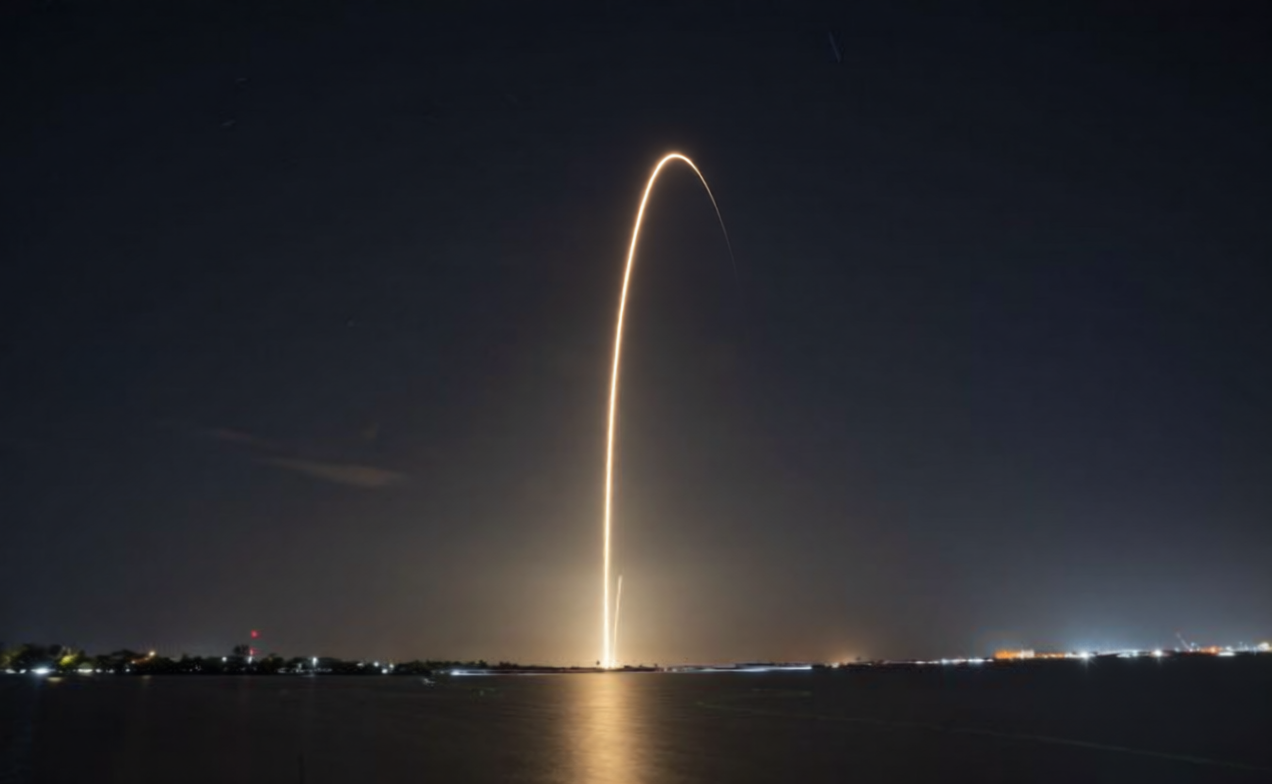
SpaceX launched eight Globalstar communications satellites from Cape Canaveral Space Force Station on Saturday night, August 15, then returned the Falcon 9 first stage to a landing zone beside the launch site. The spacecraft begin replenishing orbital infrastructure that supports emergency satellite messaging on Apple devices.

The Falcon 9 lifted off from Space Launch Complex 40 at 9:12 p.m. EDT. All eight satellites were deployed successfully, beginning about 56 minutes after liftoff, according to post-launch mission coverage. The launch became the Space Coast’s 52nd orbital flight of 2026 and SpaceX’s 45th from the region this year.
Roughly eight minutes after departure, the first stage landed at Landing Zone 40. It was the booster’s 14th flight, making the mission another example of how Falcon 9 reuse divides a launch into two distinct jobs: the upper stage continues carrying the payload toward deployment while the first stage reverses course for recovery and possible refurbishment.
A return that could be heard across Florida
Before launch, SpaceX advised that the booster’s return could produce one or more sonic booms. The company identified nine counties where the sound might be heard: Brevard, Orange, Osceola, Indian River, Seminole, Volusia, Polk, St. Lucie and Okeechobee. It also cautioned that residents’ experiences would depend on weather and other conditions.
A sonic boom is an acoustic consequence of supersonic flight, not an explosion at the landing site. As the descending booster travels faster than sound, pressure disturbances combine into a shock wave. When that wave reaches the ground, people may hear a sharp report or multiple reports. Local atmospheric conditions affect how that sound propagates, which is why a county-level advisory cannot predict what every resident will hear.
The land recovery also carries a practical operational advantage. Landing beside the launch complex avoids the need to retrieve the stage from an offshore drone ship before inspection and processing can begin. That does not make reuse automatic: a recovered stage still requires post-flight assessment and preparation before another assignment. This booster’s 14-flight history shows the accumulated value of that maintenance-and-reflight system.
The payload supports off-grid emergency messaging
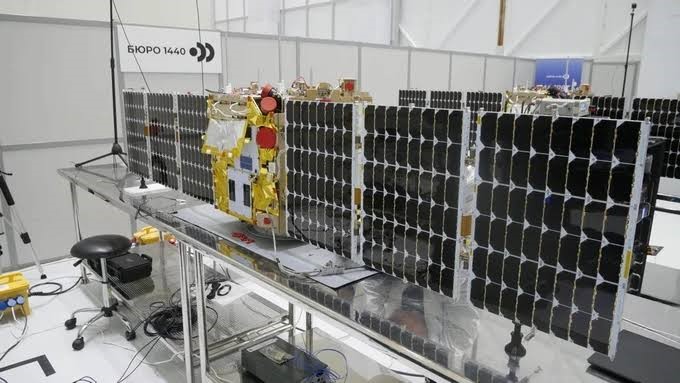
The eight HIBLEO-4 spacecraft are the first batch in a 17-satellite Globalstar replenishment program planned across two launches. Rocket Lab built the satellite platforms for MDA Space, the program’s prime contractor, while SpaceX provides launch services. That chain illustrates how a feature presented to users through a phone depends on several layers of hardware and suppliers from spacecraft manufacturing and orbital deployment to the handset and emergency-response interface.
Globalstar’s network supports direct-to-handset services including Apple’s Emergency SOS via satellite. On an iPhone 14 or later, the feature can help a user text emergency services when cellular and Wi-Fi connections are unavailable. Apple notes in its Emergency SOS guidance that users must be outside with a clear view of the sky and horizon, and that a satellite connection works differently from an ordinary cellular message.
Those operating limits matter. Satellite connectivity expands the places where a compatible phone can seek help, but it does not remove the need for sky visibility, compatible hardware, supported software and regional availability. Constellation replenishment is therefore less about adding a conspicuous new feature than sustaining the space segment behind a service intended for exceptional circumstances.
The Federal Communications Commission granted Globalstar a 15-year authorization extension and permission to operate replacement spacecraft, while attaching orbital-debris mitigation requirements. The regulator deferred a decision on nine proposed in-orbit spares pending an updated debris plan. Globalstar must also address how replacement satellites move safely from insertion altitude to their higher operating orbit and how they will be lowered for disposal at the end of service.
Saturday’s mission had previously been targeted for May, when it was pulled to give Globalstar teams more time to prepare the satellites. The assigned Falcon 9 booster also changed before the eventual flight. Its successful August launch and return completed the first half of the planned two-mission deployment campaign; the remaining milestone is getting the rest of the 17-spacecraft replenishment fleet into orbit.
By David Whitaker — Associate editor for AMI’s aerospace and drone systems desk, translating flight systems, aircraft programs, spaceflight, and UAV developments into accessible technical stories.