Cathay Pacific Radio Error Triggered NATO Interception Despite Working Equipment
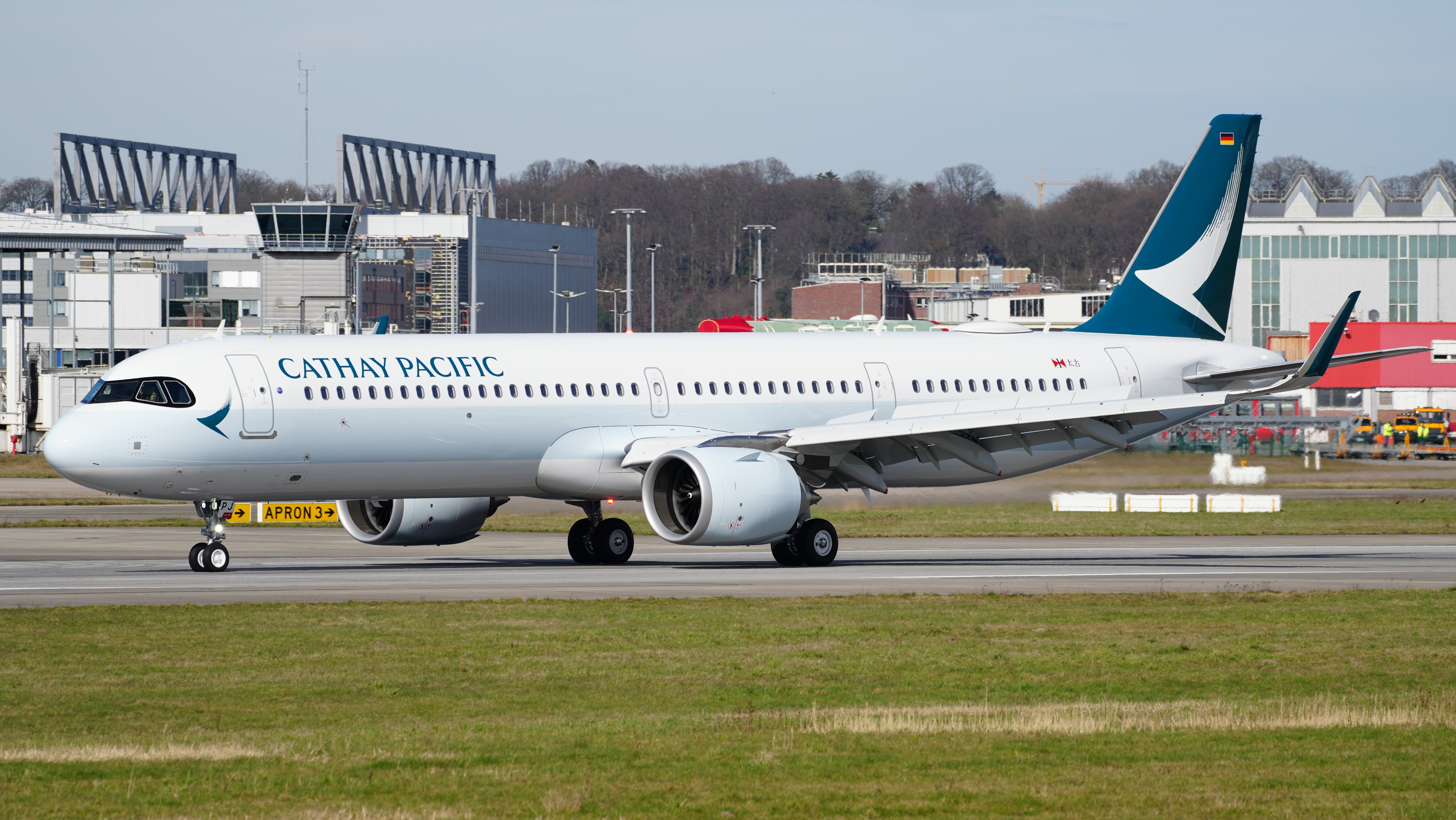
A wrong radio-frequency selection aboard Cathay Pacific Flight CX257 caused the Airbus A350 to lose contact with air traffic control over Romania, prompting Hungary to scramble two fighters for a NATO air-policing interception. A Hong Kong Civil Aviation Department review found that the aircraft’s communication equipment was operating normally, focusing attention on crew actions and monitoring rather than a hardware defect.

The July 4, 2026 flight was traveling from Hong Kong International Airport to London Heathrow when its crew responded to an instruction intended for another aircraft and selected the wrong frequency. The crew did not subsequently recognize that communication with the relevant controller had been interrupted. The A350 remained on its authorized route throughout the event, contact was restored after the visual interception, and the flight continued to Heathrow and landed safely. Cathay Pacific said the aircraft and its passengers were never in danger.
Why an on-course airliner still drew a military response
An aircraft’s route and its communications status answer different operational questions. Remaining on an approved path can indicate that the flight is continuing as cleared, but it does not explain why the crew is no longer answering controllers. Authorities therefore could not treat the A350’s predictable track as a substitute for direct contact.
NATO describes air policing as a continuous peacetime mission that monitors traffic and can support civilian aircraft that have lost communication with air traffic control. In this case, Hungary dispatched two fighters as the passenger aircraft approached Hungarian airspace. They visually identified the A350 and issued a visual warning, after which radio contact was restored.
That sequence explains the scale of the response without turning it into a combat event. A visual interception supplies an independent way to identify an unresponsive aircraft and establish communication when ordinary controller calls are not producing an answer. It does not, by itself, mean that the passenger jet had left its route or presented a hostile threat. The confirmed record here is narrower: CX257 was not responding on the required channel, and that condition activated established air-policing procedures.
The failure was in frequency management and recognition
The finding separates two linked human-performance issues. The initiating error was responding to a clearance meant for another flight and tuning the radio accordingly. The consequential second issue was the crew’s failure to recognize that expected communication with the responsible control unit had stopped.
That distinction matters because a working radio cannot protect a flight from every communication loss. The equipment can transmit and receive normally while being tuned to a frequency that does not connect the crew with the controller responsible for the aircraft. Hardware availability and correct system use are separate parts of the safety chain.
The event also illustrates why recognition is as important as initial accuracy. A frequency-selection mistake can remain recoverable if the communication interruption is detected promptly. Here, the official finding identifies delayed recognition as part of the documented failure. The available information does not specify cockpit workload, individual decision-making, alert behavior or other contributing conditions, so those factors should not be inferred.
Nor does the interception establish an A350 design defect. Investigators found that the communication equipment functioned normally, and no evidence presented links the event to an aircraft-system malfunction. The supported safety issue is operational: selecting the correct frequency, monitoring whether the expected communication path remains active and responding when contact is lost.
Procedural changes address the identified operational gap
Hong Kong’s Civil Aviation Department expressed serious concern and directed Cathay Pacific to follow up robustly. The airline introduced additional operational and monitoring procedures for cockpit communications and reminded crews to maintain greater vigilance. Those measures are directly aligned with the two documented problems: incorrect selection and failure to notice the interruption.
Additional training and assessment for the crew involved are expected, but they should not be described as completed. The Civil Aviation Department’s continuing oversight of the measures is important because introducing a procedure is not the same as demonstrating that it works consistently in line operations.
There was no reported disruption to the destination airport beyond the flight continuing to Heathrow and landing safely, and the record provides no basis for claiming passenger injury or direct danger. The concrete consequence occurred upstream: one unnoticed cockpit communication error required coordination among civilian controllers and military air-policing authorities across national airspace. The lasting test will be whether Cathay Pacific’s strengthened monitoring procedures reliably catch the next incorrect selection before silence escalates to another interception.
By Thomas Caldwell — AMI’s senior editor for mechanical and mobility engineering, covering vehicle electronics, systems integration, electrification, chassis systems, propulsion, and safety policy.