Pentagon Signs $22.9 Billion Raytheon Deal to Raise Yearly Tomahawks From 60 Past 1,000
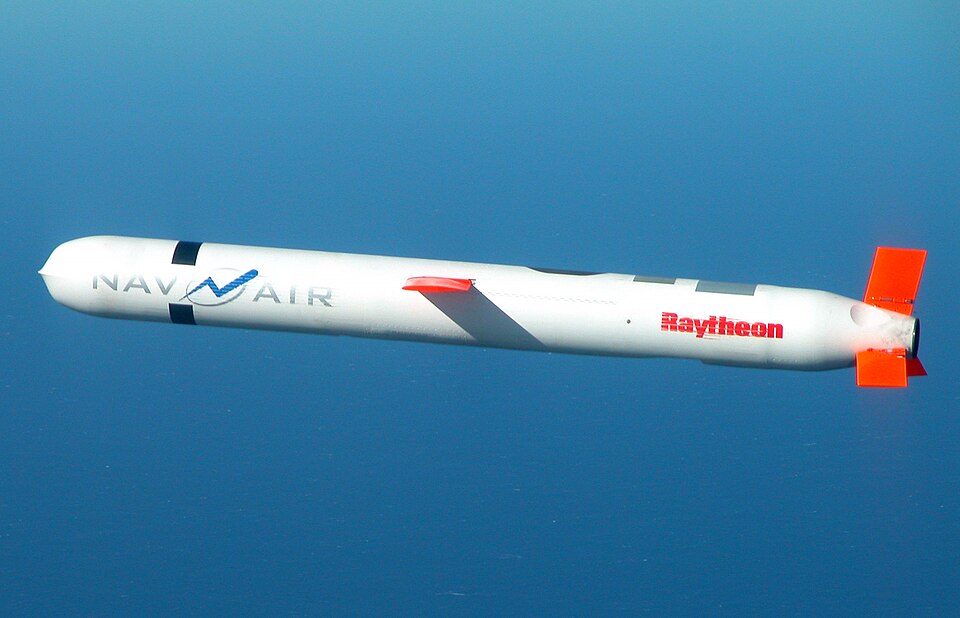
$22.9 billion is buying the Pentagon more than missiles. The seven-year Raytheon contract is intended to support a major expansion of the production system behind the Tomahawk, raising annual output from roughly 60 missiles to more than 1,000. The official award announced August 17 was made by the U.S. Navy to Raytheon, an RTX business.

That target represents an increase of more than 16 times the current stated rate. It also creates a basic accountability question for taxpayers: The government has disclosed the contract’s total value and duration, but not the schedule for reaching four-digit annual output, the number of missiles to be purchased, the work locations or how the money will be divided among finished weapons, equipment and capacity investments.
The Tomahawk is a long-range cruise missile launched from surface ships and submarines against land targets. Its established design does not make a production increase automatic. Moving from about five completed missiles per month to an average exceeding 83 per month requires more than adding final-assembly shifts. Raytheon must expand throughput across its workforce, facilities, equipment and supplier network while preserving engineering controls and product quality.
A production target is not a ramp schedule
RTX has said the increase will occur over a multiyear period, but it has not provided a specific timeline. That distinction matters because “more than 1,000 per year” describes a destination, not how quickly usable missiles will reach the Navy.
A manufacturing program can add floor space and equipment before its suppliers are ready to provide components at the same rate. It can also hire workers faster than it can qualify them for specialized production tasks. If one constrained part or process remains at low volume, additional capacity elsewhere may produce work in progress rather than completed deliveries.
The Pentagon says the agreement provides stability for Raytheon to expand its workforce, increase manufacturing throughput and strengthen supply chains. That is the central purpose of a multiyear commitment: A contractor and its suppliers have more confidence that demand will last long enough to justify capital equipment, additional personnel and other capacity investments.
The tradeoff is that the government is making a long, expensive commitment before the public has a detailed production curve against which to measure progress. Useful milestones would include when new capacity becomes operational, how annual deliveries change during the seven-year term and whether supplier throughput is keeping pace with prime-contractor expansion. None of those details accompanied the announced total.
Early deliveries do not establish the final rate
RTX said it delivered three times as many Tomahawks in the first half of 2026 as it did during the same period in 2025. That indicates higher near-term output, but it does not by itself demonstrate a sustainable rate above 1,000 per year. The underlying quantities were not disclosed, and a six-month comparison can show momentum without revealing whether the broader production system has reached stable high-volume operation.
Sustaining the target will matter as much as touching it. At this scale, production management must coordinate incoming parts, assembly, inspection, testing and acceptance so that one stage does not outrun the others. The contract’s stated focus on workforce, throughput and supply-chain strength recognizes that the production line is only as scalable as its slowest qualified element.
Reports have connected the procurement push to concern about U.S. precision-weapon inventories following deliveries to allies and munitions use during the conflict with Iran. Some published estimates claim large reductions in particular inventories, but those figures have not been independently established here. The White House maintains that the United States has sufficient weapons and that new industry deliveries are replenishing stocks.
For the military, faster production can improve its ability to replace expended weapons and plan future availability. For Raytheon and smaller suppliers, the seven-year term offers demand certainty that shorter orders may not provide. For taxpayers, however, the meaningful measure will not be the headline capacity target alone. It will be the sequence of verified annual deliveries, the cost and durability of the added industrial capacity, and whether the supplier base can sustain more than 1,000 Tomahawks a year after starting near 60.
By David Whitaker — Associate editor for AMI’s aerospace and drone systems desk, translating flight systems, aircraft programs, spaceflight, and UAV developments into accessible technical stories.