Army Will End 600-Soldier Drone Battalion Role Without Naming Replacement
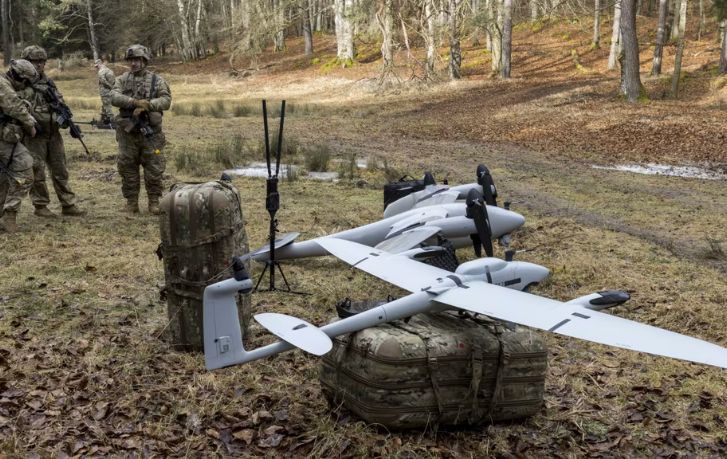
The U.S. Army is ending the specialized drone-assault role assigned to a roughly 600-soldier battalion in Europe only months after formally establishing it. Following one more major exercise, the formation will submit its findings and return to airborne-infantry duties. The Army has not publicly identified a replacement unit or explained how the dedicated experimentation work will continue.

That creates a basic organizational tension. The Army says it intends to accelerate military drone capabilities, including unmanned aircraft, ground robots and systems that counter hostile drones. At the same time, it is removing the focused role from a battalion created to develop ways of integrating those technologies with a larger brigade combat team.
The formation is 3rd Battalion, 504th Parachute Infantry Regiment, part of the 173rd Airborne Brigade. The Army decided in November to create a tactical unmanned-systems battalion and formally established it in January. No end date for the specialized assignment was announced at the time.
The battalion will first participate in the Saber Junction exercise at Hohenfels, Germany. An Army official said its work will be delivered “to inform force design and future experimentation.” Afterward, the unit will “refocus on its core warfighting tasks as an airborne infantry battalion.” The soldiers and battalion therefore are not disappearing; the dedicated drone-assault mission is.
Ending the unit’s role shifts the integration burden
A specialized experimental formation concentrates operators, maintainers, commanders and equipment around a defined technical problem. That can make it easier to conduct repeated trials, document failures, revise procedures and compare results across exercises. It also provides a stable organization in which lessons about aerial drones, ground robots and counter-unmanned systems can be evaluated together rather than as isolated pieces of equipment.
Conventional formations offer a different advantage: they can test whether unmanned systems work under ordinary staffing, training and maintenance constraints. Distributing drones across the Army may ultimately be necessary because these systems are intended to support soldiers rather than remain confined to a demonstration unit. But distribution works only if the service can transfer the specialized unit’s knowledge into training programs, doctrine, equipment support and repeatable standards.
The Army has not disclosed that transfer mechanism. It has said that it rigorously tests a variety of unmanned and counter-unmanned technologies and remains committed to accelerating U.S. military drone capabilities. Acting Army Chief of Staff Gen. Christopher LaNeve’s Army Azimuth document also calls for continued changes to formations using cyber, electronic-warfare and artificial-intelligence technologies.
Those commitments establish the direction, but not the replacement structure. Important unanswered questions include which organization will own future experiments, how results will be preserved between personnel rotations and whether conventional battalions will receive enough dedicated time and technical support to reproduce the work.
Drone integration is also a workforce problem
The hardware is only one part of the transition. An August 2026 proposal in the Army’s Aviation Digest argues that increasingly autonomous drone formations will require revised skills and clearer responsibilities for specialized enlisted personnel and warrant officers. The proposal is not announced Army policy, but it illustrates why institutionalizing unmanned systems involves command structures, airspace coordination, data management, maintenance and human oversight—not simply issuing more aircraft.
A dedicated battalion can serve as a temporary laboratory for working through those interfaces. Returning it to infantry duties could indicate that the Army believes the experiment has produced enough information to move into a broader phase. Yet the service has not released the battalion’s findings or described measurable criteria for that transition.
Several military experts have warned that ending the specialized formation could slow adoption of drone warfare capabilities. That remains an attributed assessment, not a confirmed readiness loss. The actual effect will depend on what the Army does with the battalion’s findings and whether another organization receives clear ownership of the next development cycle.
Saber Junction is consequently more than the unit’s final exercise under its current assignment. It is the handoff point between a concentrated experiment and an undisclosed follow-on approach. The Army’s next test will be whether lessons generated by 600 specialists can survive after their specialized role does not.
| More aerospace and engineering stories, right in your MSN feed. Follow AMI on MSN |
By Stephen Wallace — Editor for AMI’s aerospace integration and unmanned mobility coverage, focused on drone manufacturing, VTOL systems, autonomous networks, and air-ground mobility links.