NASA Targets June 2027 for Artemis III Earth-Orbit Test, Not Moon Landing
NASA is aiming to launch Artemis III as early as June 2027, but the four-astronaut mission is no longer the lunar landing once associated with that flight number. The revised mission would keep Orion near Earth to test rendezvous and docking with commercial lunar-lander test vehicles from SpaceX and Blue Origin. NASA Administrator Jared Isaacman announced the earliest launch target on Aug. 21.

The change moves the next planned crewed lunar landing to Artemis IV, which NASA has associated with 2028. Artemis III instead becomes an integration mission: a chance to connect spacecraft built by three organizations before asking the combined architecture to support operations around and on the Moon.
One mission depends on three separate launches
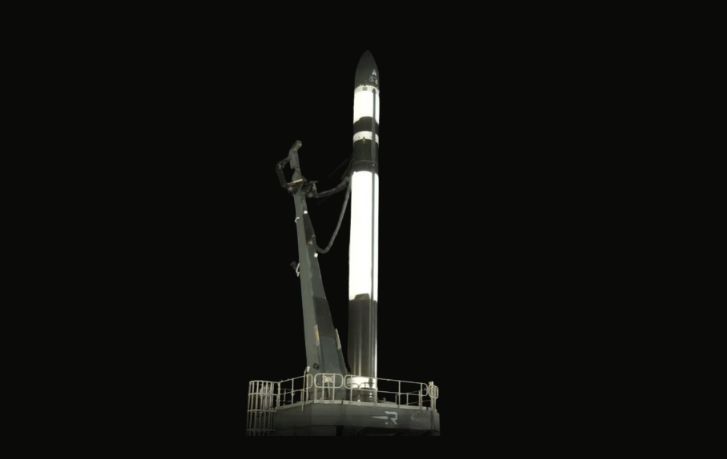
Under the described plan, NASA’s Space Launch System would send Orion and four astronauts into low Earth orbit. SpaceX would separately launch a Starship lunar-lander test article, while Blue Origin’s New Glenn would launch a test version of the company’s Mark 2 lander. Both commercial vehicles are intended to rendezvous and dock with Orion.
That three-launch arrangement is the central schedule constraint. Artemis III cannot be treated solely as a Space Launch System and Orion launch date because its main objective requires the commercial vehicles, their launch systems and the interfaces between them to be ready for coordinated operations.
Docking is more than physically joining two vehicles. The partners must integrate navigation, communications, flight software, procedures, crew displays and mechanical interfaces closely enough to conduct proximity operations and make a controlled connection. With two independently developed landers, NASA must prepare Orion and its crew to work with two different spacecraft rather than repeat one identical docking sequence.
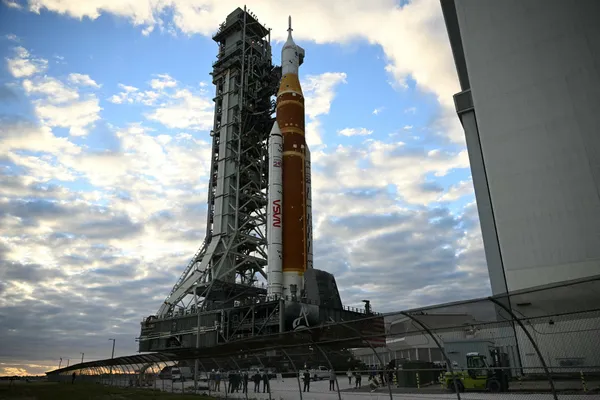
NASA’s own hardware is taking visible shape. The agency reported that engineers joined the Artemis III Orion crew and service modules on July 30. The combined spacecraft was due to undergo power-on and integrated testing, while teams at Kennedy Space Center had begun stacking the Space Launch System’s solid-rocket booster segments. All four main engines had also reached the Vehicle Assembly Building.
The revised rocket configuration reflects the mission’s Earth-orbit role. NASA is using a non-propulsive spacer in place of the interim cryogenic propulsion stage, preserving the vehicle’s dimensions and connection points without giving Artemis III the upper stage previously assigned to it. That propulsion stage has been reassigned to Artemis IV.
The late-2026 rehearsal is the next schedule gate
Isaacman said the Artemis III rocket is expected to roll to Kennedy Space Center’s Pad 39B for a wet dress rehearsal before the end of 2026. During that ground test, teams load the launch vehicle and run through countdown operations without launching it. It is a major check of the assembled rocket, mobile launcher, ground equipment and countdown procedures.
Completing that rehearsal would be important, but it would not by itself clear the entire mission for June. The commercial side still carries separate development and infrastructure work. Blue Origin is rebuilding the existing New Glenn pad at Launch Complex 36 after a May static-fire explosion while also developing a second pad. The company has said returning the current New Glenn configuration to flight remains its priority.
SpaceX’s Starship, meanwhile, had not yet reached orbit in its Texas test program as of Isaacman’s announcement. Artemis III requires more than the basic launch vehicle milestone: the relevant lander test article must also be prepared for the planned rendezvous and docking demonstration.
That is why June 2027 is an earliest target rather than an unconditional launch date. NASA can accelerate Orion assembly, reuse selected hardware and streamline Kennedy processing, but it cannot remove the need for end-to-end interface verification across the three launch systems.
The mission change trades the immediate spectacle of a Moon landing for a more controlled integration step near Earth. If Artemis III flies as described, its defining result will not be where the crew lands, but whether Orion can meet and dock with both commercial lander designs the hardware relationship Artemis IV would need to carry farther from home.
| More aerospace and engineering stories, right in your MSN feed. Follow AMI on MSN |
By David Whitaker — Associate editor for AMI’s aerospace and drone systems desk, translating flight systems, aircraft programs, spaceflight, and UAV developments into accessible technical stories.