Ukrainian Drone Strikes Disrupt Russian Refineries, Squeezing Central Asia’s Petrol Supply
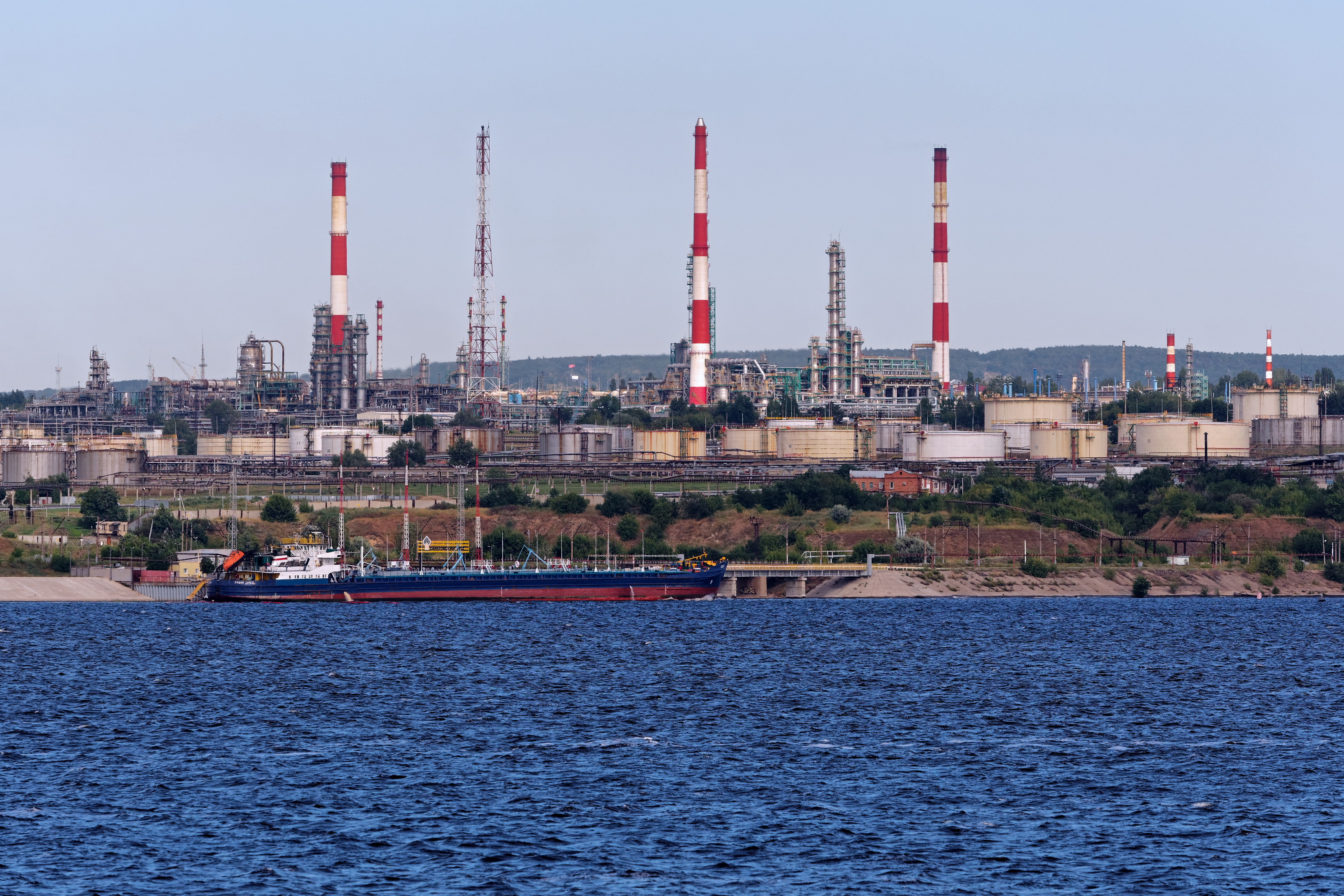
A refinery converts crude oil into usable petrol, diesel and aviation fuel. When that processing step stops, having ample crude does not immediately help motorists. That bottleneck is now extending across borders: reported Ukrainian drone attacks have reduced Russian refinery output, while drivers and governments in import-dependent parts of Central Asia face shortages, higher prices, subsidies and purchase limits.

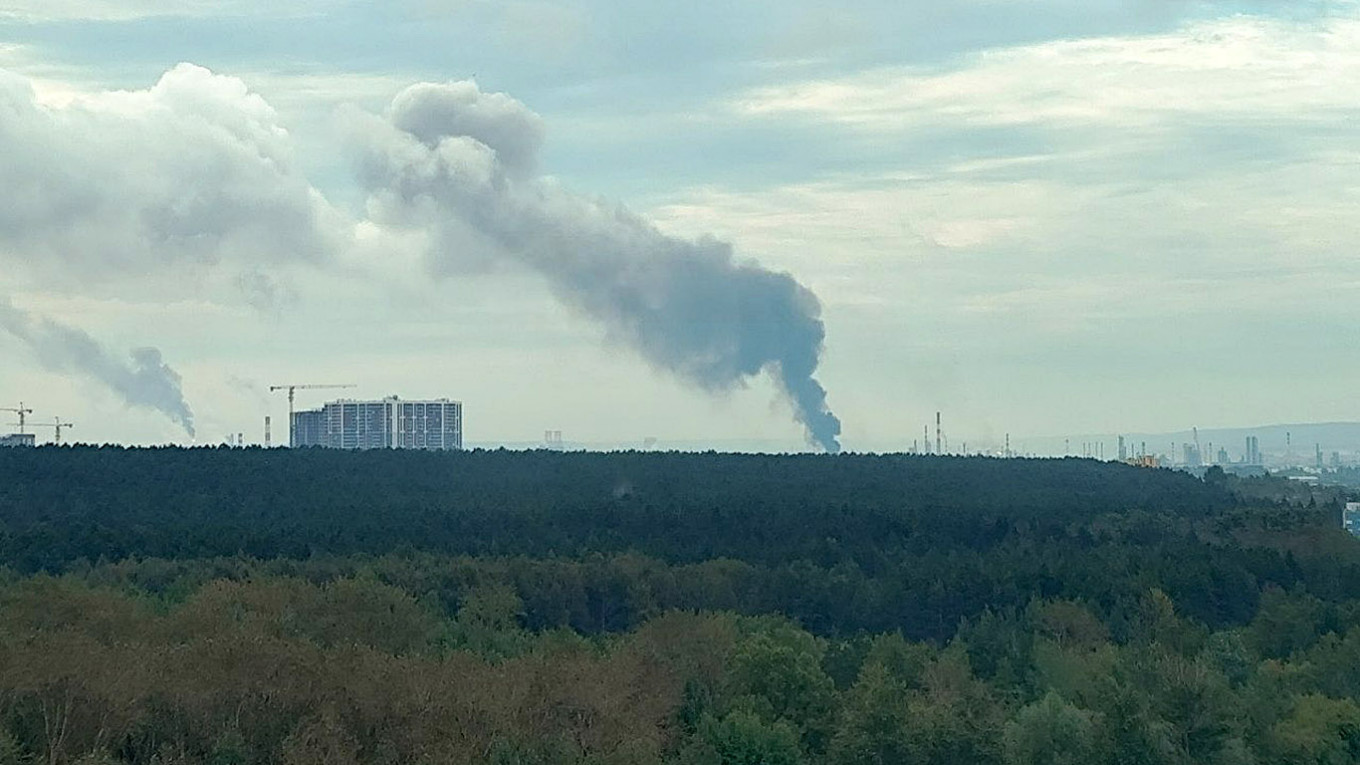
The disruption became more consequential after Russia’s Omsk refinery, a major supplier to the region, reportedly stopped operating when an early-July attack damaged a crude-distillation unit. The outage formed part of a broader decline: Russian refineries processed an estimated 3.6 million barrels of crude per day in July, roughly one-third below the seasonal norm and the lowest level since May 2002, according to EA Analytics data cited by Bloomberg.
A processing outage travels through the supply chain
The regional problem is less about the loss of one facility than the limited number of alternatives available when several parts of the Russian refining system are disrupted. Eighteen Russian refineries were reportedly targeted in July. Russia can redirect some unprocessed crude, but pipeline, port, storage and tanker limits constrain how much can be moved. Crude exports also do not replace the finished petrol that neighboring countries require.
That distinction is especially important for Kyrgyzstan and Tajikistan, which previously obtained as much as 90 percent of their petrol from Russia. Their supply networks were built around a nearby, established exporter. Replacing those volumes means finding refineries with spare production, negotiating new commercial terms and arranging rail or other transportation across multiple borders. The substitute fuel may therefore arrive later and at a higher delivered cost.
Specialized refinery repairs can also take longer than ordinary industrial maintenance. Equipment for oil refineries is not a delivery from an online shop or a supermarket, Kyrgyz energy expert Olzhas Baydildinov said in televised remarks. The deficit that has come is here for a long time. His warning does not establish how long any particular outage will last, but it identifies the central reliability constraint: large processing units cannot necessarily be restored with readily available components.
Governments are buying time, not eliminating the constraint
Kazakhstan banned petrol exports in late May as pressure spread through the regional market. Border guards reported preventing hundreds of attempts to move fuel into Russia, while UlusMedia reported that Kazakh fuel prices had risen 15.6 percent during the year. Those attempted movements indicate a price and availability imbalance, although they do not by themselves quantify the region’s total shortage.
Kyrgyzstan responded by regulating petrol prices, requesting supplies from other former Soviet countries and spending about $11.4 million on subsidies by the middle of the referenced month. Subsidies can protect motorists temporarily, but they transfer part of the higher fuel cost to the public budget. They also do not create additional refinery output.
Kyrgyz officials say modernization of the country’s largest refinery could eventually cover at least half of domestic demand, though no completion schedule was specified. That project illustrates the longer-term industrial response: domestic processing reduces dependence on one foreign supplier, but refinery construction and modernization require capital, equipment, commissioning and reliable crude deliveries.
Tajikistan has still less domestic cushioning. Local processing supplies only 0.5 percent of the petrol it consumes, and some stations imposed limits of 20 litres per car during shortages. Officials said reserves could cover at least 60 days, while acknowledging problems in both oil processing and logistics. Tajikistan has also pursued replacement supplies from Iran; one subsequent proposal covered 2.55 million tonnes of crude and petroleum products, but delivery timing, financing and transport arrangements remained unresolved.
Reserves provide a clock for diversification
Uzbekistan is in a stronger position because domestic production meets about two-thirds of its petrol requirement. Its government says reserves can last two or three months. Tajikistan’s 60-day reserve and Uzbekistan’s larger domestic share show why the same Russian disruption produces different consequences: resilience depends on local refining, stored inventory, transport access and the number of qualified suppliers.
The drone campaign also creates an industrial-readiness burden inside Russia. Protecting numerous refineries and associated energy assets across a wide geography requires air-defense resources, while repairing disrupted plants demands specialized labor and equipment. Available reporting does not establish the duration of each outage or the precise share attributable to individual attacks, so production data and government supply measures provide firmer indicators than competing wartime claims.
Central Asian governments are now using rationing, subsidies and reserves to bridge a processing shortfall they cannot quickly repair themselves. Those measures may preserve supply for weeks or months, but the durable response requires something slower and more expensive: additional refining capacity, diversified import routes and enough storage to withstand the next interruption.
| More aerospace and engineering stories, right in your MSN feed. Follow AMI on MSN |
By Stephen Wallace — Editor for AMI’s aerospace integration and unmanned mobility coverage, focused on drone manufacturing, VTOL systems, autonomous networks, and air-ground mobility links.