Ukrainian Adviser Says Interceptors Trail Reported 600-Kilometer-an-Hour Geran-5, Leaving Costlier Defenses
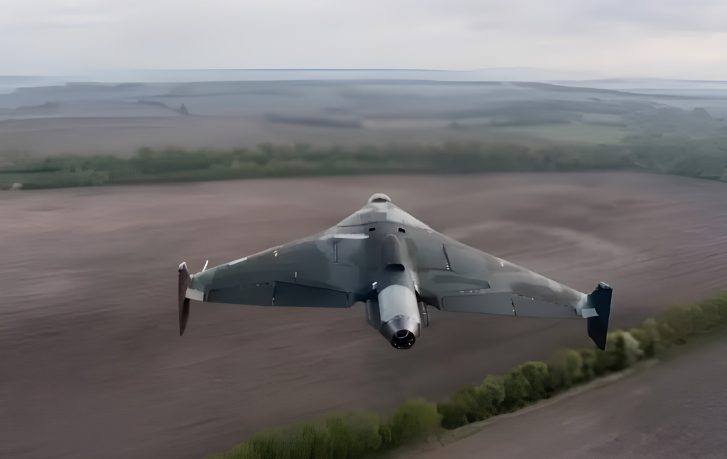
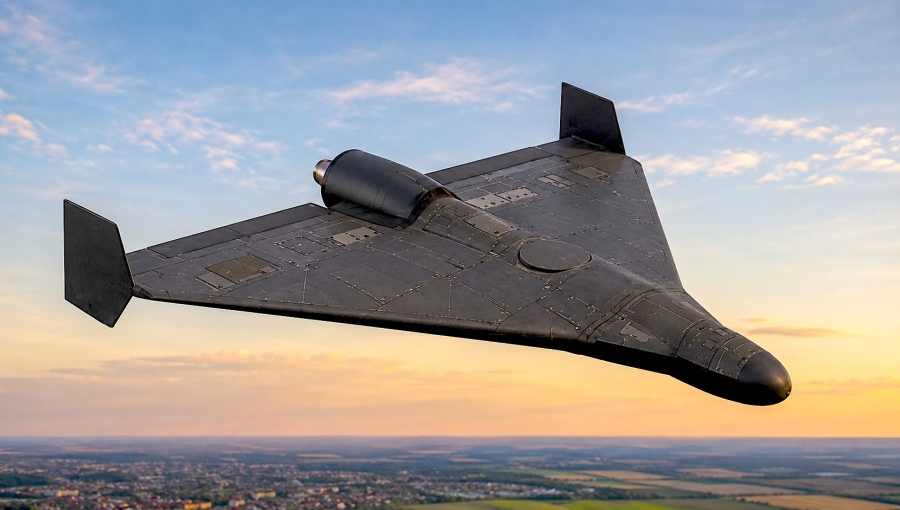
Ukraine’s effort to build an inexpensive defense against fast attack drones has run into a basic constraint: the interceptor must be substantially faster than its target. Ukrainian technology adviser Serhiy Beskrestnov said on August 29 that manufacturers had not yet delivered a reliable, scalable interceptor for Russia’s newest jet-powered Geran drones, including the Geran-5, which is reported to reach about 600 kilometers per hour.
The known numbers illustrate the gap. UV Military Cluster lists a maximum speed of 365 kilometers per hour for the wingless version of its Crazy interceptor and 310 kilometers per hour for the winged version. That may put the aircraft in the performance range of the reported 300-to-330-kilometer-per-hour Geran-3, but it falls well behind the Geran-4’s reported 450-to-500-kilometer-per-hour speed and the Geran-5’s approximately 600 kilometers per hour.
Matching the target’s speed is not enough
An interceptor cannot reliably solve the problem merely by reaching the same top speed as the aircraft it is pursuing. It needs additional performance to close distance and retain enough maneuvering margin during an interception. That requirement affects propulsion, control authority, structural strength, sensor integration and endurance at the same time.
Those demands also work against the original attraction of interceptor drones: low cost and high-volume manufacturing. A faster turbojet engine adds expense and places greater demands on fuel capacity, thermal management and airframe construction. Higher speed can require stronger structures and more responsive controls, while the complete system still needs reliable detection, communications and guidance. Each improvement pushes the design closer to the complexity of a conventional aircraft or missile.
Ukraine does have additional candidates. Defense Minister Yevhenii Khmara said four potential interceptors for jet-powered drones have undergone field testing, with further refinement and production in the thousands as the next objective. But a field-tested design is not automatically a mature, repeatable system that can be manufactured and supported at the required scale.
The distinction also applies to Alexa Spatium. Ukraine’s Ministry of Defense has accepted the jet-powered interceptor for its defense forces, describing a turbojet aircraft with a composite structure, high maneuverability and the ability to return for reuse if it does not complete a mission. Its maximum speed, range and operational ceiling were not disclosed, however, so the public specifications do not establish whether it closes the Geran-5 performance gap.
Production scale turns speed into a cost problem
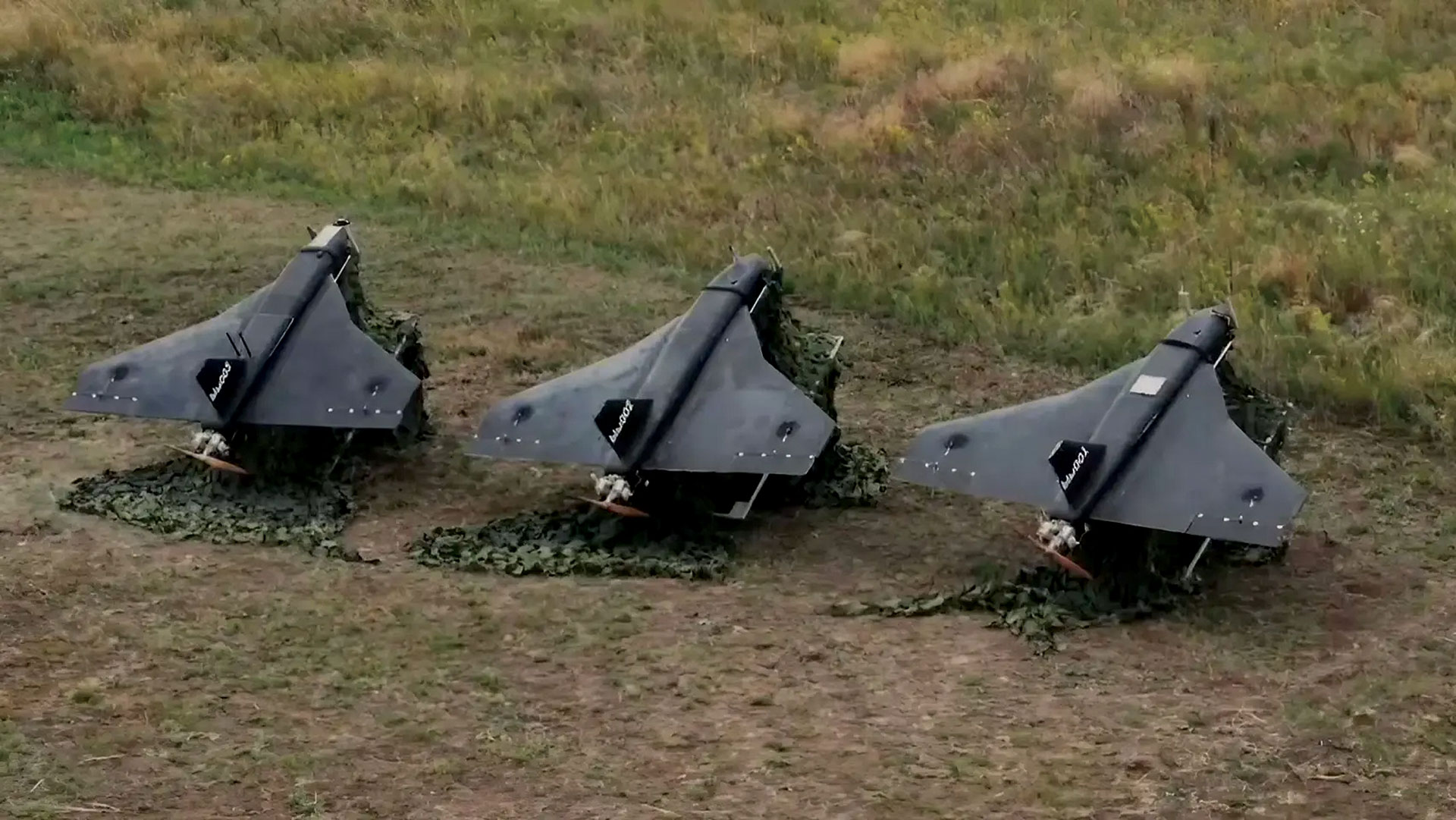
Beskrestnov’s assessment is more consequential because the challenge is no longer limited to a small experimental fleet. Ukraine’s Main Intelligence Directorate estimates that Russian industry is producing about 3,000 Geran-4 and Geran-5 aircraft per month, slightly more than the estimated 2,800 monthly Geran-2 output. Those are Ukrainian intelligence estimates, not independently verified factory totals, but they describe the scale against which an interceptor program must be judged.
A successful design therefore has to clear several gates simultaneously. It must be fast enough, dependable across its intended operating envelope, producible in large quantities and inexpensive enough that repeated use does not exhaust the defense budget or manufacturing base. A prototype that demonstrates speed but depends on scarce engines, labor-intensive composite work or costly sensors may not provide the scalable answer officials are seeking.
Until that combination is available, Ukraine remains dependent on more expensive conventional defenses against the fastest drones, including F-16 fighters carrying air-to-air missiles and portable ground-launched air-defense systems. That keeps capable but finite aircraft and missile inventories tied to a mission interceptor drones were supposed to handle more economically.
The same cost-versus-performance tension has direct relevance for the United States. The U.S. Army is seeking a new surface-to-air missile for small drones with a desired price below $150,000 each in a bulk purchase of 5,000. Its requirements emphasize extended range, quick response and compatibility with existing launchers and radars an acknowledgment that the interceptor itself is only one part of an integrated defense system.
Ukraine’s current candidates show why “build a faster drone” is not a complete answer. The publicly stated Crazy speed remains far below the reported Geran-5 figure, while Alexa Spatium’s undisclosed performance prevents a meaningful comparison. The next decisive milestone is not another prototype announcement, but evidence that one of the four tested candidates can combine a genuine speed margin with dependable operation and production measured in thousands.
| More aerospace and engineering stories, right in your MSN feed. Follow AMI on MSN |
By Stephen Wallace — Editor for AMI’s aerospace integration and unmanned mobility coverage, focused on drone manufacturing, VTOL systems, autonomous networks, and air-ground mobility links.