Germany Probes Airbus A380, Boeing 787 Incidents on Same Munich Runway
German aviation investigators are examining two mechanically different incidents involving large passenger aircraft on Munich Airport’s Runway 26L within roughly 48 hours. A Lufthansa Airbus A380 touched down short on August 17, 2026, two days after a Vietnam Airlines Boeing 787-9 experienced abnormal acceleration, a late rotation and a tail strike during takeoff. Both events are under formal investigation, but no common cause or connection has been established.
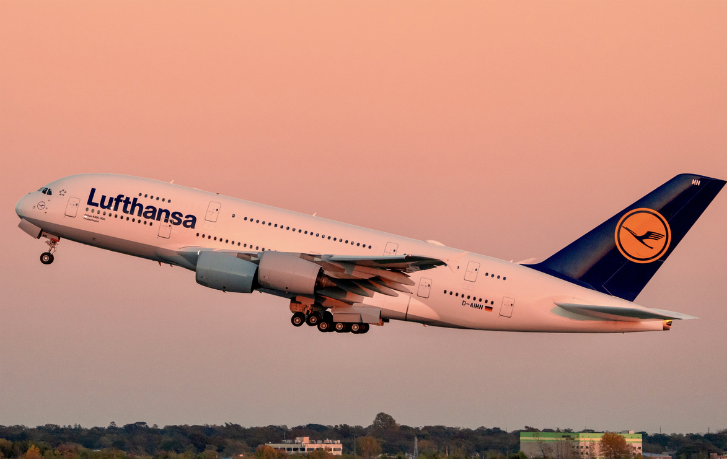
The later incident involved Lufthansa flight LH459, Airbus A380 D-AIML, arriving from San Francisco with 351 passengers. The aircraft struck approach lighting near the runway threshold, remained on its landing gear and stopped safely. All passengers were reported unhurt and disembarked normally. Germany’s Federal Bureau of Aircraft Accident Investigation, or BFU, sent investigators to the site and secured the flight-data and cockpit-voice recorders. An official international safety-investigation listing classifies the occurrence as a serious incident involving runway-threshold lights struck during landing.
The first question is why the A380 reached the ground before the paved runway. That cannot be answered merely from the location of the damage. Recorder data can establish the aircraft’s speed, flight path and configuration over the final portion of the approach, while cockpit audio and operational records can provide context for crew actions and communications. Investigators will still have to align those records with airport and environmental information before drawing conclusions. No explanation for the short touchdown has been announced.
The August 15 event presents a different investigative problem. Vietnam Airlines flight VN34, a Boeing 787-9 carrying 271 passengers and 16 crew members, was departing for Hanoi when its acceleration reportedly changed abnormally during the takeoff roll. Preliminary information indicates that the aircraft rotated late, struck its tail and passed beyond the paved runway end before becoming airborne.
The crew declared an emergency after receiving indications associated with a tail strike and tire pressure, then returned to Munich. Four of the eight main-gear tires were subsequently reported to have lost pressure, and the aircraft sustained damage to its aft underside and landing-gear wheels and tires. Everyone aboard was reported safe. The BFU recovered the 787’s flight recorders for analysis in Braunschweig.
For the 787 investigation, the central technical task is to reconstruct the relationship among acceleration, wheel behavior, aircraft speed and crew decisions during the takeoff roll. Tire marks attributed to the flight were found on the runway, but their presence does not by itself prove that a brake malfunction caused the reduced acceleration. Investigators must determine whether the tire and wheel damage preceded, accompanied or resulted from the takeoff sequence. The reported tire-pressure warning occurred after the aircraft became airborne, so it cannot independently establish what initiated the event.
The shared runway makes the two incidents notable, not automatically related. One aircraft contacted threshold-area lighting while landing; the other experienced a takeoff problem near the opposite end of its ground roll. They involved different aircraft manufacturers, operators, crews and phases of flight. There is currently no confirmed link involving runway infrastructure, airport systems, weather, aircraft systems or human factors.
That distinction matters because coincidence and common exposure require different evidence. A runway-related finding would need physical or recorded information connecting a specific condition to both events. An operational connection would likewise require more than the runway designation. Until investigators compare timelines, aircraft data and airport records, Runway 26L is a shared location not an identified cause.
The immediate passenger consequence was substantial disruption and concern across two long-haul flights carrying 638 passengers and crew in total, although no injuries were reported. The documented physical consequences were also different: damaged approach lighting in the A380 event and substantial aircraft damage in the 787 event. No runway closure, airport-wide operational change or corrective action has been announced in the available findings.
Germany is leading the 787 investigation, with Vietnam participating as the operator’s state and the U.S. National Transportation Safety Board participating as the state representing the aircraft and engine manufacturers. That framework allows aircraft, operator and recorder expertise to be combined without presuming where responsibility lies. The next meaningful development will be a preliminary investigative account that separates verified sequence from possible cause and establishes whether two incidents on Runway 26L were connected at all.
| More aerospace and engineering stories, right in your MSN feed. Follow AMI on MSN |
By Thomas Caldwell — AMI’s senior editor for mechanical and mobility engineering, covering vehicle electronics, systems integration, electrification, chassis systems, propulsion, and safety policy.