Ukraine Reports 60% Success Against Russia’s Near-Continuous Jet Drone Waves
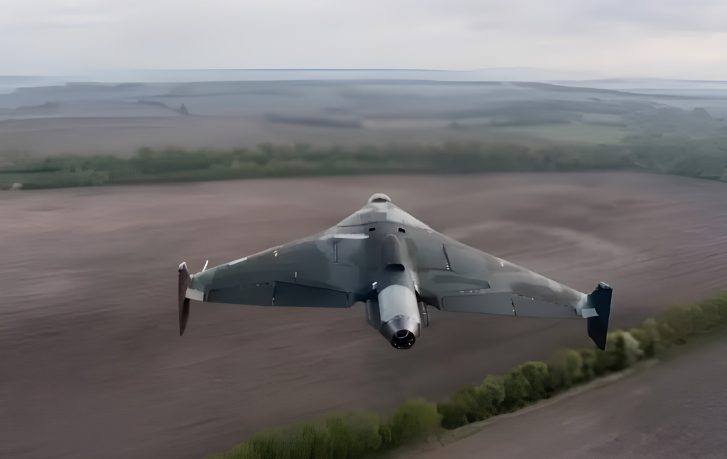
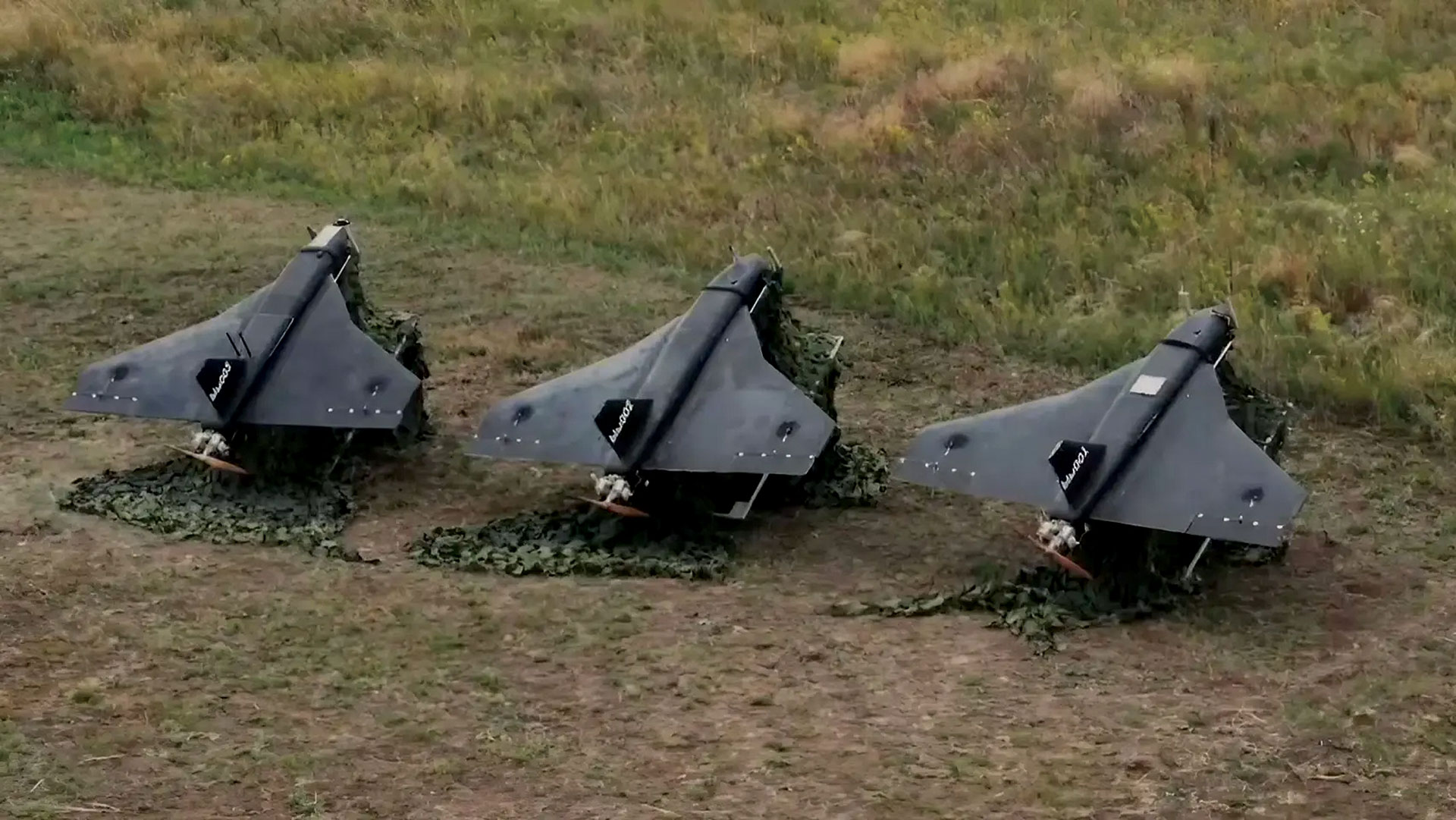
Ukraine’s high overall drone-interception figures now conceal a more difficult air-defense problem. Russia has shifted toward near-continuous launch waves while making faster, jet-powered aircraft half or more of the reported Shahed-type mix. Ukrainian Air Force spokesperson Yuriy Ihnat put effectiveness against those jet-powered drones at about 60%, well below the reported 90% to 95% against propeller-driven models.
The change was reported beginning Aug. 27 and continued through Sept. 1. Morning Air Force briefings recorded an average of about 188 drones per night from Aug. 27 through Aug. 31, compared with nearly 160 per night in July. That is a moderate increase within the same 6 p.m.-to-8 a.m. reporting window, not the dramatic volume jump that the near-continuous alerts might suggest.
Ukraine reported aggregate interception rates ranging from 79% to 96% across those five overnight periods. Those totals covered multiple drone types, however, including the S-8000 Banderol, and cannot be treated as a uniform measure of performance against every aircraft. Incomplete daytime reporting also prevents a reliable calculation of total launches over each full 24-hour period.
Speed changes the available response time
The propulsion shift matters because a jet engine buys speed, and speed compresses nearly every stage of an interception. Detection, classification, command decisions and interceptor positioning must all occur within a shorter period. A defense system that performs well against a slower propeller-driven aircraft may get fewer engagement opportunities against a faster target, even if sensors can still detect it.
That pressure is compounded when aircraft arrive with different speeds, altitudes and routes. “You have to react instantly,” Ihnat said while describing the need to respond to those changing characteristics. His statement identifies the control-system challenge at a high level: air defense is not confronting one repeatable flight profile but a changing mixture that demands faster decisions and sustained coordination.
The reported propulsion mix changed quickly. The Air Force said about one-third of the Shahed-type drones launched on Aug. 27 were jet-powered and put the share at half the following day. Its Aug. 30 and Aug. 31 briefings described most Shahed-type launches as jet-powered. Ihnat said Russia launched more than 2,800 jet-powered drones during August.
Continuous pressure is an endurance problem
Occasional large swarms create an intense peak-capacity test. Near-continuous waves impose a different requirement: crews, sensors, command networks and interceptors must remain available for longer periods. Even where the overnight aircraft count rises only moderately, distributing activity across more hours can extend alerts and reduce opportunities to reset equipment, reposition resources and rotate personnel.
That distinction helps explain why a strong aggregate interception percentage can coexist with prolonged disruption. Air-defense success does not immediately reopen businesses or end alerts when additional aircraft continue to appear. The reported waves and explosions disrupted operations in Kyiv and other Ukrainian cities, giving the change a civilian and economic effect beyond the number of drones that ultimately get through.
There is also a cost and production dimension. A faster target may require a faster interceptor or another air-defense asset with a suitable performance envelope. If cheaper counter-drone systems cannot consistently catch the jet-powered aircraft, defenders may have to draw more heavily on other finite resources. The supplied figures do not establish the cost of that shift, but the gap between roughly 60% and 90% to 95% effectiveness shows why interceptor availability and manufacturing scale matter.
New interceptors face a scaling test
Ukraine has been testing jet-powered interceptor drones, including the Alexa Spatium, while other developers have presented systems intended for the faster Shahed variants. Testing establishes whether a design can perform the mission under selected conditions; it does not by itself demonstrate reliable performance at the volume required for a sustained campaign.
The engineering path from prototype to dependable air-defense layer includes repeatable manufacturing, propulsion supply, sensor integration, command-and-control compatibility, operator training and field maintenance. Production must also keep pace with consumption. An interceptor that works but cannot be built, distributed and supported in sufficient numbers will have limited influence on an operation measured in thousands of incoming aircraft per month.
Russia’s launch infrastructure may support continued pressure. An Aug. 17 Institute for the Study of War assessment cited reporting that 59 new drone-launching rails had been built at 10 sites along Russia’s borders with Ukraine and Belarus. That does not prove a particular future launch rate, but it points to physical capacity relevant to sustained operations.
The next meaningful measure will not be the overall interception percentage alone. It will be whether Ukraine can raise its reported success against jet-powered drones while sustaining that performance through prolonged launch cycles. Until then, the 60% figure marks the operating gap that faster propulsion has opened inside otherwise strong aggregate results.
| More aerospace and engineering stories, right in your MSN feed. Follow AMI on MSN |
By Stephen Wallace — Editor for AMI’s aerospace integration and unmanned mobility coverage, focused on drone manufacturing, VTOL systems, autonomous networks, and air-ground mobility links.