Ukraine Tests Four Interceptors as Faster Geran Drones Raise Defense Costs
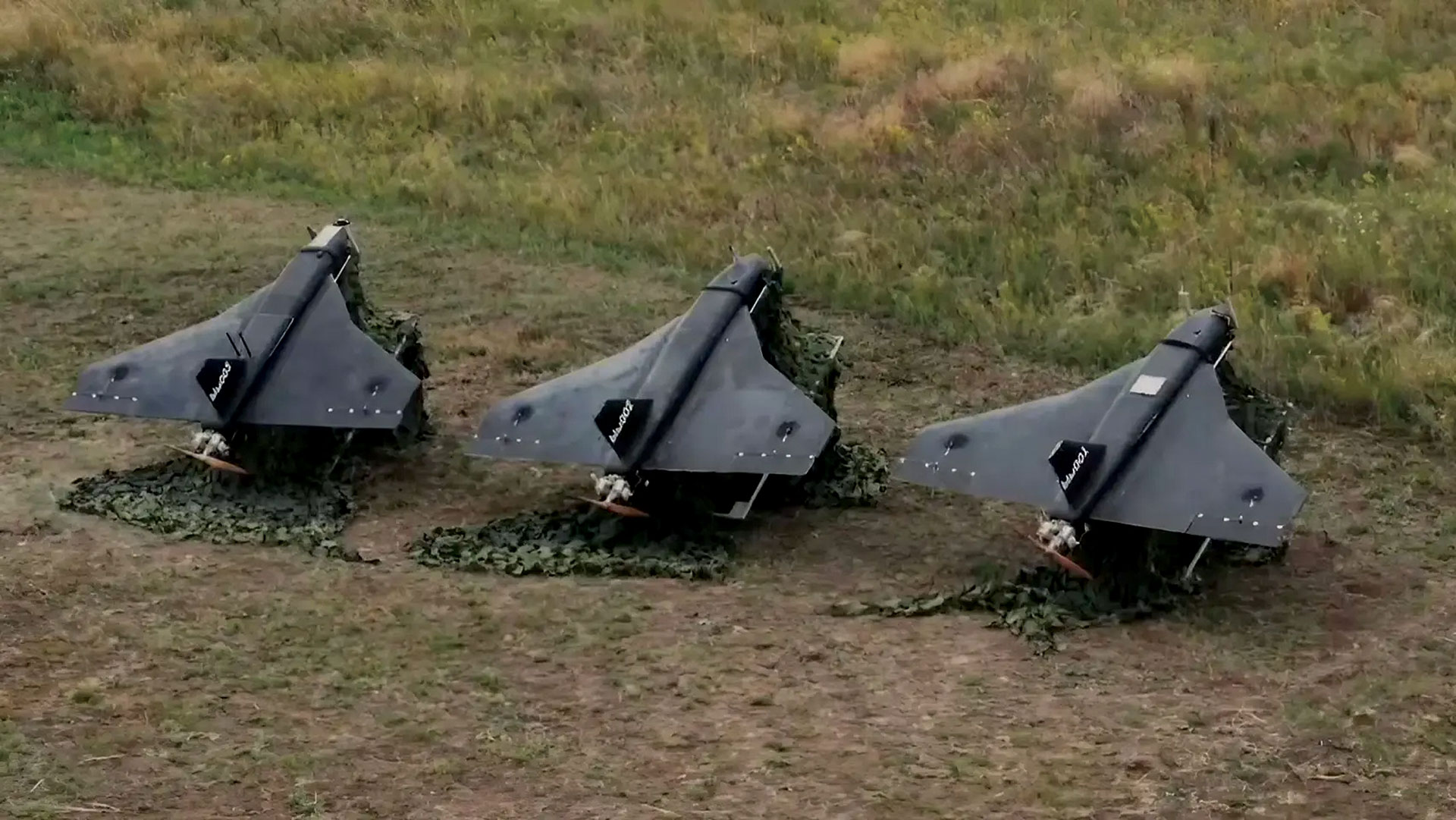
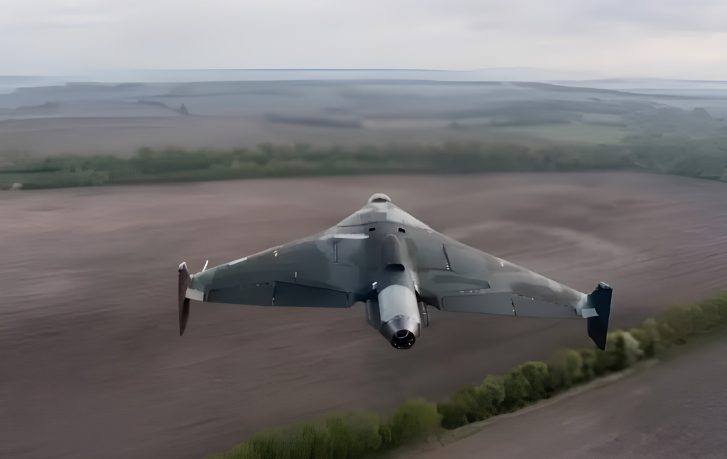
Ukraine’s inexpensive interceptor-drone layer faces a problem that top speed alone cannot solve. Russia is sharply increasing its use of jet-powered Geran drones, which fly more than three times faster than the propeller-driven Shahed-type aircraft that Ukraine’s low-cost interceptors were developed to catch. Ukraine has field-tested four potential interceptor systems, but it has not established that all four are ready for large-scale deployment.
The immediate risk is economic as well as technical. Conventional surface-to-air defenses and combat aircraft can engage fast aerial targets, but using those scarcer and more expensive assets more frequently would weaken the cost advantage Ukraine gained by assigning cheaper drones to mass interception. Higher Geran speeds now threaten to push more engagements back toward the costly end of the air-defense network.
Speed compresses the entire defensive cycle
Propeller-driven Shaheds are described as flying at about 185 kilometers per hour. The newer jet-powered Geran family including the Geran-3, Geran-4 and Geran-5 operates at substantially higher speeds. Oleksii Kolesnyk, director of Reactive Drones, said established air defenses can treat these aircraft much like other fast aerial targets. The difficult part is preserving the low-cost interceptor layer.
An interceptor needs more than a nominal maximum speed above that of its target. The supporting network must detect and classify the incoming drone, assign an interceptor, provide useful tracking data and guide the aircraft through the final phase. As target speed rises, every stage receives less time, while tracking errors and communication delays consume a larger share of the available window.
Former Ukrainian brigade commander Oleksandr Saienko summarized the constraint: The challenge is no longer only interception it is detecting, identifying, and assigning the target quickly enough. That puts greater emphasis on automation, distributed sensing and rapid data exchange, rather than simply installing a more powerful engine on an existing interceptor.
Terminal guidance is another boundary. Kolesnyk said interceptors designed around slower targets encounter tracking, guidance and final-homing limits at speeds approaching those associated with cruise missiles. His conclusion was direct: “New technical solutions will be needed.”
Twelve funded technologies, four field-tested systems
Ukraine is attempting to move those solutions from development into production. The state-backed Brave1 defense-technology cluster supported 12 technologies through the EU4UA Defence Tech grant program, offering grants of up to €150,000 each. The effort targeted interceptor drones capable of reaching at least 450 kilometers per hour.
Defense Minister Yevhenii Khmara said in late August that four potential interceptor systems had undergone field testing. The Alexa Spatium system was also reported to have entered service. Those are meaningful development milestones, but field testing and initial service entry are not equivalent to having thousands of reliable units, trained crews and supporting sensors distributed across an air-defense network.
Scaling will add manufacturing constraints. Compact turbojets are more expensive and harder to source than the electric or piston propulsion used by many smaller drones. Faster flight can also increase demands on airframe stiffness, control response, onboard processing and guidance quality. A successful design therefore must buy enough performance to catch the target without becoming so expensive or production-intensive that it loses its purpose as the affordable defensive option.
Reported Geran growth raises the production stakes
The scale of Russia’s shift remains based largely on Ukrainian reporting. Informal presidential adviser Serhii “Flash” Beskrestnov said Russia sent more than 2,500 jet-powered drones by August 30, compared with roughly 1,500 in July. Ukraine’s president separately said approximately 800 jet drones were launched over four days near the end of August.
Ukrainian military intelligence reportedly assessed that Russia had stopped producing the Geran-3 and shifted toward newer Geran-4 and Geran-5 variants at a rate of roughly 3,000 per month. These are attributed estimates, not independently established production totals, but the reported launch growth is sufficient to explain the urgency behind Ukraine’s grant funding and field trials.
The four tested interceptors could restore part of the speed margin, yet the decisive test will be whether complete systems not just fast airframes can be manufactured, integrated and operated at the required scale. Until that happens, every faster Geran that bypasses the inexpensive interceptor layer increases pressure to use a costly missile or combat aircraft instead.
| More aerospace and engineering stories, right in your MSN feed. Follow AMI on MSN |
By Stephen Wallace — Editor for AMI’s aerospace integration and unmanned mobility coverage, focused on drone manufacturing, VTOL systems, autonomous networks, and air-ground mobility links.