Germany Blames Russia After Explosive Drone Near Ukrainian Plane Disrupts Leipzig Airport
An explosive-carrying drone reached the vicinity of a Ukrainian cargo aircraft at Leipzig/Halle Airport, forcing runway closures and flight diversions before police deployed a robot to make the device safe. Germany attributed the August 4 incident to Russia on September 1, but Moscow denied involvement and the technical basis for Berlin’s conclusion has not been publicly detailed.
The immediate facts establish a serious airport-operations event regardless of that unresolved public dispute. According to an account of the initial response, an airport employee found the drone near the south runway with an unknown explosive device. Both runways were closed, several flights were diverted and an explosives-disposal robot was sent to examine the object. Police removed its detonator.
What investigators have established and what remains undisclosed
German Interior Minister Alexander Dobrindt said police investigations, patterns among offenses and intelligence findings established Russian responsibility for the attempted attack. He characterized the event as part of a wider pattern of hybrid activity rather than an isolated episode.
Russia’s embassy rejected the allegation as unsubstantiated, absurd, and contrary to common sense. The Kremlin likewise disputed Germany’s account and argued that officials had not presented supporting evidence publicly.
That distinction matters. Germany’s finding is an official attribution with diplomatic consequences, not an independently verifiable technical conclusion based on information currently available to the public. Authorities have not disclosed the drone’s design, origin, flight path or explosive type. They also have not released the detailed police or intelligence findings behind the attribution.
The gaps do not diminish the confirmed aviation consequence: an explosive device attached to an unmanned aircraft was found beside operating airport infrastructure and near a Ukrainian cargo plane. They do limit conclusions about how the drone arrived, how it was controlled and who deployed it. Suspicious drones had previously been reported over German military and industrial sites, but no connection between those sightings and the Leipzig device has been established.
One object created three competing airport demands
For airport operators, the incident compresses detection, explosive-ordnance safety and continuity of operations into the same decision. A suspicious unmanned aircraft cannot be treated solely as an airspace intrusion once explosives are discovered. Personnel must preserve distance, protect workers and passengers, support police access and manage aircraft movements while the object is assessed.
The robot deployment illustrates one part of that response. Remote handling can reduce direct exposure for bomb technicians, but examining and neutralizing a device near a runway still requires controlled access to an area normally organized around tightly scheduled aircraft movements. Closing both runways and diverting flights imposed an operational cost, yet those measures created the separation needed for the police response.
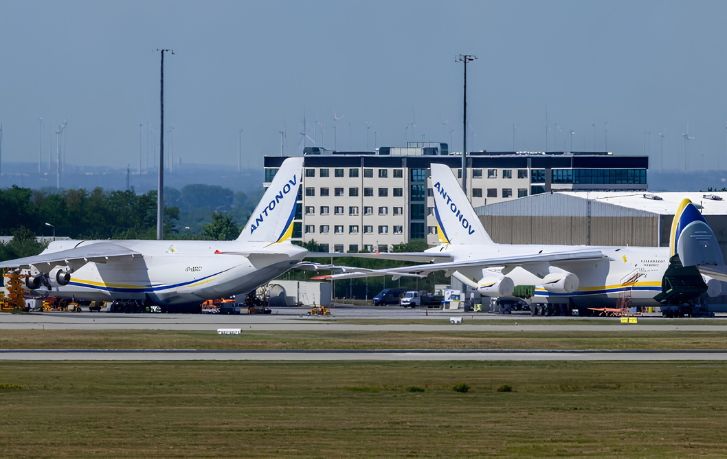
Leipzig/Halle’s role raises the consequence beyond an isolated delay. The airport is a major freight hub, serves as a base for Ukraine’s Antonov Airlines and is used by the German military and NATO allies to transport military goods. Civilian passenger movements, commercial freight and government-supported logistics therefore share the same broader operating environment.
That mixed mission complicates continuity planning. A closure intended to protect people and preserve an investigation can affect passenger itineraries, time-sensitive cargo and wider logistics commitments simultaneously. Counter-drone readiness at such an airport is consequently not just a matter of detecting an object. It also depends on safely classifying the hazard, coordinating with police and restoring operations without compromising evidence or exposing personnel.
Attribution and airport readiness remain separate questions
Germany responded to its attribution by announcing that it would close the Russian Consulate in Bonn later in September, cancel the lease for the Russia House cultural center in Berlin, tighten entry controls for Russian nationals and propose additional individuals for European Union sanctions. NATO Secretary-General Mark Rutte and European Commission President Ursula von der Leyen expressed solidarity with Germany. Russia continued to deny responsibility.
Those measures address state responsibility as assessed by German authorities. Airport readiness addresses a narrower but more immediate engineering and operational problem: what happens when a potentially hazardous drone is discovered close enough to aircraft movement areas that normal operations can no longer continue safely.
Leipzig/Halle provided a concrete answer on August 4. Runways closed, aircraft diverted and a police robot handled the device. What remains unanswered publicly particularly the drone’s origin, route and technical characteristics will determine how much more investigators can establish about the event and whether Germany releases a clearer basis for its disputed attribution.
| More aerospace and engineering stories, right in your MSN feed. Follow AMI on MSN |
By Stephen Wallace — Editor for AMI’s aerospace integration and unmanned mobility coverage, focused on drone manufacturing, VTOL systems, autonomous networks, and air-ground mobility links.