Navy’s $2.87 Billion GE Deal Supports Super Hornet and Growler Engines
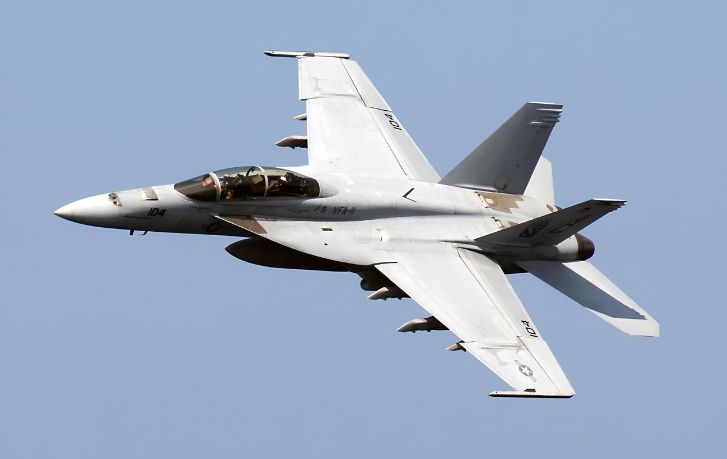
$2.8747 billion is the maximum value not the amount already spent of a new U.S. Navy agreement with General Electric covering engine-component support for F/A-18E/F Super Hornets and EA-18G Growlers. The five-year performance-based logistics contract runs through August 2031 and covers 17 components for the aircraft’s F414-GE-400 engines, according to the official contract announcement posted September 1.

The initial delivery order is worth $198.22 million. Of that amount, $148.67 million in fiscal 2026 funding was obligated when the award was made. That distinction matters for taxpayers: the nearly $2.9 billion figure establishes how much the Navy could order over the contract period, while later delivery orders and funding decisions will determine how closely actual spending approaches the ceiling.
What the Navy is buying
This is not primarily an order for complete new engines. It creates a logistics framework under which GE is expected to manage inventories, repair or replace covered hardware, and deliver ready-for-issue components under negotiated performance standards. A 2025 Navy procurement notice described 17 head-of-family stock numbers encompassing 44 F414-related items.
The listed categories included combustion liners, rotor components, case and vane assemblies, frames, bypass ducts, and nozzle assemblies. These are distributed across an engine rather than concentrated in one easily replaced module, so the practical value of the agreement lies in having serviceable hardware available when Navy maintenance organizations need it.
That availability affects more than an engine-parts storeroom. An aircraft waiting for an unavailable propulsion component can remain out of service even if its airframe, avionics and other systems are otherwise ready. Predictable component supply can therefore support aircraft availability, maintenance throughput and the number of carrier sorties the Navy can generate, although the contract alone does not guarantee any particular readiness rate.
The scale grows clearer at the aircraft level. Every Super Hornet and Growler uses two F414-GE-400 afterburning turbofans, each producing roughly 22,000 pounds of thrust. Supporting a twin-engine fleet requires not just replacement hardware but a continuing repair cycle, transportation capacity, inventory planning and enough serviceable components positioned to meet changing maintenance demand.
Why performance-based logistics matters
In a conventional parts transaction, the government buys specified quantities of individual items. A performance-based logistics arrangement instead emphasizes negotiated support outcomes, placing more responsibility on the supplier to coordinate inventory, repair and delivery. For the Navy, the potential benefit is better access to usable components without managing every transaction as an isolated purchase.
The tradeoff is a long, high-value commitment centered on the original engine supplier. Naval Supply Systems Command Weapon Systems Support awarded the requirement on a sole-source basis after soliciting one source and receiving one offer. That structure does not establish that the full ceiling will be spent, nor does it by itself demonstrate whether the Navy will obtain better value than it would through separate parts and repair orders. Performance standards, subsequent order volumes and delivered component availability will determine the operational return.
GE will perform 90 percent of the work in Lynn, Massachusetts, and 10 percent in Jacksonville, Florida. Subsequent orders are expected to use Navy working-capital funds as requirements emerge. That approach gives the service room to order against actual demand, but it also means the final public cost will develop over several budget years rather than being settled at award.
Engine support outlasts the production line
The timing reflects a broader fleet transition. The Navy ordered its final 17 Block III Super Hornets in March 2024 five single-seat F/A-18Es and 12 two-seat F/A-18Fs with deliveries scheduled from late 2026 into early 2027. Growler production is already complete.
Ending new-aircraft production does not end propulsion demand. Existing jets still require scheduled maintenance, unscheduled repairs and replacement components throughout their remaining service. Boeing’s Super Hornet Service Life Modification program is intended to increase airframe life from about 6,000 to 10,000 flight hours, but those additional hours are useful only when engines and other major systems remain supportable.
The contract can also be viewed as a logistical hedge while the Navy’s future carrier-aircraft plans develop, but it does not establish any specific delay involving a successor fighter. Its confirmed purpose is narrower and more immediate: maintaining access to covered F414 components through 2031. For an aircraft fleet moving beyond new production, that parts pipeline is what connects an extended airframe life on paper to an aircraft that can actually return to the flight line.
| More aerospace and engineering stories, right in your MSN feed. Follow AMI on MSN |
By David Whitaker — Associate editor for AMI’s aerospace and drone systems desk, translating flight systems, aircraft programs, spaceflight, and UAV developments into accessible technical stories.