Ukraine Says Novatek Drone Strike Near Saint Petersburg Adds to Russia’s Fuel Shortages
At least 21 strikes on Russian refineries were reported in August, while the country’s crude processing averaged just over 3.8 million barrels per day. Against that backdrop, Ukraine’s claim that drones struck the Novatek-Ust-Luga complex near Saint Petersburg on September 1 matters less as an isolated event than as another source of pressure on a fuel system already operating well below its typical summer processing range.
Ukrainian military intelligence said the joint operation hit parts of an oil-processing installation and other equipment, causing a large fire. The claimed damage has not been independently confirmed, and no Russian assessment, repair schedule or measured capacity loss was provided. It therefore remains unclear whether the September 1 event materially reduced output at the complex.
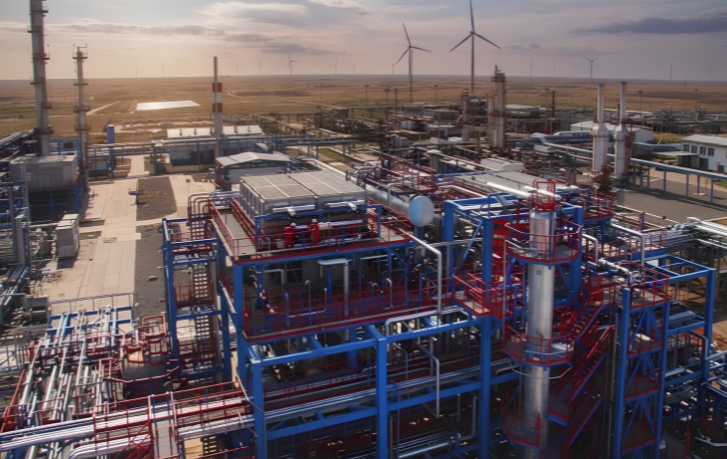
That uncertainty is important because Ust-Luga is not simply a conventional crude-oil refinery. According to Novatek’s description of the complex, it processes stable gas condensate into products including naphtha, jet fuel, gasoil and a ship-fuel component. It also supports product shipments from the Baltic port. A confirmed interruption could therefore affect processing and logistics, but the available information does not establish that either function was halted.
The larger number is 3.8 million barrels per day
Russia typically processes between 5.3 million and 5.5 million barrels of crude per day during the higher-demand summer period. The reported August average of just over 3.8 million barrels per day is roughly 1.5 million to 1.7 million barrels below that range. Gasoline production reportedly fell nearly 20% year over year during the first three weeks of August, while diesel output dropped by more than 23%.
Those figures indicate substantial system-level pressure, but they do not prove that drone attacks caused the entire decline. Refinery throughput can also be shaped by maintenance, domestic demand, export restrictions, storage constraints and other operational factors. The defensible conclusion is narrower: the record strike frequency occurred alongside sharply reduced processing and fuel production, making each additional claimed disruption more consequential than it would be in a system with ample spare capacity.
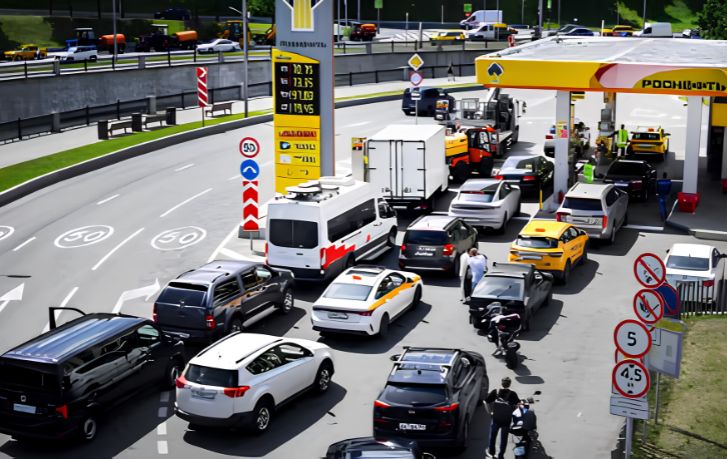
The consequences are already visible beyond industrial statistics. Fuel shortages returned to parts of Russia in August, with controls on sales reported in at least 10 regions. Gasoline was unavailable at some stations in the Moscow region, while motorists elsewhere faced restrictions and queues. Russian authorities had also taken steps to increase domestic availability, including export controls and product imports.
Repeated drone operations create a readiness burden
The August count at least 21 refinery strikes and the highest monthly total reported to that point shows the scale of the campaign more clearly than any single damage claim. Repetition matters for autonomous-aircraft operations because defenders must maintain surveillance, interception and emergency-response readiness across time and geography, even when individual aircraft cause limited or unverified damage.
That is a broad readiness and resource-allocation problem, not evidence that every drone penetrated defenses or disabled its target. The information available provides no drone specifications, launch details or reliable measure of how many aircraft reached their intended facilities. It supports an assessment of sustained pressure, but not a technical judgment about the performance of a particular unmanned system or air-defense network.
The campaign’s frequency also suggests an ability to keep fielding unmanned aircraft over repeated operations. It does not, however, disclose production rates, unit costs, component supply or fleet availability. Strike counts are evidence of operational tempo, not a complete measure of drone-industry capacity.
Refining constraints can spread beyond the refinery gate
Lower refinery runs create a balancing problem. Crude that is not processed must be exported, stored or left unproduced. Rystad Energy estimates that Russian refinery throughput could average around 4 million barrels per day from July through December, nearly 30% below the 2016-2023 seasonal average. That forecast incorporates multiple disruptions and constraints rather than attributing the decline solely to drones.
Separate July data from the Centre for Research on Energy and Clean Air found that Russian oil-product export loadings had fallen to 4.7 million tonnes, their lowest level on record and less than half the July 2025 level. With domestic gasoline and diesel needs competing against exports, reduced processing can propagate into retail availability, shipping volumes and crude-storage decisions.
The next fact needed is not another claim about flames at Ust-Luga. It is a verified operating update showing whether processing or shipments stopped, how much capacity was unavailable and for how long. Until then, the September 1 strike remains an attributed event inside a confirmed broader pattern: at least 21 August attacks coincided with crude processing falling to just over 3.8 million barrels per day and motorists encountering real fuel shortages.
| More aerospace and engineering stories, right in your MSN feed. Follow AMI on MSN |
By Stephen Wallace — Editor for AMI’s aerospace integration and unmanned mobility coverage, focused on drone manufacturing, VTOL systems, autonomous networks, and air-ground mobility links.