Ukrainian Drone Attacks Push Russia to Delay Refinery Maintenance for Fuel Output
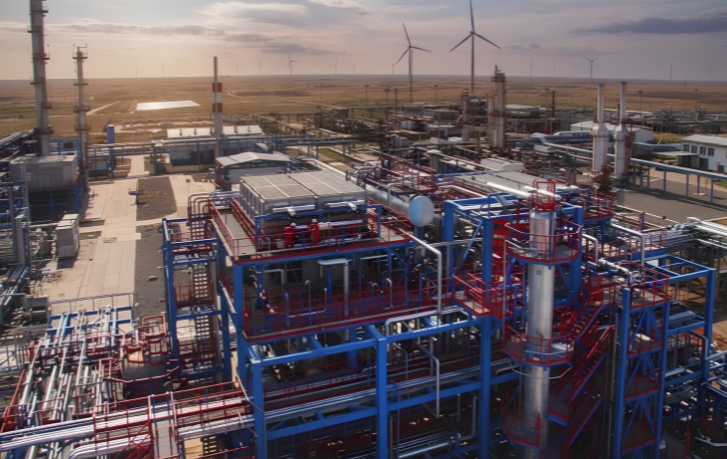
Russia is trying to keep its refineries producing more fuel at the same time that drone attacks are increasing the need for protection and repairs. That tension has prompted operators to postpone some planned summer maintenance while spending more on physical security, according to Deputy Prime Minister Alexander Novak.
Speaking at the Eastern Economic Forum in Vladivostok on September 2, Novak said approximately 10% of Russian refinery facilities were undergoing repairs. He said other maintenance had been moved to later periods to maximize current production and supplies to the domestic market. Novak also said protection work had intensified in recent months as Ukrainian attacks on refineries and other energy facilities increased.
The schedule change is more than an administrative adjustment. Refineries are tightly interconnected industrial systems in which inspections, equipment servicing and larger turnaround projects are coordinated around planned shutdowns. Deferring work can preserve near-term output, but it does not eliminate the maintenance requirement. It transfers that work into a later operating window, potentially concentrating labor, replacement components and shutdown demand.
Security spending now competes with maintenance resources
Novak said oil companies were financing refinery protection themselves and coordinating with Russia’s Defense Ministry and National Guard. He also said design institutes and refinery operators were developing measures around a more stringent threat model. The effort reportedly includes physical barriers such as metal frameworks and protective netting, although the effectiveness of those defenses has not been independently established.
This creates a second resource burden beyond repairing damaged equipment. Operators must fund protective construction, engineering reviews and security coordination while continuing ordinary mechanical-integrity work. These expenses do not directly increase refining capacity; their purpose is to improve the likelihood that existing capacity remains available.
Novak argued that maintaining refinery operations justified the significant cost. He also compared Russian safeguards favorably with protection used at facilities in the United Arab Emirates. That comparison remains his assessment, not a verified performance result. Without operating data, standardized tests or independently documented outcomes, it is not possible to determine how much availability the added protection actually purchases.
Delayed work creates a compressed maintenance calendar
The immediate production logic is clear: a refinery undergoing planned maintenance cannot deliver its full output. Moving discretionary work can therefore help preserve gasoline, diesel and other products during a period of disruption. The industrial limitation is that some refinery tasks are governed by equipment condition, inspection intervals and safety obligations rather than fuel demand alone.
Maintenance programs typically distinguish between work that can be rescheduled and work that cannot responsibly be extended beyond defined limits. An industry discussion of U.S. Gulf Coast refinery turnarounds notes that inspection intervals associated with pressure vessels, piping and tanks can carry legal and insurance consequences, making indefinite deferral untenable. Those U.S. requirements do not establish the rules at Russian plants, but they illustrate the broader refinery-management constraint: delayed work eventually returns as required scope.
If multiple operators move planned projects into the same later period, the challenge shifts from immediate lost output to maintenance capacity. Refineries may need specialized contractors, inspection personnel, engineering support and components at overlapping times. The available information does not establish whether Russia faces shortages in any of those areas, but schedule compression is a practical risk whenever substantial turnaround work is moved rather than canceled.
Recent throughput data explains the urgency
The decision comes against evidence of unusually weak refining activity. EA Analytics data cited by Bloomberg estimated that Russian refineries processed 3.6 million barrels of crude per day in July, about one-third below the seasonal norm and the lowest level since May 2002. Russian refineries had averaged between 5.3 million and 5.6 million barrels per day during the same part of the year from 2020 through 2025.
A separate July analysis from the Centre for Research on Energy and Clean Air said Russian oil-product export loadings fell 23% from June to 4.7 million metric tons, their lowest level on record. The organization said depressed refinery throughput and priority for domestic demand contributed to the decline. Those figures provide context for the effort to preserve domestic output, but they do not isolate how much of the reduction resulted from drone attacks, maintenance, operating decisions or other constraints.
Russia’s response therefore combines two forms of industrial readiness: attempting to protect facilities from further disruption and shifting maintenance to keep more equipment online now. The unresolved issue is how long that balance can hold. With about 10% of refinery facilities already under repair, postponed summer work still has to find space in a later calendar increasingly shaped by security costs, repair demand and the continuing requirement to keep domestic fuel moving.
| More aerospace and engineering stories, right in your MSN feed. Follow AMI on MSN |
By Stephen Wallace — Editor for AMI’s aerospace integration and unmanned mobility coverage, focused on drone manufacturing, VTOL systems, autonomous networks, and air-ground mobility links.