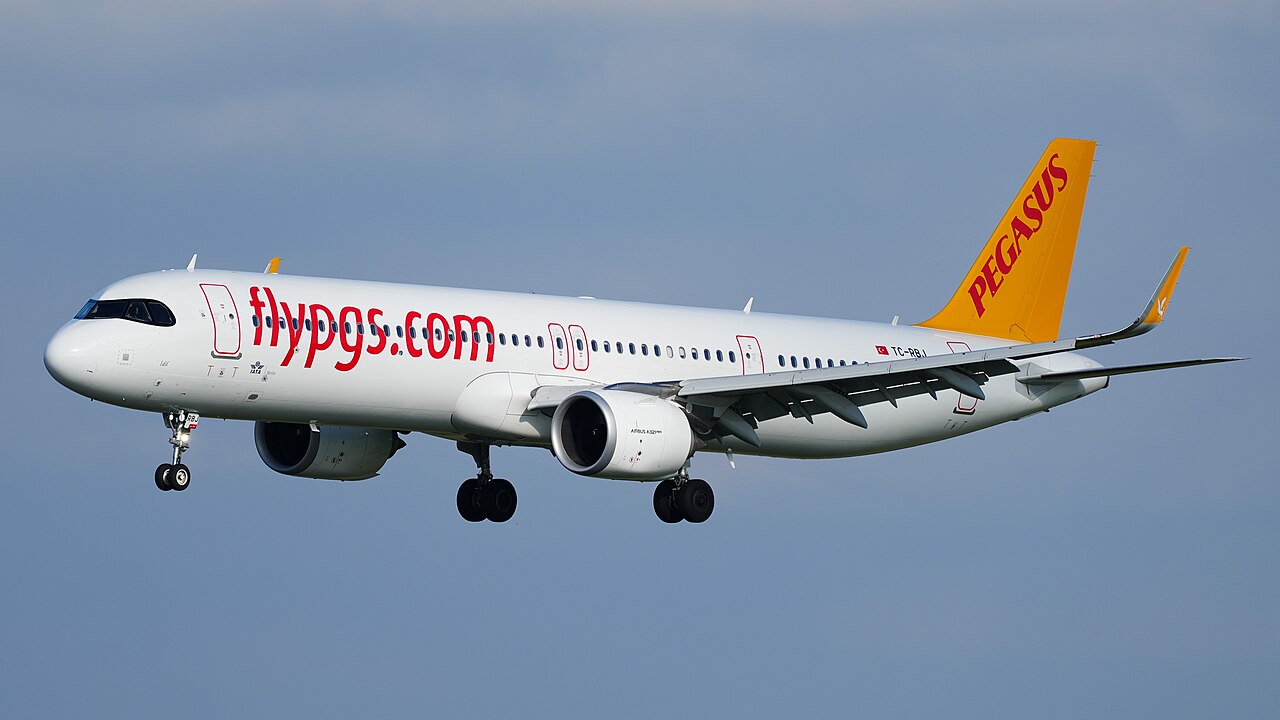
Pegasus Cancels or Reverses Three Moscow Flights, Stranding Passengers for Hours
Pegasus Airlines canceled or reversed at least three Moscow-bound flights overnight into September 2, leaving some passengers waiting more than 10 hours and sending two aircraft back to Turkey. Temporary restrictions at Moscow’s Vnukovo airport coincided with reports of drones approaching the capital, but Pegasus has not confirmed that the drone activity or a warning from Ukrainian President Volodymyr Zelensky drove each decision.

The clearest documented cases involve three different departure points. Flight PC1456 from Bodrum was canceled during boarding, with the change appearing on the airport departure board. Passengers said they received hotel accommodation but no confirmed replacement time. Post reported that PC1576 from Antalya turned back after reaching Lithuanian airspace, while flight-tracking data listed the September 1 PC1521 service from Izmir as returning to Izmir.
Pegasus attributed some cancellations to “technical and operational reasons.” It had not announced a blanket suspension of Russian service as of Wednesday: some routes remained listed as operating, while others awaited new dates. Reports that dozens of Turkey-Russia flights were canceled provide broader context, but that total has not been independently established here.
A temporary closure can disrupt flights far beyond the airport
The operational problem is not limited to whether an airport is open when an aircraft leaves Turkey. An international dispatcher must consider whether the destination and planned alternates are likely to remain available through arrival, whether delays can be absorbed within fuel and crew constraints, and whether the aircraft can complete its next scheduled assignment.
Short-notice restrictions make those inputs unstable. Vnukovo’s overnight limits reportedly ended at about 6 a.m., but reopening an airport does not instantly restore an airline schedule. Aircraft may be out of position, crews may be approaching duty limits, gates may be occupied and delayed passengers may need to be reassigned. A restriction lasting hours can therefore produce cancellations and turnbacks after the restriction itself ends.
That helps explain why a carrier can keep Russia service generally active while treating individual flights differently. Cancellation before departure avoids committing an aircraft to an uncertain destination. A return after takeoff is more disruptive because it consumes fuel, crew time and aircraft availability, but conditions or operating assessments can change while the flight is underway. The available information does not establish which specific factor controlled either Pegasus turnback.
Drone alerts create an irregular dispatch problem
Intermittent drone activity differs operationally from a published, long-duration airspace closure. Airlines can plan around a stable closure by removing routes or building new schedules. Repeated alerts and temporary airport restrictions instead create a moving boundary between an available destination and one that may stop accepting arrivals with little notice.
Moscow Mayor Sergey Sobyanin claimed that air defenses intercepted 14 drones approaching Moscow beginning at about 7 a.m. That remains an attributed Russian official figure, not an independently verified result. For civilian aviation planning, however, the immediate consequence is the restriction imposed by authorities rather than the final number of drones claimed intercepted. Even an alert that produces no confirmed airport damage can interrupt arrivals and departures.
The scale and frequency of drone operations also matter more to airline readiness than any single reported event. If restrictions become recurrent, carriers may need more schedule margin, additional recovery capacity and closer monitoring of aircraft and crew positioning. Those measures carry costs even when most flights ultimately operate normally. The burden is therefore cumulative: irregular interruptions can erode schedule reliability without producing a formal suspension of the route.
A warning is not the same as a binding closure
Hours before the disruption, Zelensky warned airlines, insurers and governments that expanding Ukrainian drone operations would make Russian airspace increasingly risky. Ukraine subsequently notified the International Civil Aviation Organization that it considered Russian airspace unsafe for civilian traffic.
That notification did not itself close Russian airspace or create a binding global prohibition. Pegasus also did not say Zelensky’s statement caused its cancellations or turnbacks. Timing alone cannot establish that connection, particularly when airport restrictions were imposed during the same period and the airline cited broader technical and operational reasons.
The unresolved question is whether this was a short-lived schedule disturbance or the start of a more persistent reliability problem for airlines still serving Russia. Pegasus continuing some services shows that no blanket withdrawal had occurred. Yet the three confirmed disruptions demonstrate the practical limit of that continuity: an airline can keep a route on sale while passengers still face cancellation, a midflight return or an open-ended wait whenever airport access changes faster than the schedule can recover.
| More aerospace and engineering stories, right in your MSN feed. Follow AMI on MSN |
By Stephen Wallace — Editor for AMI’s aerospace integration and unmanned mobility coverage, focused on drone manufacturing, VTOL systems, autonomous networks, and air-ground mobility links.