Ukrainian Drone Strikes Push Russia to Kondensat; Annual Output Covers Under Two Days
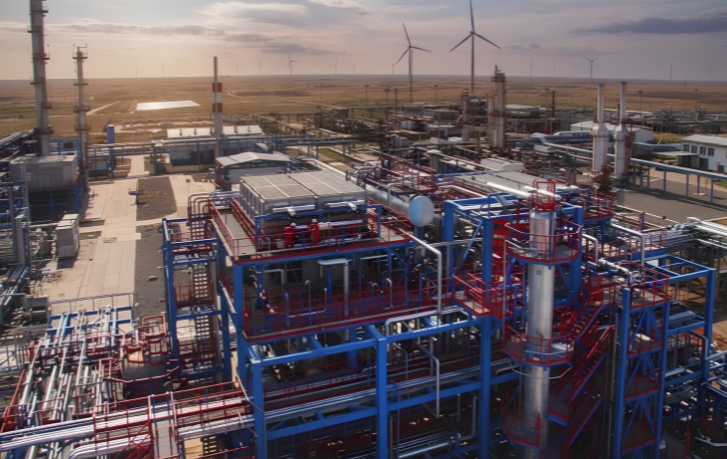
Russia is turning to Kazakhstan’s Kondensat refinery for additional fuel processing after Ukrainian drone strikes disrupted Russian refineries, but the scale comparison is stark. Kondensat can produce up to 200,000 metric tons of gasoline in an entire year; Russia’s summer gasoline consumption can reach 120,000 tons in one day.
Kazakhstan Energy Minister Erlan Akkenzhenov said on August 25 that the privately connected refinery in western Kazakhstan would process Russian crude, with approximately 70 percent of the resulting petroleum products planned for the Russian market. The foreign-processing arrangement follows Russian restrictions on gasoline exports and consumption-rationing measures attributed to tightening fuel supplies.
An annual number against daily demand
At its stated annual gasoline capacity, Kondensat averages roughly 548 metric tons per day across a full year. Compared with peak Russian summer consumption of 120,000 tons per day, that equals about 0.46 percent of one day’s demand for every day the refinery operates at that rate. Put another way, its maximum annual gasoline output amounts to less than two days of Russia’s peak summer use.
That comparison is a capacity illustration, not a forecast of actual deliveries. The 200,000-ton figure is Kondensat’s maximum gasoline capacity, while the 70 percent return plan applies to the broader mix of petroleum products. The available figures do not establish how much gasoline, rather than diesel or other products, Russia will receive. Kondensat also operated below its designed capacity for many years, so maximum nameplate output should not be treated as guaranteed production.
The arrangement can still provide limited local or logistical relief. Refining Russian crude outside Russia converts feedstock into usable products when domestic processing is constrained, and even modest volumes can help cover specific shortages. But foreign toll refining does not recreate the throughput of a large national refinery network. It adds a comparatively narrow stream of finished fuel while introducing another border, another processing operator and additional transport requirements.
Central Asia has little spare capacity
Scaling the model across neighboring countries would require refineries with unused equipment, available feedstock, suitable product configurations and transport capacity. Analysts cited in connection with the arrangement said Kazakhstan, Uzbekistan and other prospective suppliers do not have enough surplus refining capacity to transform Russia’s fuel balance.
That limitation reflects the region’s own supply pressure. Central Asian markets have historically relied on comparatively inexpensive Russian petroleum products. A Carnegie Endowment analysis found that Russia’s 2026 export restrictions affected neighboring markets, where countries were already contending with refinery constraints, feedstock shortages and limited alternative transport routes. Sending more output back toward Russia can therefore compete with domestic requirements rather than draw from a deep reserve of unused capacity.
Kondensat is not a wholly new pathway. It began processing Russian crude supplied through Tatneft’s TANECO refinery in 2024. Kazakhstan and Russia also established a framework that year permitting gasoline made at Kondensat from Russian crude to be exported to Russia, and the agreement was extended in 2025. The latest step expands the importance of an existing industrial connection rather than creating a large replacement refining system from scratch.
Sanctions narrow the supplier pool
Capacity is only one constraint. Kazakhstan’s state-owned refineries reportedly declined to assist because of concern about Western sanctions. Tatneft itself was sanctioned by the United Kingdom in 2025. Prospective processors must weigh Russian business against possible restrictions and broader trade or investment consequences, even when a particular transaction has not been identified as prohibited.
Those risks make a broad network of willing processors harder to assemble. They also complicate financing for upgrades that would be needed to produce materially larger volumes. Refinery expansion requires sustained capital, equipment, maintenance support and confidence that crude and finished products can continue moving through the relevant markets.
The wider supply data reinforces the pressure behind the request. The Centre for Research on Energy and Clean Air reported that Russian oil-product export loadings fell to 4.7 million tons in July 2026, down 23 percent from June and less than half the July 2025 level. That does not by itself measure domestic gasoline availability or prove the effect of any individual strike, but it shows a refining and export system operating with substantially lower product volumes.
Kondensat can contribute fuel, yet its annual gasoline ceiling remains smaller than two days of Russia’s peak summer demand. Repeating the arrangement at meaningful scale would require spare refineries, secure logistics and partners willing to accept sanctions and investment risk three resources Central Asia does not appear to have in abundance.
| More aerospace and engineering stories, right in your MSN feed. Follow AMI on MSN |
By Stephen Wallace — Editor for AMI’s aerospace integration and unmanned mobility coverage, focused on drone manufacturing, VTOL systems, autonomous networks, and air-ground mobility links.