Moscow Airports Record 43 Cancellations, 329 Delays After Ukraine’s Drone Warning
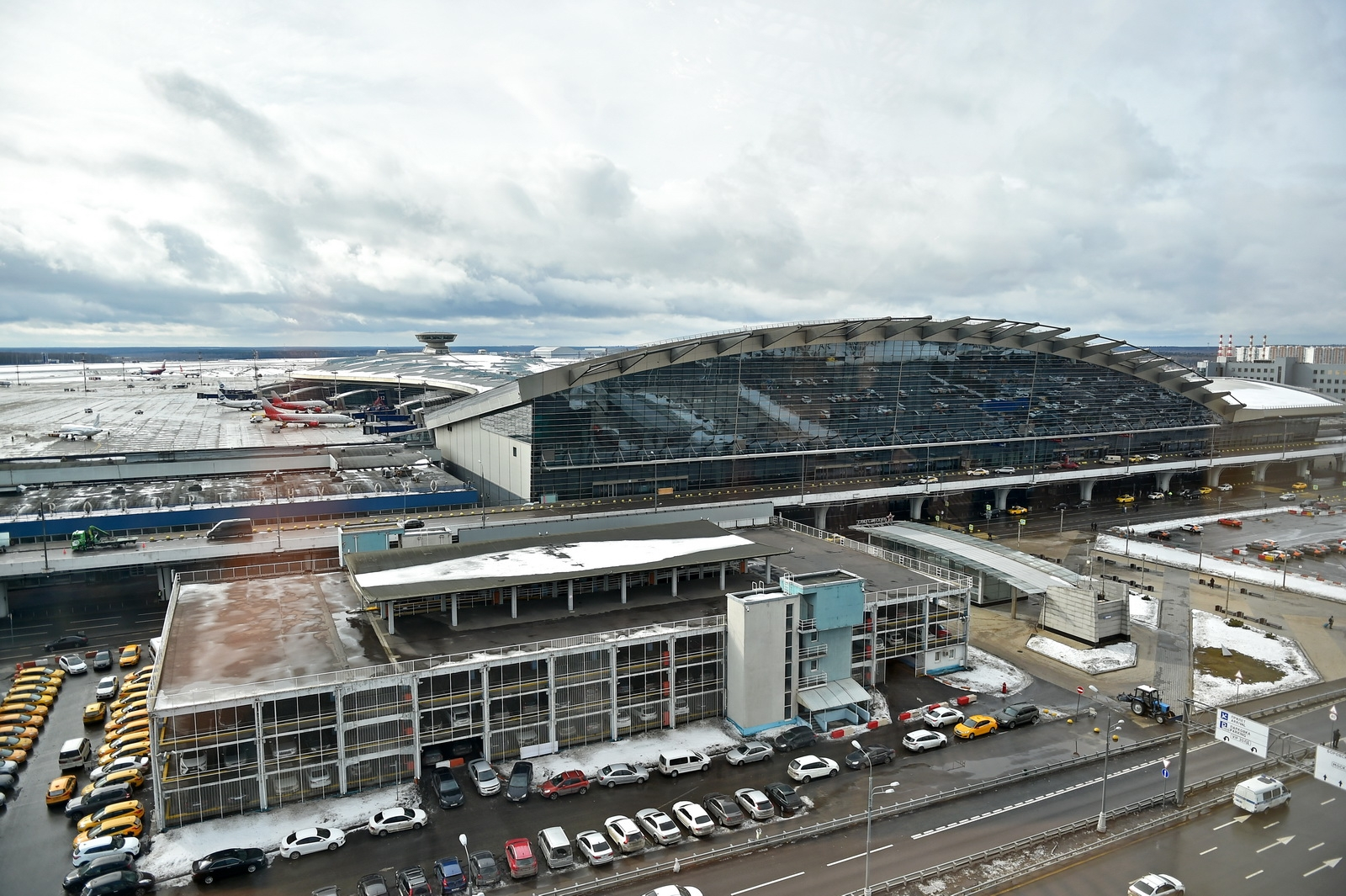
Russia promised to prevent significant disruption to civil aviation, but Moscow’s Sheremetyevo and Vnukovo airports recorded a combined 43 cancellations and 329 delays on Wednesday, September 2. The figures followed a Ukrainian warning to airlines and insurers about drone-related risks in Russian airspace, creating a direct tension between official assurances of continuity and the reliability passengers actually encountered.

Flightradar24 listed 21 cancellations and 235 delays at Sheremetyevo International Airport, alongside 22 cancellations and 94 delays at Vnukovo. Those numbers establish substantial disruption, but they do not prove that drone activity caused every affected flight. Weather, aircraft availability, crew scheduling and other operational issues were not ruled in or out by the available information.
Warnings can disrupt flights without closing an airport
Drone-related aviation risk does not have to produce a prolonged airport shutdown to weaken a schedule. Temporary airspace controls, changing departure windows and additional security coordination can all reduce the predictability on which airline dispatch systems depend. A restriction lasting less than a scheduled flight may still have consequences for several later services if aircraft or crews arrive out of sequence.
That distinction matters at a large airport system. An airport may remain open while airlines hold departures, revise routes, delay inbound flights or protect aircraft from becoming stranded away from their planned operating bases. Once those decisions accumulate, the visible passenger consequence can be delays and cancellations even without a single continuous closure.
Russian Transport Minister Andrei Nikitin said authorities were improving flight-safety and airport-security requirements and coordinating with the Ministry of Defence and National Guard. He said they would not allow “any significant disruption” to civil aviation. That coordination is itself an indication of the wider operational burden: civil transport authorities must reconcile airline schedules with security decisions that can change faster than a conventional airport plan.
Airlines make their own risk decisions
Government assurances are only one input into an airline’s operating decision. Carriers also consider their internal safety assessments, insurer requirements, route alternatives, crew limitations and the likelihood that an aircraft can complete its planned rotation. Those assessments can produce different responses among airlines using the same broad region.
Pegasus Airlines canceled some Russian services for what it described only as “technical and operational” reasons. Vnukovo said the carrier canceled six arriving and six departing flights there on Tuesday. Pegasus said overnight services into Wednesday were affected, while its other continuing flights were operating as scheduled. The airline did not directly attribute its cancellations to drone operations.
Flydubai took a more flexible position, saying it was monitoring conditions and adjusting schedules and routes when necessary. It warned that delays and diversions could occur as its teams reassessed operational requirements. That approach illustrates another way airspace uncertainty reaches passengers: a carrier can continue flying while accepting less schedule certainty and preparing to change a route or destination.
The exposure is not uniform across global aviation. European and U.S. airlines already avoid Russian airspace because of the war, while carriers from China, Turkey, the United Arab Emirates and other Gulf states continue to use it. The immediate operational pressure therefore falls more heavily on airlines that still serve Russian airports or use Russian airspace for other routes.
Drone scale increases the planning burden
Ukraine formally notified the International Civil Aviation Organization that it considered Russian airspace unsafe for commercial aviation. Separately, aviation-risk firm Osprey Flight Solutions assessed that daily attacks deeper inside Russia were likely through 2026, including near Moscow and St. Petersburg. That is a private forecast rather than an official finding, but it identifies the planning problem facing carriers: repeated warnings can turn a temporary disruption into a continuing dispatch and network-reliability concern.
The key uncertainty remains attribution. The airport totals cannot be treated as a precise count of drone-caused disruption, and neither Pegasus nor flydubai directly linked its adjustments to drone activity. What is confirmed is narrower but still consequential: two major Moscow airports accumulated 43 cancellations and 329 delays while authorities coordinated aviation security and international airlines reassessed Russian operations.
For passengers and crews, the practical boundary between an open airport and a dependable airport is increasingly important. Moscow’s airports continued handling traffic, but Wednesday’s figures show that operational continuity alone does not guarantee schedule reliability when airspace warnings, security controls and airline risk decisions are changing at the same time.
| More aerospace and engineering stories, right in your MSN feed. Follow AMI on MSN |
By Stephen Wallace — Editor for AMI’s aerospace integration and unmanned mobility coverage, focused on drone manufacturing, VTOL systems, autonomous networks, and air-ground mobility links.