Air New Zealand Improves Punctuality as Engine Shortages Help Drive NZ$336 Million Loss
Air New Zealand ran a more punctual operation in the second half of its 2026 financial year, yet the airline still recorded a NZ$336 million loss before tax. The reversal from a NZ$164 million pre-tax profit in FY2025 shows the tension between improving day-to-day service and absorbing the longer financial tail of aircraft-engine shortages.

On-time performance increased from 77.5% in 2025 to 84.0% in the second half of FY2026. Financially, however, limited availability of Rolls-Royce Trent 1000 and Pratt & Whitney PW1100 engines affected capacity, leasing requirements and fleet utilization. Air New Zealand estimated the engine disruption reduced its annual result by approximately NZ$190 million, net of compensation. Its net loss after tax was NZ$242 million.
Unavailable engines create costs on both sides of the schedule
An aircraft that cannot fly because its engine is unavailable does not simply remove ticket revenue. The airline continues carrying fixed costs associated with its fleet, employees, infrastructure and systems. Protecting the schedule can then require leased aircraft or engines, while substitutions and reduced fleet utilization introduce further operating inefficiencies.
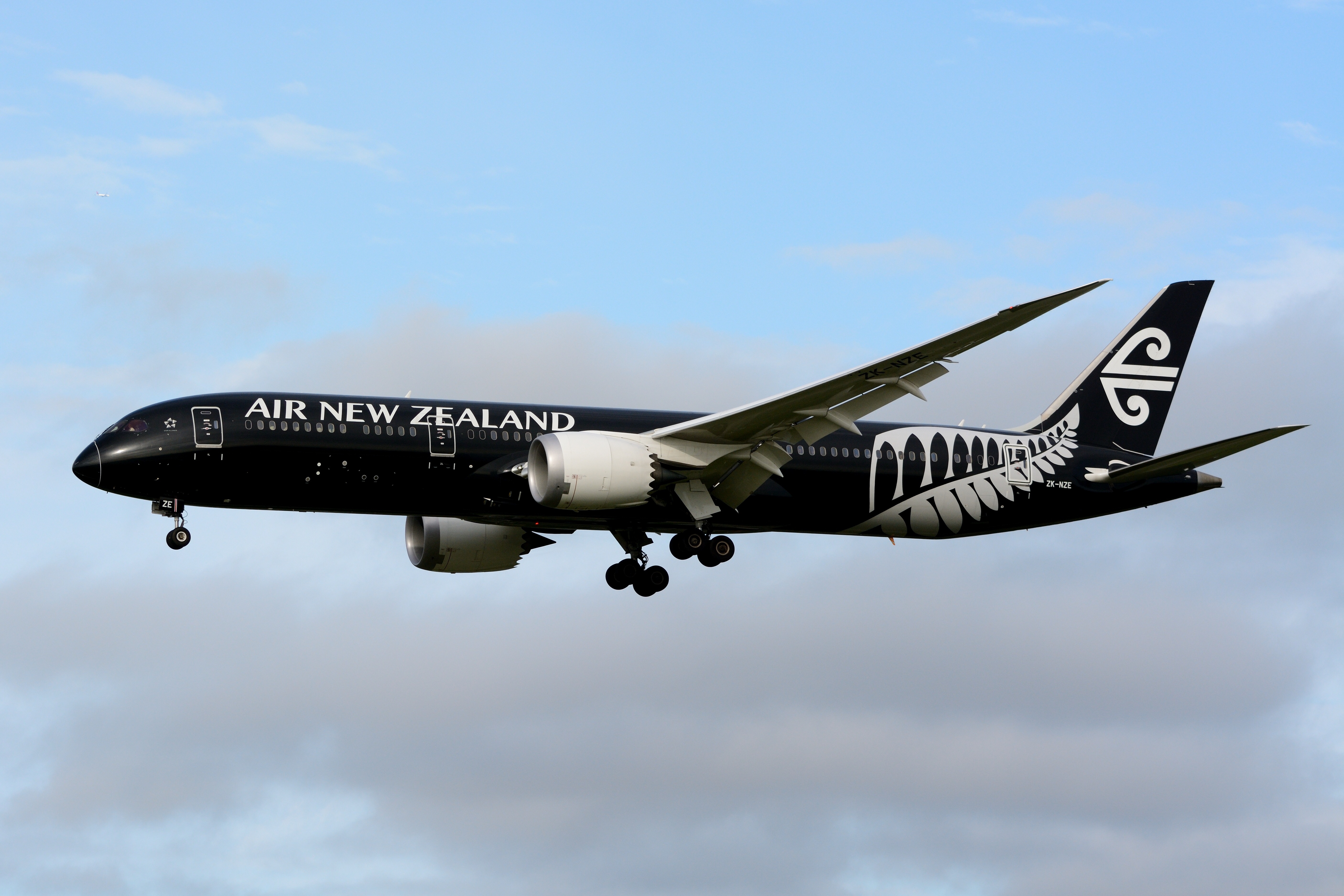
At the peak of the disruption, five of Air New Zealand’s 14 Boeing 787 aircraft and six Airbus A320neo-family jets were grounded. The Trent 1000 constraints primarily affected widebody Boeing 787 availability, while PW1100 constraints affected narrowbody aircraft used across domestic, trans-Tasman and Pacific services. Air New Zealand did not divide its NZ$190 million estimate between the two engine programs.
That distinction matters because the loss of a long-haul widebody and the loss of a short-haul narrowbody remove different kinds of capacity. In both cases, however, the airline has fewer opportunities to spread fixed costs across productive flights. Temporary leases can protect network reliability, but they also add expenses that may remain after the original aircraft returns.
Air New Zealand said all 14 of its existing Boeing 787-9 aircraft had left long-term storage by the beginning of FY2027. Narrowbody availability was also improving, although the last affected aircraft was not expected to return until calendar 2027. The airline nevertheless expects residual engine-related disruption to cost NZ$70 million to NZ$90 million in FY2027, reflecting continuing lease commitments and aircraft that may not be fully utilized.
A peak maintenance cycle added another pressure
Maintenance expenditure rose by NZ$139 million, excluding foreign-exchange effects. The increase reflected the timing of lifecycle maintenance and additional work on leased engines during what Air New Zealand characterized as a peak maintenance year.
The maintenance increase should not be treated as wholly separate from the NZ$190 million engine-disruption estimate and simply added on top. Leased-engine maintenance forms part of the broader propulsion-availability problem, creating potential overlap between the disclosed figures. The numbers nevertheless show how an engine shortage can expand from a component-supply constraint into a fleet-wide cost and capacity issue.
Air New Zealand expects FY2027 maintenance spending to decline by NZ$50 million to NZ$100 million from the FY2026 peak. That would provide relief, but it is a forecast rather than a completed saving, and some temporary engine and aircraft costs will take longer to leave the system.
Fuel overwhelmed part of the operational progress
Engine availability was not the airline’s only major constraint. Average jet fuel cost approximately US$111 per barrel in FY2026, up from US$88 in FY2025. Air New Zealand estimated that fuel-market volatility added NZ$328 million to its expected second-half bill, reduced to NZ$205 million after hedging.
Fare adjustments and capacity reductions mitigated part of that increase. The airline estimated the remaining effect on its pre-tax result at approximately NZ$135 million. Passenger revenue still rose 4.8% to NZ$6.1 billion as network capacity increased 1.3%, but overall operating costs climbed 11.8% and non-fuel operating costs rose 10%, or about NZ$438 million.
Aviation-system charges added another layer. Charges incurred by Air New Zealand and its customers totaled approximately NZ$1.2 billion, NZ$142 million more than in FY2025. About NZ$720 million appeared in the airline’s financial statements, an increase of roughly NZ$83 million.
The stronger punctuality result indicates that schedule planning, operational processes and returning aircraft produced a measurable service improvement despite those pressures. It does not mean the associated costs disappeared at the same speed. Air New Zealand has withheld FY2027 earnings guidance because fuel prices remain uncertain. Its next test is whether lower maintenance spending and improving engine availability can unwind temporary leases and inefficiencies faster than fuel and aviation-system costs rise.
| More aerospace and engineering stories, right in your MSN feed. Follow AMI on MSN |
By Thomas Caldwell — AMI’s senior editor for mechanical and mobility engineering, covering vehicle electronics, systems integration, electrification, chassis systems, propulsion, and safety policy.