Ukrainian Drone Threats Triggered 993 Russian Airport Shutdowns in August
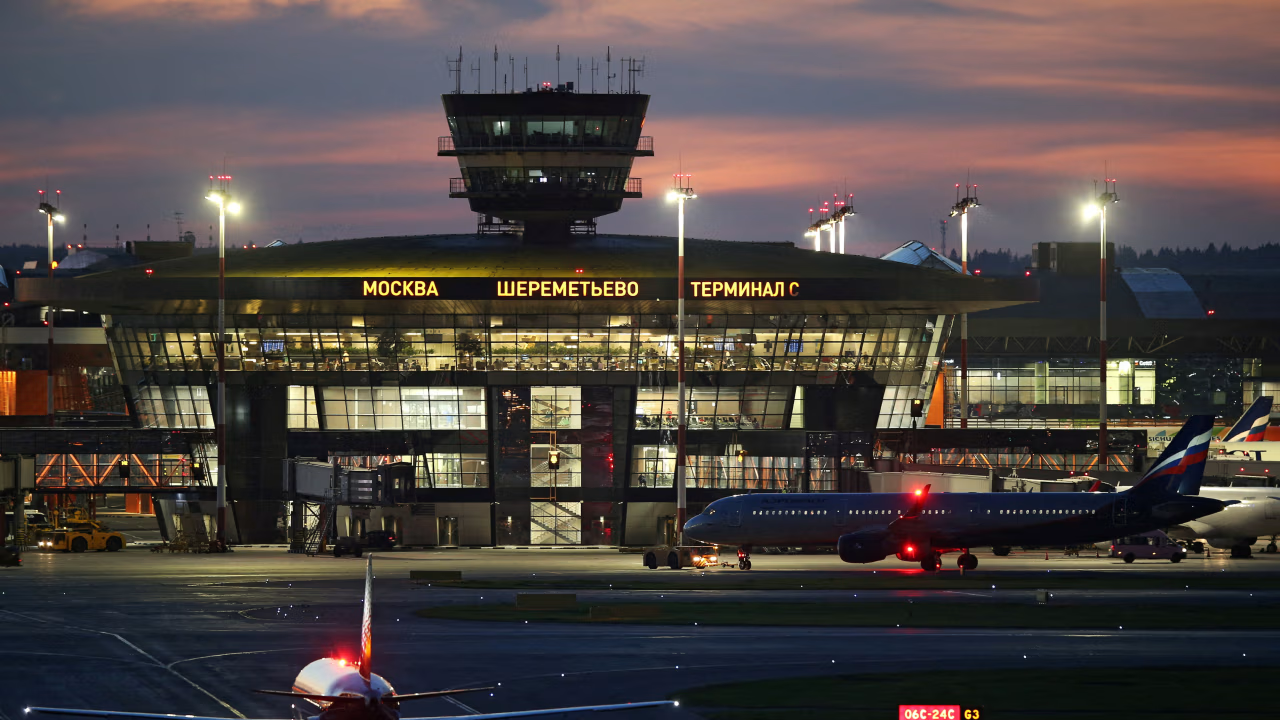
Russian airports recorded 993 temporary shutdowns during August 2026 as recurring Ukrainian drone threats interrupted civilian flight operations. The count, compiled by aviation-security firm Osprey Flight Solutions and reported by The Wall Street Journal, was more than one-third higher than July’s total. It represents shutdown instances not 993 different airports and illustrates how frequently security restrictions are now interrupting Russia’s largely open civilian airspace.

Temporary restrictions affected an average of 32 airports per day, including major hubs around Moscow and St. Petersburg. Osprey counted 2,182 shutdowns from June through August, already exceeding the 1,923 recorded during all of 2025. Flightradar24 data also showed Russian airlines canceling an average of 86 flights per day from September 1 through September 3, extending the operational pressure beyond the August count.
Why temporary restrictions create systemwide disruption
An airport closure does not need to last all day to generate consequences well beyond its perimeter. Suspending arrivals and departures leaves inbound aircraft holding, diverting or returning to their departure points. Aircraft already on the ground may miss later assignments, while crews can approach duty-time limits and passengers lose connections. When restrictions affect multiple hubs repeatedly, airlines have less spare capacity to restore schedules between interruptions.
That helps explain the tension inside Russia’s current operating model. The country has kept most civilian airspace open, with broader restrictions concentrated nearer Ukraine, rather than adopting the nationwide commercial closure that Ukraine imposed after Russia launched its full-scale invasion in February 2022. Keeping flights moving preserves connectivity, but it also requires airport operators, air-traffic services and airlines to respond repeatedly as local conditions change.
The challenge is not limited to detecting an uncrewed aircraft. Drone activity can overlap with air-defense interceptions and widespread interference affecting satellite navigation. Each element creates a separate airspace-management demand: authorities must evaluate a threat, separate civilian traffic from defensive activity and determine whether navigation conditions still support safe operations. Those decisions must then be distributed quickly enough for controllers, airports and airline operations centers to act on the same information.
Satellite-navigation interference is particularly consequential for modern airline operations because crews and dispatchers use satellite-derived positioning throughout a flight. Aircraft retain other navigation resources and operating procedures, but interference can reduce predictability and increase workload. Its presence does not prove that any particular cancellation or shutdown was caused by navigation problems; it adds another variable that operators must assess alongside drone alerts and defensive activity.
Large estimates require careful attribution
Osprey estimated that approximately 16,000 Ukrainian drones entered Russian airspace in August, compared with more than 13,000 in July and about 11,000 in June. Earlier monthly estimates for 2026 generally ranged from 4,000 to 5,000, apart from 7,544 in May. These are the security firm’s estimates, not official confirmed totals, and reliable independent counts are difficult during an active conflict.
The shutdown figures nevertheless provide a more direct measure of the civilian consequence than estimated drone volume alone. One alert can affect several airports, while numerous detected aircraft might produce only limited disruption depending on timing and the restrictions authorities impose. The relationship between drone estimates and airport closures is therefore not one-to-one.
International concern is increasingly focused on that overlap between military systems and passenger aviation. Ukraine has raised Russian-airspace risks with the International Civil Aviation Organization while stating that it does not target civilian aircraft. ICAO is also updating conflict-zone aviation guidance covering drones, long-range weapons, advanced air defenses and radio-frequency interference with satellite navigation. The organization has emphasized threat-information sharing and coordination between military and civilian authorities.
Russian Transport Minister Andrei Nikitin said authorities were improving flight-safety and airport-security requirements and would not allow significant disruption. Airlines must still make their own operational assessments: Pegasus Airlines turned several Moscow-bound aircraft around and canceled dozens of Russia services amid the disruption.
August’s 993 shutdowns show the practical limit of describing airspace as simply open or closed. Russia’s network remains open in the broad regulatory sense, but airlines and passengers are encountering a fragmented operating environment in which access to individual airports can disappear repeatedly and with little scheduling margin.
| More aerospace and engineering stories, right in your MSN feed. Follow AMI on MSN |
By Stephen Wallace — Editor for AMI’s aerospace integration and unmanned mobility coverage, focused on drone manufacturing, VTOL systems, autonomous networks, and air-ground mobility links.