Chinese Naval Gun Study Estimates One Shell Damages 1.19 Drones
One fragmentation shell damaged an estimated 1.19 drones in a modeled 30-drone swarm. That number captures both the appeal and the limitation of a Chinese research team’s proposal to use large naval guns as a lower-cost layer of warship defense: one shell could affect multiple targets, but the calculation does not show that artillery can reliably stop a mass attack.

Wang Lei and his team modeled a large-caliber explosive shell against 30 Russian-made Lancet-3 loitering munitions. Each drone was described as weighing roughly 26 pounds and carrying up to 6.6 pounds. The work appeared in the peer-reviewed Chinese journal Command Control & Simulation, but its results came from modeling rather than a live interception test.
How the model reached 1.19 drones per shell
The shell was treated as an area-effect interceptor. Instead of requiring a direct hit, it would detonate near the incoming aircraft and spread fragments through the surrounding airspace. The modeled shell generated 2,000 fragments, of which 1,589 were estimated to be capable of causing damage.
With a fragment cloud extending 49 feet around the explosion, the researchers calculated that each drone had a 3.95% probability of being damaged by one shell. Applying that probability across 30 drones produced the estimate of approximately 1.19 damaged aircraft per round.
That is not the same as demonstrating that one shell will consistently remove more than one drone from an approaching group. “Damage” also does not automatically establish that a target was destroyed or prevented from completing its mission. The figure is an expected result across the modeled scenario, subject to its assumptions about fragment distribution, burst placement and the aircraft involved.
The shell is only the final link in a longer chain
A fragmentation cloud helps only if it forms in the correct place at the correct time. The proposed system therefore depends on sensors detecting the drones, tracking systems maintaining their positions, fire-control equipment calculating an interception and programmable fuses triggering each shell near the targets.
Those dependencies make the concept a controls and integration problem as much as an ammunition problem. A shell can carry many fragments, but the defensive system must first convert sensor data into a sufficiently accurate firing and burst solution. The modeled fragment count cannot compensate for an interception chain that detects too late, loses tracks or places the burst outside the useful area.
The researchers consequently did not present artillery as a complete defense. They proposed combining naval guns with electronic warfare and laser systems. Each layer could address a different part of the cost and capacity problem, while preserving more expensive missile interceptors for targets that cannot be handled by another method.
Why navies are pursuing layered defenses
The underlying concern is an unfavorable cost exchange: relatively inexpensive unmanned aircraft can pressure a warship into firing costly missiles. Guns and directed-energy systems are being examined as additional options because they could reduce reliance on those interceptors, although their useful ranges, environmental constraints and engagement capacity differ.
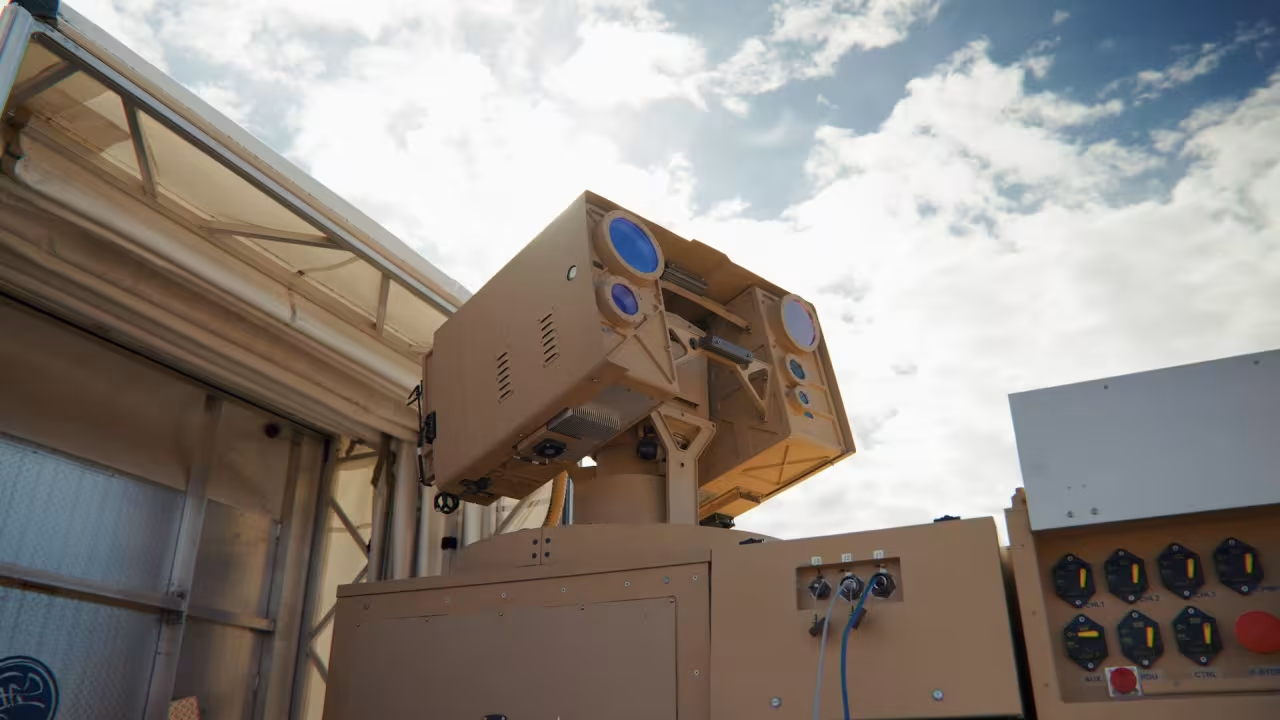
That layered approach is already visible in current U.S. counter-drone development. An official August 2026 account described an Army high-energy laser defeating three unmanned aircraft and emphasized lower cost per shot and deeper magazines. Separately, L3Harris announced in September 2026 that it had been selected to deliver VAMPIRE counter-drone systems to the U.S. Navy. Neither development validates the Chinese artillery model, but both illustrate why military customers are assembling defenses from multiple sensor and interceptor types.
The research has also been associated with a proposed new U.S. battleship design calling for nine large naval guns, substantial missile capacity and electromagnetic weapons. That connection does not make the modeling study an endorsement of the ship or proof that its gun architecture would work. A Chinese weapons specialist reportedly disputed whether the paper established that large-caliber guns could defeat swarms reliably.
The proposed ship faces separate uncertainties as well. Congress reportedly removed its funding from a pending Senate appropriations bill, while U.S. shipyard labor shortages could complicate construction. Those industrial constraints remain distinct from the technical question examined by the model.
For counter-drone engineering, the most consequential number is therefore not simply 1.19. It is the gap between that limited modeled effect and the complete detection, tracking, fire-control and layered-interceptor network required to turn a fragment cloud into a dependable ship defense.
| More aerospace and engineering stories, right in your MSN feed. Follow AMI on MSN |
By Stephen Wallace — Editor for AMI’s aerospace integration and unmanned mobility coverage, focused on drone manufacturing, VTOL systems, autonomous networks, and air-ground mobility links.