Military Says AeroVironment LOCUST Debut Preceded 75% Border Drone Activity Drop
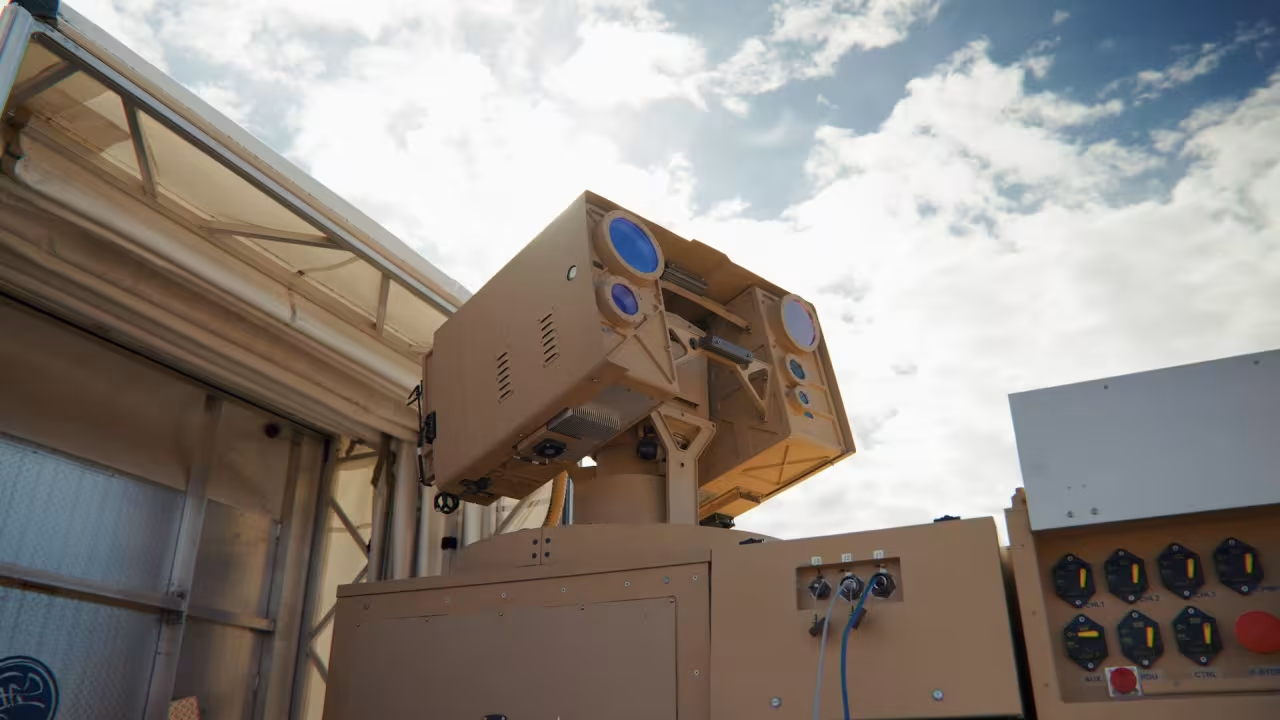
A roughly 75% decline in suspicious drone activity is the first major result military officials are associating with the operational debut of AeroVironment’s LOCUST laser in Texas’ Rio Grande Valley. The decline reportedly occurred less than two weeks after U.S. forces began using the system, although officials acknowledged that the laser may not be the only reason activity changed.

The confirmed operational numbers are narrower than the 75% figure might initially suggest. Joint Task Force–Southern Border used the Army’s version of LOCUST to defeat three drones on Aug. 25 and 26, and officials said the system disabled 11 over ten days. A U.S. Northern Command update said the task force had stopped more than 300 drones described as associated with illicit activity during 2026, using a combination of kinetic and non-kinetic systems.
What the 75% decline does not establish
The military did not disclose the underlying daily activity counts used to calculate the decline. Army Col. Robert Felicio also did not specify which side of the border the recent laser takedowns occurred on. Without a baseline, a longer observation period or a breakdown of other counter-drone activity, the percentage cannot establish that LOCUST alone caused the reduction.
Officials specifically identified another possible explanation: organizations operating the drones may have changed routes. That still could represent a deterrent or displacement effect after the laser arrived, but it is different from proving that the system directly removed three-quarters of the drones previously observed. Seasonal conditions, changes in surveillance coverage and the use of other counter-drone tools would also need to be separated before assigning causation, although no findings on those factors were provided.
The historical scale provides context rather than a direct comparison. Air Force Gen. Gregory Guillot told lawmakers in 2024 that the southern border experienced approximately 1,000 drone incursions per month. Current officials say cartel-linked drones are used to locate military and law-enforcement personnel, potentially allowing smugglers to identify areas to avoid.
LOCUST adds a permanent option to a layered defense
LOCUST’s practical difference is the effect it can produce. Electronic countermeasures can disrupt a drone or redirect it, but those outcomes may be temporary and can leave the aircraft available for another attempt. A high-energy laser applies concentrated heat to physically disable a selected aircraft. In an observed demonstration, a quadcopter was recovered with a damaged propeller and its battery separated, while the airframe remained identifiable.
That recoverability can matter when authorities need to inspect an aircraft after an interception. It also distinguishes the laser from an explosive interceptor, although the single demonstration should not be read as proof that every drone will be disabled or recovered in the same condition.
AeroVironment estimates that a laser firing costs about $3 in consumed energy, far below the price of a conventional interceptor. That figure does not include acquisition, staffing, maintenance, power generation or support. Estimates cited for an individual system range from approximately $17.4 million to $25 million, and the Army has awarded AeroVironment a $465 million production agreement. The Army describes it as its first production contract for a high-energy laser system, moving the technology beyond isolated prototype work.
Weather and civilian airspace set firm operating boundaries
Low firing cost does not make a laser universally available. Rain and atmospheric vapor can weaken the beam, making performance dependent on the path between the system and the drone. The laser therefore supplements rather than replaces electronic disruption and other counter-drone methods.
Domestic airspace creates another constraint. A high-energy beam must be managed around civilian aircraft, requiring coordination with the Federal Aviation Administration before and after use. Military officials say that coordination occurs regularly, and multiple LOCUST-based systems are now positioned along the border.
The FAA and military had already conducted a dedicated White Sands safety evaluation covering aircraft-surrogate effects, aircrew eye safety and automated shutoff functions. Those safeguards are central to whether lasers can become routine domestic counter-drone equipment rather than systems reserved for controlled ranges.
The reported 75% decline is consequently an important operational signal, not a settled measure of LOCUST’s effectiveness. The stronger confirmed milestone is that the Army has moved a laser into sustained border operations, recorded 11 drone defeats in ten days and begun production while weather, attribution and civilian-airspace protection remain decisive limits on how broadly it can be used.
| More aerospace and engineering stories, right in your MSN feed. Follow AMI on MSN |
By Stephen Wallace — Editor for AMI’s aerospace integration and unmanned mobility coverage, focused on drone manufacturing, VTOL systems, autonomous networks, and air-ground mobility links.