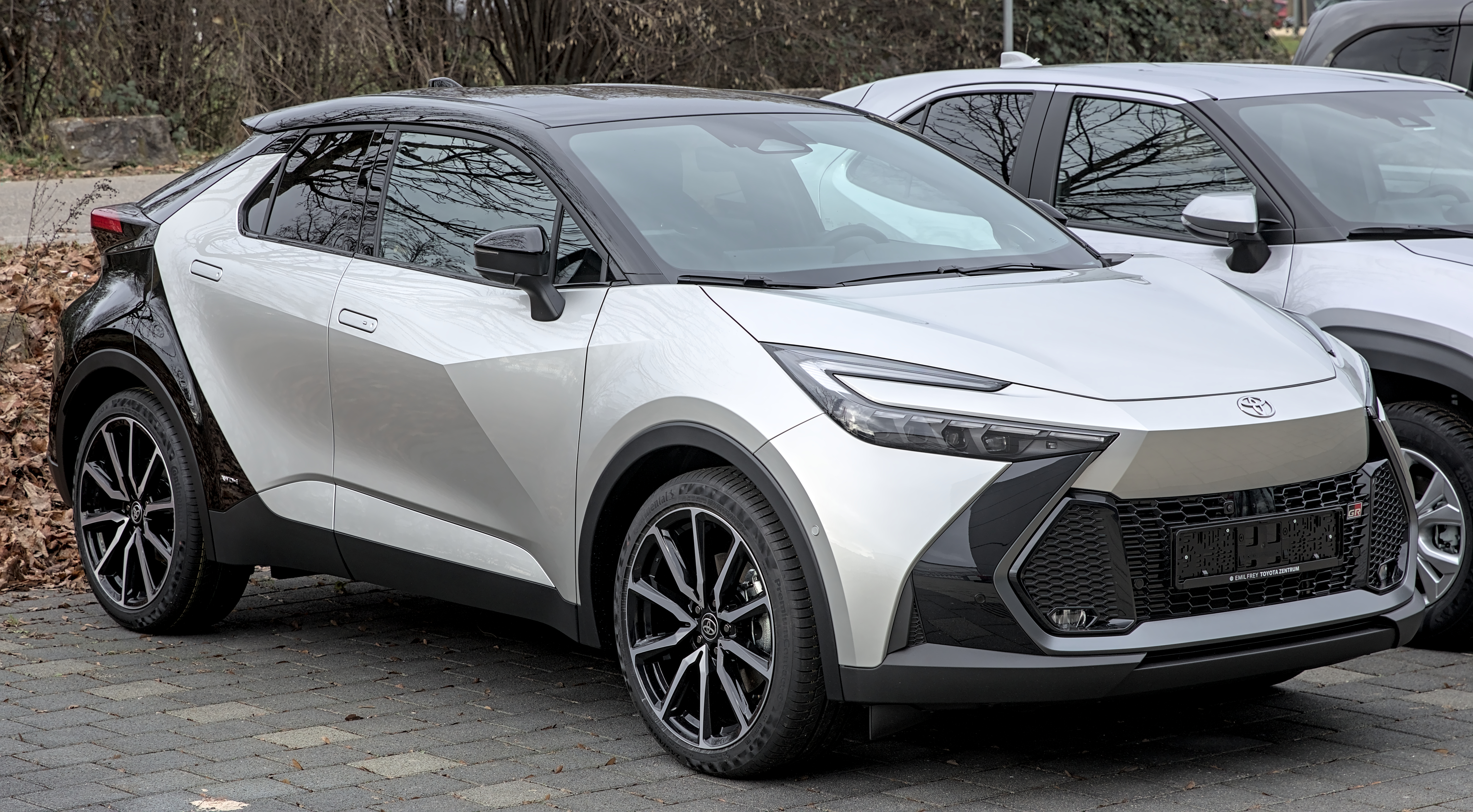
Toyota Recalls About 10,000 2026 C-HR EVs Over Sudden Power Loss
Regenerative braking normally recovers energy that would otherwise be lost as heat, but the battery must still have room to accept that energy. In certain 2026 Toyota C-HR EVs, incorrect control software can allow regeneration to exceed the charging limit when the traction battery is already at a high state of charge. The resulting overcharge condition can activate a protective shutdown of the electric-drive system.

That protection creates the central safety problem behind Toyota’s recall of about 10,000 C-HR EVs globally: The vehicle can remain otherwise powered while suddenly losing power to its wheels. A loss of motive power at speed can increase crash risk when a driver needs acceleration for a freeway merge, passing maneuver or another traffic situation with limited time and space.
Toyota Canada says approximately 1,310 affected vehicles are in Canada. All of the recalled vehicles are from the 2026 model year. Canadian owners are expected to receive notification letters by early November, although dealers can already perform the repair for owners who schedule an appointment.
Why regenerative braking can trigger the shutdown
An electric vehicle’s regenerative-braking system reverses the usual energy flow through the drivetrain. Instead of drawing electricity from the battery to propel the vehicle, the motor acts as a generator during deceleration and sends energy back into the battery.
The vehicle’s control logic must continuously determine how much regenerative energy the battery can safely accept. That limit changes with operating conditions, particularly the battery’s state of charge. When the battery is full or nearly full, there is less capacity available for recovered energy, so the software must restrict charging from regeneration.
In the affected C-HR EVs, a programming error disrupts that charging-limitation function. Under the required combination of a highly charged battery and continued regenerative braking, the software can permit excessive charging. The electric-drive system then responds to the detected overcharge condition by shutting down to protect the high-voltage system.
The identified defect is in the control software, not the battery cells or electric motors. That distinction matters because the recall is not addressing damaged energy-storage hardware or replacing the propulsion unit. It is correcting the logic that defines the operating boundary between useful energy recovery and a condition requiring system protection.
The repair requires new control-unit software
Toyota dealers will install an updated software release in the Battery Electric Vehicle Electronic Control Unit at no charge. That controller manages the relevant interaction between regenerative braking and the high-voltage battery, and the revised programming corrects the charging-limit logic.
Toyota has not clarified whether this particular update will also be delivered remotely. Owners should therefore treat a dealer visit as necessary unless Toyota provides different instructions. The repair can be completed before an owner receives a notification letter, provided the vehicle is covered and an appointment is arranged.
The C-HR EV uses Toyota’s e-TNGA battery-electric platform, which is also associated with Toyota BZ vehicles, the Lexus RZ and the Subaru Solterra. Some related vehicles are involved in a separate 2026 loss-of-power recall concerning high-voltage battery-control software. That separate campaign should not be treated as proof that the C-HR defect applies identically across every vehicle sharing the architecture.
A corresponding C-HR recall entry is expected in the U.S. National Highway Traffic Safety Administration database, but its appearance there was not yet confirmed in the available recall information. Owners awaiting formal notice can contact a Toyota dealer to determine whether their vehicle is included.
The repair is software-only, but the consequence it addresses is mechanical in the most practical sense: Pressing the accelerator may no longer produce propulsion. The campaign illustrates why an electric vehicle’s safe operating envelope depends not only on sound cells, motors and power electronics, but also on correct calculations governing when recovered energy must be limited.
| More aerospace and engineering stories, right in your MSN feed. Follow AMI on MSN |
By Thomas Caldwell — AMI’s senior editor for mechanical and mobility engineering, covering vehicle electronics, systems integration, electrification, chassis systems, propulsion, and safety policy.