BYD Atto 1 Becomes Australia’s Cheapest New Car at A$19,990, With 220-Kilometre Range
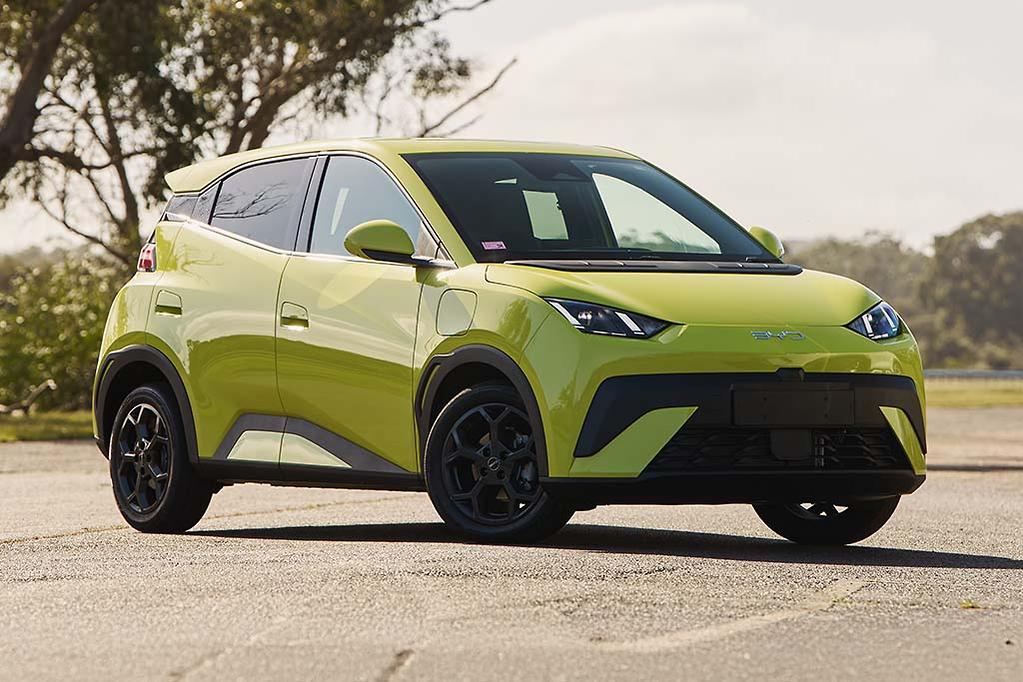
Australia’s cheapest new car is now a battery-electric hatchback. BYD reduced the Atto 1 Essential to A$19,990 driveaway nationwide on September 15, 2026, putting its upfront price below the petrol and electric rivals identified in current listings.
The immediate national offer removes the state-by-state variation in its previous driveaway pricing. It also brings a significant constraint into view: the entry-level Atto 1 has a rated range of 220 kilometres under the WLTP laboratory test cycle, making the price-versus-utility tradeoff unusually clear.
An EV moves below the cheapest petrol rival
At A$19,990 driveaway, the Atto 1 Essential is about A$1,000 below the MG3 Vibe’s listed A$20,990 driveaway price. That comparison matters because driveaway pricing includes the on-road charges that can otherwise obscure the amount a customer pays to put a new vehicle on the road.
The reduction is also much larger than the headline gap to the MG. Before the offer, the Atto 1 Essential cost between A$25,762 driveaway in the Northern Territory and A$27,194 in Victoria. The new national price represents a stated saving of A$5,772, or 22%, in the Northern Territory and A$7,204, or 26%, in Victoria.
BYD had not published an end date for the offer when it was announced. The price applies only to the entry-level Essential grade, so it should not be read as a reduction across the complete Atto 1 range.
The low price buys a city-oriented battery package
The Atto 1 Essential combines a 30-kilowatt-hour lithium iron phosphate battery with a 65-kilowatt electric motor. BYD claims up to 220 kilometres of WLTP range and says the battery can charge from 10% to 80% in about 30 minutes when connected to a suitable DC fast charger.
Neither figure guarantees the same result in normal use. WLTP is a standardized comparison cycle rather than a promise of real-world distance, which can vary with speed, weather, climate-control demand, load and driving conditions. The charging claim is similarly conditional: the announcement did not specify the charger power required to produce the quoted 30-minute session.
The battery size and range position the Essential primarily around shorter, predictable travel rather than long-distance flexibility. That does not make the package inherently inadequate, but it places more importance on a driver’s daily distance, access to charging and tolerance for additional charging stops. BYD also did not provide a complete Essential-grade equipment list with the price announcement, limiting a full specification-for-specification assessment.
Costlier EVs purchase additional range
The Geely EX2 Complete is listed at A$26,490 before on-road costs and carries a 252-kilometre WLTP rating. It therefore offers 32 kilometres more rated range than the Atto 1, but its advertised base price is A$6,500 higher even before registration and other on-road costs are added.
The GAC Aion UT Premium makes the tradeoff more pronounced. At A$31,990 driveaway, it costs A$12,000 more than the discounted BYD, but combines a 60-kilowatt-hour lithium iron phosphate battery with a stated 430-kilometre range. That is almost twice the Atto 1 Essential’s battery capacity and 210 kilometres more rated range.
These comparisons do not establish which vehicle offers better overall value because equipment, packaging and other ownership factors differ. They do show what the Atto 1’s price reduction does technically: it lowers the entry cost by accepting substantially less stored energy and rated travel distance than a more expensive budget EV.
Support coverage will be another part of that operating equation. BYD expects its Australian network to exceed 150 dealerships by the end of 2026 after averaging one new sales and service centre opening per week over the previous 12 months. For a low-cost EV, that expansion could be as consequential as the sticker price because charging hardware, software, battery systems and conventional chassis components still have to be supported over the vehicle’s service life.
The A$19,990 offer crosses an important price boundary by putting an electric car below Australia’s listed petrol competition. It does so with a 30-kilowatt-hour battery and 220-kilometre WLTP range a concrete reminder that the lowest acquisition price and the widest operating envelope remain different engineering objectives.
| More aerospace and engineering stories, right in your MSN feed. Follow AMI on MSN |
By Thomas Caldwell — AMI’s senior editor for mechanical and mobility engineering, covering vehicle electronics, systems integration, electrification, chassis systems, propulsion, and safety policy.