Coast Guard, FBI Examine VL Prosperity Network; No Operational Harm Reported
Federal cyber specialists boarded a Texas-bound oil tanker after indications that its network may have been compromised by a foreign actor. The Coast Guard and FBI examined both computer and machinery-control networks, but officials reported no operational disruption, vessel instability, danger to the crew or environmental impact.
The Aug. 21 boarding involved Coast Guard law-enforcement personnel, a vessel inspector, Coast Guard Cyber Protection Team members and FBI Cyber Action Team operators. They worked with the crew and the vessel’s corporate operator to examine its information-technology and operational-technology systems and eradicate the suspected threat.
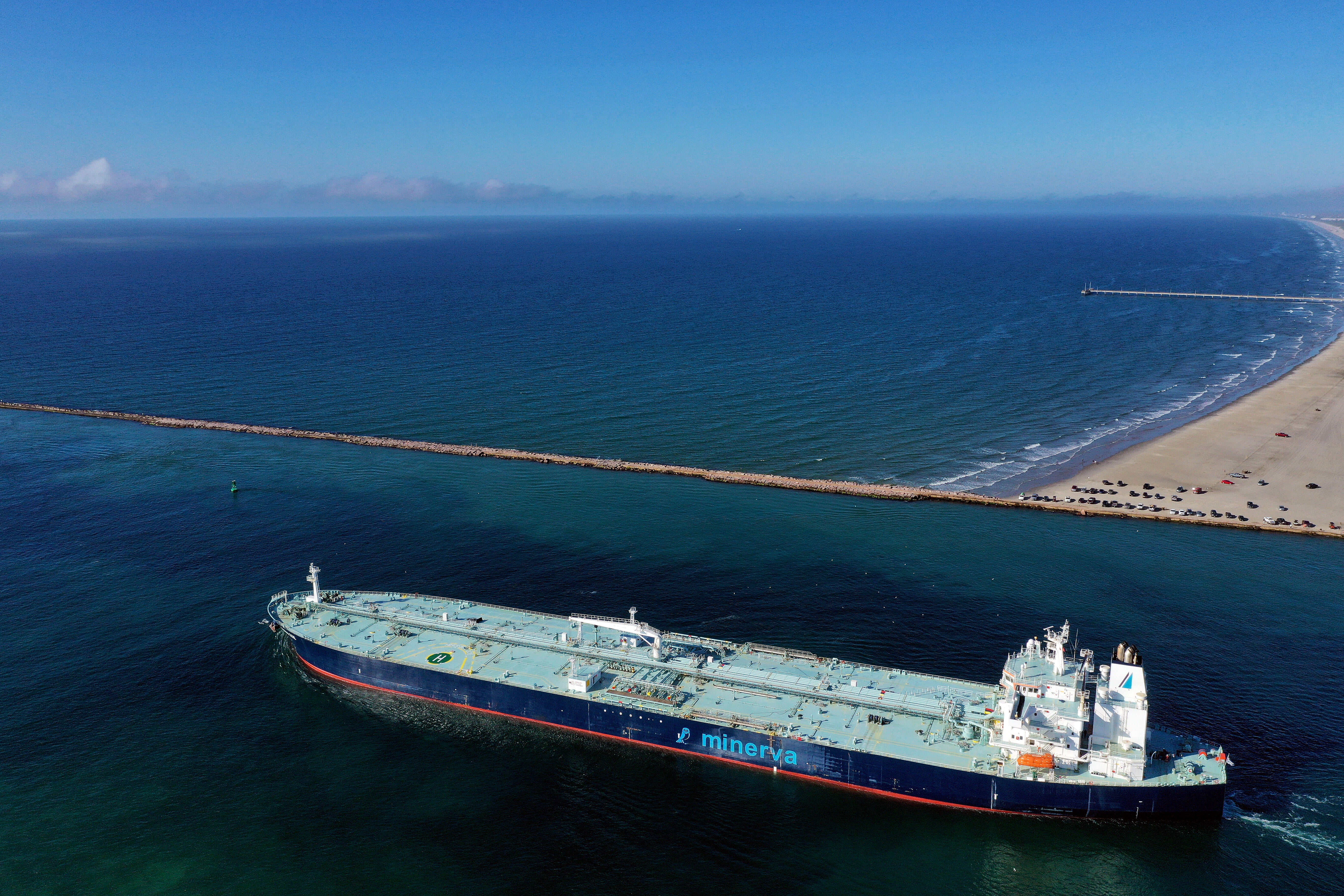
The Coast Guard did not publicly name the ship. Iranian reports identified it as the VL Prosperity, while its South Korean manager, HMM Ocean Service, confirmed that the Coast Guard had boarded the vessel. Public vessel data showed the ship bound for Galveston, Texas.
The VL Prosperity is a 333-meter, Liberian-flagged very large crude carrier capable of carrying roughly 2.3 million barrels of oil. That capacity gives the investigation a substantial public-safety dimension: a cyber incident aboard a ship of this scale could potentially affect its crew, nearby maritime traffic, port operations and the environment. Capacity does not establish how much cargo the vessel carried at the time, however, and federal officials found no current physical effects.
What remains unconfirmed
Iranian state media alleged that the tanker lost communications for 30 hours and that attackers interfered with engine-room equipment and obtained control over propulsion, navigation and cargo systems. U.S. authorities have not confirmed those claims. They also have not disclosed the extent of the suspected intrusion, identified the systems initially affected or attributed the activity to a particular attacker.
The distinction matters. Evidence that an information network was compromised does not by itself prove that an intruder reached or controlled machinery. Propulsion, navigation and cargo handling are operational functions with direct physical consequences, while ordinary information systems support activities such as communications and administration. Connections between the two environments can improve efficiency and remote support, but they also make separation, controlled access and monitoring important safety measures.
The federal response indicates that investigators considered both environments relevant enough to inspect. It does not establish that the ship’s propulsion, navigation or cargo equipment was manipulated. The Coast Guard’s finding of no current disruption or physical harm is therefore compatible with several possibilities, including a compromise that was contained before operational effects occurred. Officials have not provided enough detail to determine the precise pathway or scope.
Why operational technology changes the response
Operational technology interacts with physical processes, often through controllers, sensors and engineering workstations. On a tanker, these systems can support machinery and cargo functions where availability and predictable behavior are essential. A cybersecurity response must consequently account for more than stolen data: investigators also need to determine whether equipment remains in a known, stable state without creating new operational risks during inspection or recovery.
That helps explain why the boarding combined cyber personnel with law enforcement and a vessel inspector, and why the team coordinated with both the crew and corporate operator. Crews understand the vessel’s immediate behavior, operators manage corporate systems and outside support, and specialists can examine whether activity crossed boundaries between business and machinery-control networks.
The broader industrial-control threat is not limited to shipping. A recent federal cybersecurity advisory on programmable controllers urged operators to isolate control equipment from the internet where possible, strengthen access controls, apply appropriate updates and monitor for unauthorized activity. Those are defense-in-depth principles rather than proof that any particular controller or weakness was involved aboard the VL Prosperity.
The institutional response is also expanding. On Aug. 31, the Coast Guard announced a new Office of Maritime Cybersecurity Policy to coordinate policy, compliance strategy and work with industry and other agencies across ports, vessels and facilities. Its creation reflects the growing dependence of maritime transportation on connected information and operational systems.
For the VL Prosperity, the most consequential questions remain unanswered: how far the suspected compromise extended, whether it crossed into machinery-control networks and who was responsible. What is confirmed is narrower but significant a suspected network intrusion aboard a tanker capable of carrying about 2.3 million barrels triggered a joint federal examination, yet produced no reported operational, crew-safety or environmental effects.
| More aerospace and engineering stories, right in your MSN feed. Follow AMI on MSN |
By Thomas Caldwell — AMI’s senior editor for mechanical and mobility engineering, covering vehicle electronics, systems integration, electrification, chassis systems, propulsion, and safety policy.