




Pentagon Keeps Missile-Production Timelines Private 26 Days After Deadline
Twenty-six days after the Pentagon’s Aug. 26 industry deadline, the Defense Department had not publicly disclosed how many companies responded to its demand for faster weapons output or what production timelines those manufacturers offered.

It also remained unclear whether the Pentagon had accepted or funded any proposal and whether the 21-day exercise changed planned purchases, expected delivery schedules or the department’s fiscal 2028 budget plans. That missing information leaves taxpayers and defense planners without a public measure of whether an urgent request produced executable factory plans or only another round of capacity discussions.
The unanswered questions matter because a production target is not the same thing as production capacity. Manufacturers can propose a higher annual rate, but reaching it may require construction, new tooling, supplier commitments, workforce expansion, qualification testing and stable orders. Each element has its own schedule, and several may need government funding or contractual authority before work can proceed.
Deputy Defense Secretary Steve Feinberg’s Aug. 5 memo asked industry for “significantly faster, more aggressive delivery schedules and/or increased production” across 16 critical programs. Manufacturers including Boeing, Lockheed Martin and RTX were asked to identify capital investments, facility expansions and Pentagon cooperation needed to accelerate output. Feinberg also wanted companies to commit their own resources to “put skin in the game.”
That creates a central cost-allocation question. The government wants companies to invest before every future requirement is fully contracted, while contractors need enough demand certainty to justify buildings, equipment and labor that may remain in place for years. Companies can finance some expansion themselves, but public money may still be needed to place orders, support suppliers or underwrite capacity that the commercial market cannot use.
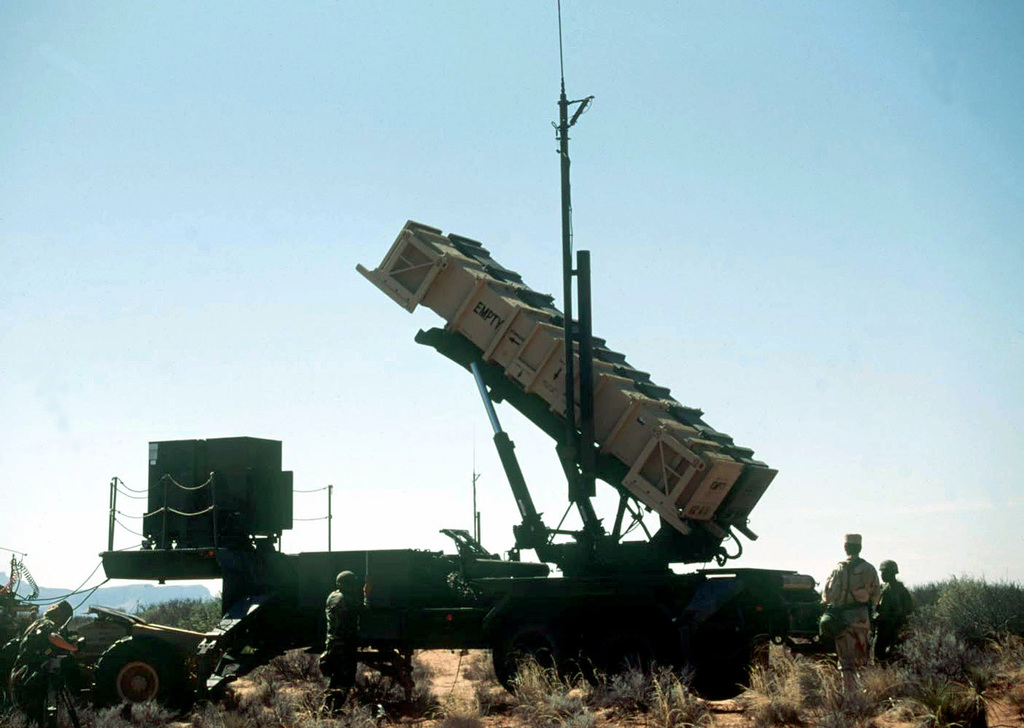
The production challenge is especially visible in missile defense. The Center for Strategic and International Studies estimated delivery timelines of roughly 42 months for Patriot PAC-3 MSE interceptors and 53 months for THAAD interceptors. Those estimates show why replenishment cannot be judged only by a newly announced production goal: missiles ordered now may take several years to arrive under current conditions.
CSIS also estimated that Patriot interceptor inventories declined from about 2,330 before the conflict with Iran to between 759 and 827 after the latest operations, while THAAD inventories declined from 452 to between 234 and 278. Those are think-tank estimates, not official Pentagon inventory counts, but they illustrate the planning pressure behind the acceleration effort.
Existing agreements provide evidence that component capacity is already receiving attention, but they do not answer what came out of the August submissions. Seven-year arrangements announced for Patriot and THAAD propulsion and structural components are intended to raise output sharply. Northrop Grumman described two framework agreements totaling more than $3 billion, including a $2 billion Patriot component arrangement and a $1 billion THAAD component arrangement.
Framework agreements can give suppliers a longer planning horizon, but they are not by themselves proof that complete interceptors will leave final assembly lines at the same rate as individual components. Missile output depends on synchronized capacity across propulsion, structures, electronics, final integration, testing and government acceptance. Expanding one constrained stage helps only if the surrounding stages can absorb the higher flow.
The distinction between company capital and appropriated funding is equally important. A manufacturer may be willing to expand a plant, but the Pentagon still needs procurement authority and money to convert that capacity into delivered hardware. Funding instability can delay new starts, contract awards and supplier commitments, weakening the demand signal that is supposed to justify private investment.
The Pentagon said the industry responses would help determine what could be delivered faster, what additional resources might be required and how the fiscal 2028 request should be shaped. Public disclosure does not need to expose sensitive inventory levels or proprietary manufacturing details to provide accountability. Aggregate response counts, broad delivery ranges, selected investment categories and whether proposals have entered contracting would show whether the exercise produced a usable industrial plan.
Until those results emerge, the department’s push remains difficult to evaluate against its own objective. The decisive milestone is not another statement that production must accelerate; it is a funded schedule linking factory investments and supplier expansion to faster deliveries of complete interceptors.
| More aerospace and engineering stories, right in your MSN feed. Follow AMI on MSN |
By David Whitaker — Associate editor for AMI’s aerospace and drone systems desk, translating flight systems, aircraft programs, spaceflight, and UAV developments into accessible technical stories.


