


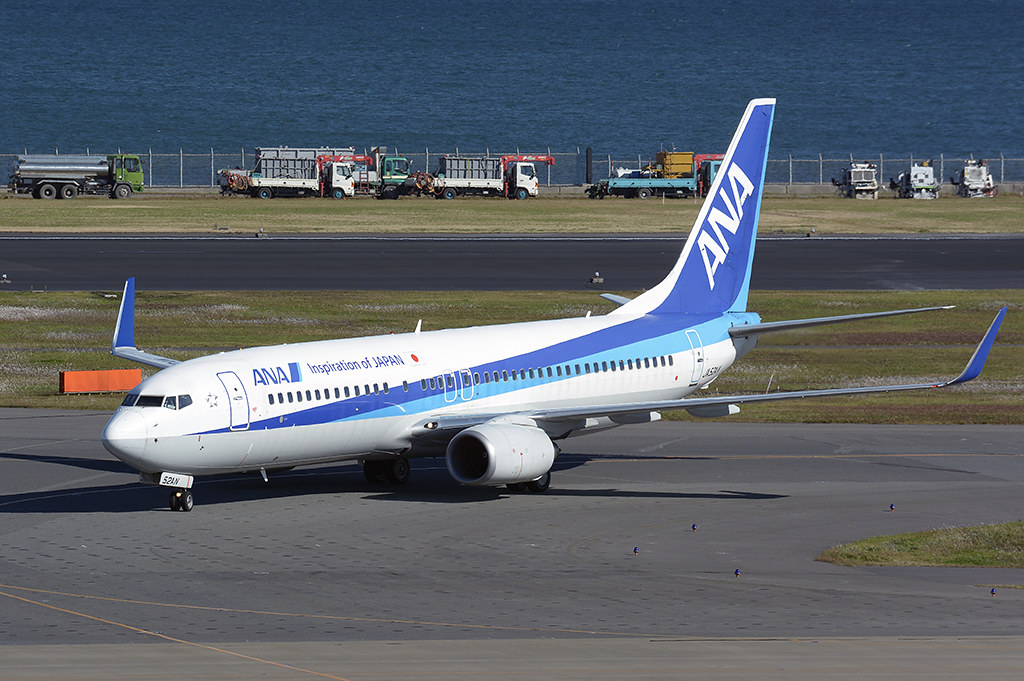
ANA 737 Engine Shutdown Triggers Japan Investigation After 158 Evacuate
An All Nippon Airways Boeing 737 returned safely to Naha Airport in Okinawa with its right engine shut down on September 23, 2026, after a cockpit indication showed high engine oil temperature. All 158 occupants then evacuated on the taxiway using emergency slides, and three passengers reportedly sustained minor injuries.

The Japan Transport Safety Board is investigating the occurrence, which the transport ministry classified as a serious incident. ANA said in an official incident notice that it would cooperate with the investigation. The classification establishes the seriousness of the event; it does not identify the cause or demonstrate that the engine itself suffered a particular type of failure.
What is confirmed
ANA Flight 1502 was operating from Naha to Saga with 152 passengers and six crew members. Shortly after departure at about 9 p.m., a pilot observed an abnormally high oil temperature indication for the right engine. The crew shut that engine down, requested priority handling from air traffic control and returned to Naha, landing safely at about 10 p.m.
The aircraft stopped on a taxiway, where all passengers and crew evacuated by slide. Fire engines responded, but no smoke or fire was reported. The three reported passenger injuries were minor, including scratches. That distinction matters: the injuries were associated with the evacuation, not the airborne engine indication or landing.
The confirmed sequence therefore contains two separate safety responses. In flight, the crew shut down the affected engine and returned to the departure airport. On the ground, everyone left through the emergency slide system. The available information does not establish why a complete evacuation was ordered after the safe landing, beyond confirming that it occurred on the taxiway.
The indication is not yet a diagnosis
A high oil temperature display tells investigators where the event became operationally significant, but it does not by itself settle what happened inside the propulsion system. No official finding has established whether the reading resulted from an oil system problem, another mechanical condition or an instrumentation issue.
The absence of reported smoke or fire is equally important. It defines what was observed, but it neither explains the elevated temperature indication nor makes the engine shutdown unnecessary in hindsight. Describing the occurrence as an engine fire would go beyond the confirmed facts.
The aircraft has been identified in supplemental reporting as a Boeing 737-800, but the engine model has not been established in the available official account. That missing identification limits any responsible discussion of component architecture, maintenance history or model specific behavior. Until investigators document the aircraft and engine configuration and release technical findings, assigning a mechanism would be speculation.
Why the evacuation remains part of the inquiry
The safe single engine return resolved the immediate airborne phase, but the taxiway evacuation created a second area for examination. Investigators can distinguish between the initiating engine indication, the crew’s operational response, the aircraft’s condition after landing and the circumstances surrounding the evacuation. Those are connected stages, not proof of one continuous mechanical failure.
The reported minor injuries also require careful scale. Three passengers were hurt during an evacuation involving 158 people, while the other occupants were reported to have left the aircraft without injury. The injuries should not be overstated, but they remain relevant because slide evacuations expose passengers to a demanding, time sensitive exit process even when an aircraft has landed safely.
ANA said the incident was officially classified at 10:45 p.m., shortly after the aircraft returned. Investigators’ central task is now to move beyond the cockpit indication and establish what produced it, what the aircraft systems recorded and how the airborne and ground responses unfolded. Until those findings are released, the strongest supported conclusion is narrow but consequential: the crew shut down one engine and landed safely, yet the event still ended with a full evacuation and three reported minor injuries.
| More aerospace and engineering stories, right in your MSN feed. Follow AMI on MSN |
By Thomas Caldwell — AMI’s senior editor for mechanical and mobility engineering, covering vehicle electronics, systems integration, electrification, chassis systems, propulsion, and safety policy.



