Bahamas Air Navigation Services Authority Bills Aircraft Retroactively Since May 2021
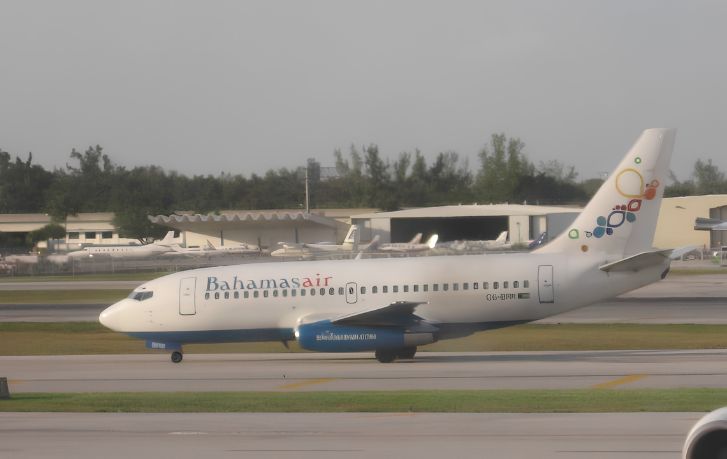
The Bahamas Air Navigation Services Authority is issuing higher landing and overflight bills for private and commercial aircraft operations dating as far back as May 2021. The revised charges are based on aircraft maximum takeoff weight and are reported to be roughly 300% to nearly 700% above the previous rates, potentially leaving operators with substantial costs years after their flights were completed.

These invoices are the immediate policy issue. They must be separated from two other potential increases: a proposed $775 overflight levy and a proposed 2027 fee schedule at three Family Island airports. Those additional measures remain under consideration and should not be treated as charges already imposed.
Aircraft weight and flight type determine exposure
The Bahamas Air Navigation Services Authority, commonly known as BANSA, uses maximum takeoff weight rather than the aircraft’s actual weight on a particular flight to calculate the backdated charges. Maximum takeoff weight is a certified operating limit, so a larger aircraft can face a higher bill even when carrying few passengers or little cargo.
Operators that paid the applicable BANSA charge at the time of a flight may now be invoiced for the difference between the original payment and the revised rate. This creates a different accounting problem from an ordinary prospective fee increase: operators may need to reconstruct several years of flight records, confirm aircraft weights and categories, match earlier payments to individual movements, and assess whether exemptions were applied correctly.
The listed exemptions cover search and rescue and emergency medical flights, qualifying emergency landings, private operations in single engine piston aircraft, certain Bahamas government aircraft, and aircraft belonging to the armed forces or governments of countries that are members of the International Civil Aviation Organization. Private turbine aircraft, twin engine piston aircraft and commercial operations are not included in the stated single engine piston exemption.
BANSA has reportedly indicated that an aircraft connected to unpaid debt may be seized or detained if an operator refuses payment. The precise enforcement process and the options available for contesting an invoice are not established here, making invoice documentation and a clear dispute mechanism especially important. The National Business Aviation Association is working with affected operators and the U.S. government to challenge the retroactive charges.
Retroactivity changes the cost and fairness calculation
A prospective aviation charge allows an airline, charter company or private operator to incorporate the amount into routing, pricing and travel decisions. A retroactive increase does not. Commercial operators may have completed contracts or sold tickets using the rates in effect at the time, while private operators made travel decisions without knowing that the navigation charge could later increase several fold.
That does not by itself determine whether the revised bills are valid. It does, however, place greater importance on notice, rate authority, calculation transparency and consistent treatment across aircraft categories. The larger the lookback period, the more difficult it may be for an operator to reconcile each invoice against archived operational and payment records.
Invoices were initially coordinated through the International Air Transport Association’s Simplified Invoicing and Settlement system. IATA describes that platform as a standardized electronic process providing invoice tracking, dispute management and an audit trail. Communication with BANSA reportedly stopped, and IATA is understood to no longer be participating. That reported change matters because the billing channel can affect how operators receive, verify and dispute old claims, although it does not resolve the underlying policy question.
Two other fee plans remain unresolved
The Bahamas Aviation, Climate and Severe Weather Network is separately seeking international approval for a stated $775 overflight charge. Its aircraft coverage, geographic reach and relationship to existing BANSA charges remain unresolved. There is also an arithmetic discrepancy requiring clarification: stated allocations of $500 to the government and $225 to the network total $725, not $775. The proposed figures have not been presented as a final schedule, according to reporting on objections from U.S. airlines.
A separate January 2027 schedule is proposed for North Eleuthera, Governor’s Harbour and Georgetown in Exuma. It would add passenger charges of $66 for an international traveler and $33 for a domestic traveler while increasing aircraft landing and parking fees. For a four night international stay at Governor’s Harbour with four passengers, a cited comparison estimated that total airport costs would rise 84% for a Pilatus PC 12 and 92% for a Hawker 800.
Those airport rates remain under Bahamas government review, and it is unclear whether they would apply to fixed base operator terminals and ramps. The schedule is intended to support upgraded airport infrastructure, creating a direct tradeoff between funding improved facilities and preserving affordable access for residents, visitors, airlines and charter operators. The three-airport plan therefore cannot yet be added to the active BANSA invoices as though it were one implemented package.
For now, operators face one confirmed billing problem and two possible future cost layers. The retroactive BANSA invoices are already arriving; the proposed overflight levy still lacks a settled scope and internally consistent amount, while the 2027 airport schedule still awaits review and clarification.
| More aerospace and engineering stories, right in your MSN feed. Follow AMI on MSN |
By Thomas Caldwell — AMI’s senior editor for mechanical and mobility engineering, covering vehicle electronics, systems integration, electrification, chassis systems, propulsion, and safety policy.