Ukrainian Drones Reportedly Ignite Yaroslavl Refinery Processing 15 Million Metric Tons Annually
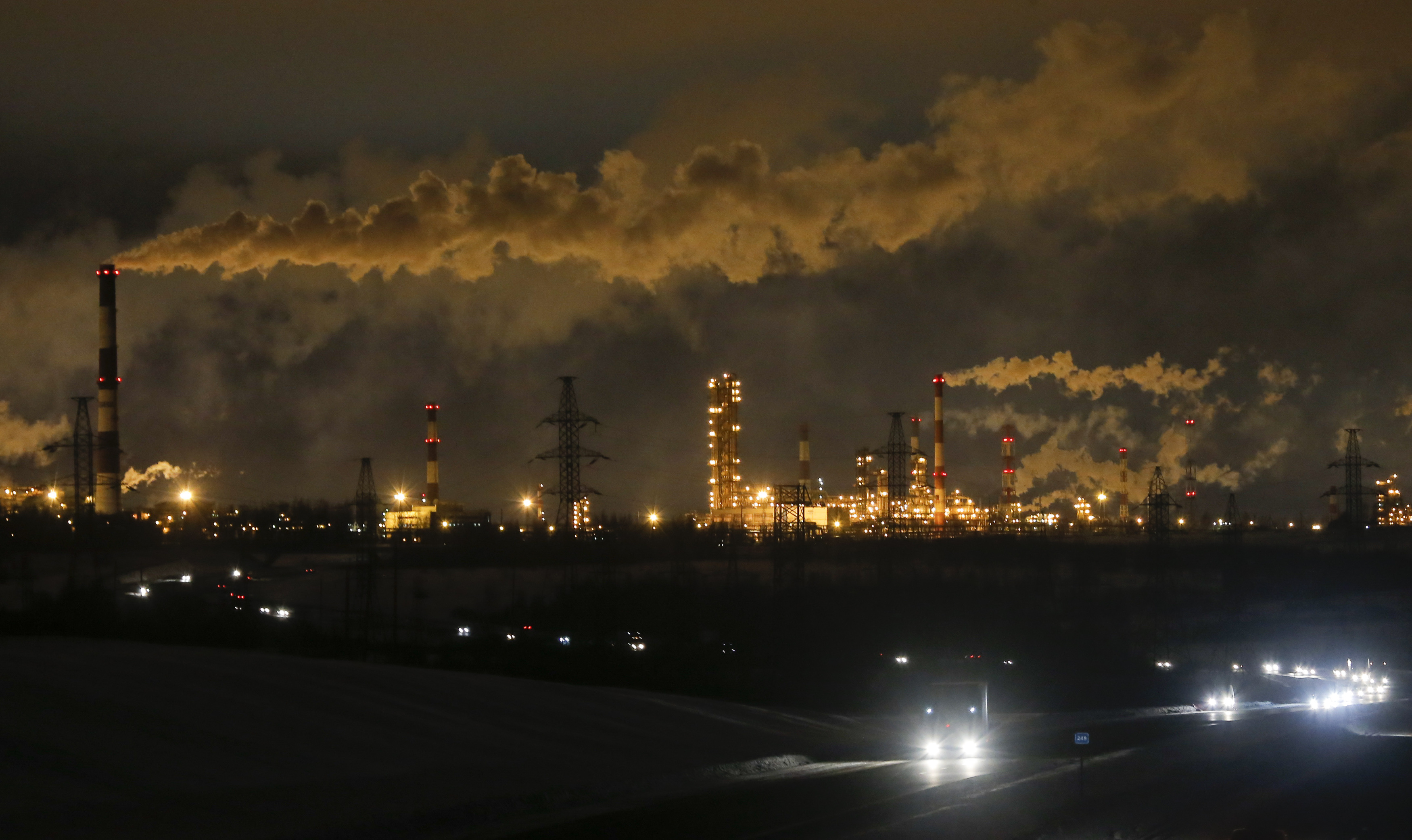
Fifteen million metric tons is the annual crude-processing capacity at the center of a reported Ukrainian drone attack in Yaroslavl, Russia. The Yaroslavnefteorgsintez refinery, also known as Slavneft-YANOS, reportedly caught fire after the overnight attack on Friday, Aug. 28. That is a substantial industrial scale, but capacity is not the same as lost production: the fire’s extent, duration and effect on refinery output remain unconfirmed.
The immediate civic disruption is clearer. Yaroslavl Oblast Governor Mikhail Yevrayev said authorities blocked several roads leading toward Moscow, rerouted public transportation and closed several kindergartens. He did not identify a damaged facility or report whether anyone was injured. Independent reporting on the restrictions said some intermunicipal bus service was also temporarily suspended.
Astra identified the reported site from eyewitness material as Yaroslavnefteorgsintez, one of Russia’s largest refineries. The plant can process up to 15 million metric tons, or 16.5 million short tons, of crude annually. Its output includes Euro-5 gasoline and diesel, aviation fuel, lubricants, bitumen, liquefied gas and fuel oil. Slavneft owns the facility and is jointly controlled by Gazprom and Rosneft.
Capacity shows the potential exposure, not the confirmed loss
A refinery’s nameplate capacity describes how much crude it is designed to process under defined operating conditions. It does not reveal the throughput immediately before an incident, which units were running or whether downstream product shipments continued from storage. A visible fire therefore cannot, by itself, establish that all or even part of the plant’s 15-million-metric-ton capacity went offline.
The refinery’s varied product slate nevertheless explains why any verified interruption would matter. Refineries do more than convert crude into one interchangeable fuel. Different process stages support gasoline, diesel, aviation fuel and heavier products, and an interruption affecting one part of a plant may constrain some outputs while leaving others available. Establishing the consequence requires operator data, government reporting or reliable throughput and shipment information not simply confirmation that a fire occurred somewhere at the complex.
The Aug. 28 event was reportedly at least the eighth time the refinery had been targeted in 2026. Seven earlier incidents were reported on March 28, April 26, May 8, May 22, July 6, July 16 and Aug. 6. That count indicates recurring pressure, but it does not mean eight successful strikes, eight fires or cumulative damage. The operational outcomes of those earlier incidents have not been established here.
Repeated alerts create a readiness burden even without a proven outage
For a large industrial site and its surrounding city, repetition matters independently of physical damage. Each drone alert can require authorities to coordinate airspace monitoring, road controls, emergency response and decisions about public services. The Aug. 28 road blocks, transit changes and kindergarten closures demonstrate that this burden can reach residents before the industrial consequences are known.
The same recurrence can pressure refinery continuity planning. Operators must be prepared to inspect equipment, confirm safe operating conditions and manage product movements after an alert or reported impact. Those checks can consume time and personnel even when damage is limited. What cannot be inferred is that those precautions caused a sustained shutdown at Yaroslavnefteorgsintez.
The wider refining environment makes that uncertainty consequential. In a Sept. 17 analysis, the International Energy Agency reported that Russian refinery throughput fell to 3.8 million barrels per day in June, its lowest level in more than 20 years and roughly 30% below a year earlier. It also reported gasoline output down 20% from 2025 levels and estimated diesel production nearly 30% lower. Those national figures show sector-wide pressure, but they do not quantify the Aug. 28 event’s contribution.
August trade data provide another system-level indicator. The Centre for Research on Energy and Clean Air reported that Russia imported 172,000 metric tons of oil products during the month, more than seven times the previous monthly high since the full-scale invasion began. Again, that does not prove a Yaroslavl outage; it shows why a credible production interruption at a refinery of this scale would warrant attention.
The decisive next evidence would be verified operating data: which refinery units, if any, stopped; how long they remained unavailable; and whether gasoline, diesel or aviation-fuel output declined. Until those figures emerge, the confirmed consequence is disruption to roads, transit and childcare around Yaroslavl not the loss of 15 million metric tons of annual refining capacity.
| More aerospace and engineering stories, right in your MSN feed. Follow AMI on MSN |
By Stephen Wallace — Editor for AMI’s aerospace integration and unmanned mobility coverage, focused on drone manufacturing, VTOL systems, autonomous networks, and air-ground mobility links.