India Targets 2027–2028 First Flights for Tejas Mk2, Stealth Fighter Amid Shortage
India has put firm dates against two fighters it needs to rebuild an undersized combat-aircraft force, but neither date represents an aircraft ready for service. Defence Secretary Rajesh Kumar Singh on September 27 set a September 2027 first-flight target for the Tejas Mk2 and a September 2028 target for the Advanced Medium Combat Aircraft, or AMCA, according to the announced program timetable.

The schedule carries unusual weight because the Indian Air Force is estimated to operate roughly 29–31 fighter squadrons against an authorized establishment of about 42–42.5. Additional legacy-aircraft retirements could deepen that shortfall before either new design reaches useful production volume. The dates therefore mark visible progress, but they also expose how much industrial and engineering work remains.
Tejas Mk2 must move from structure to integrated aircraft
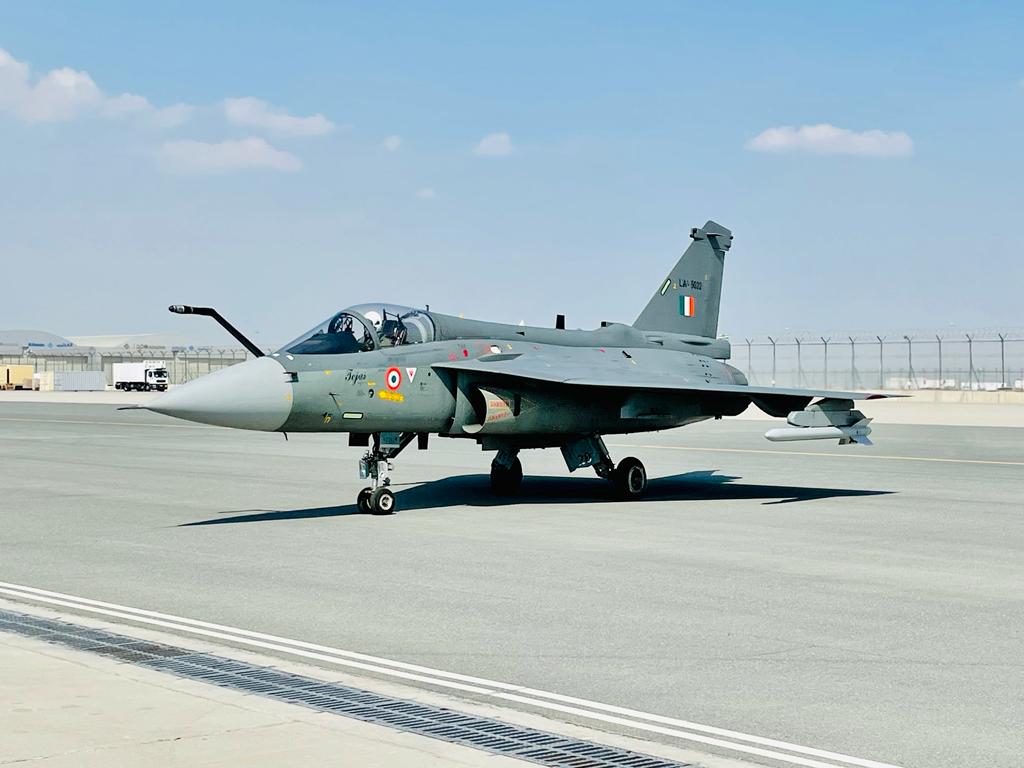
The Tejas Mk2 is a redesigned medium-weight, 4.5-generation fighter rather than a minor update to the smaller Tejas Mk1A. It is intended to sit between that aircraft and India’s heavier fighters, with an initial requirement described as approximately 120 aircraft, or roughly six squadrons. The longer-term plan is for it to replace Jaguar, Mirage 2000 and MiG-29 fleets.
Hindustan Aeronautics Limited has joined the front, center and rear fuselage sections of the first prototype. That is an important manufacturing milestone, but a joined airframe is not yet a functioning flight-test aircraft. Wiring, hydraulics, avionics, propulsion and other systems still have to be installed and integrated before a targeted ground run in March 2027.
Ground testing must then establish that those systems operate together before the prototype can safely begin flight trials. Any issue found during installation, power-on checks or ground runs can require rework and repeat testing. With first flight targeted only about six months after the planned ground run, the schedule leaves limited room between initial integrated operation and the September deadline.
Four Tejas Mk2 prototypes are planned, allowing the development program eventually to distribute different test tasks across multiple aircraft. Yet the production contract remained unsigned at the time of the announcement. That distinction matters: even if the first prototype flies on schedule, orders, manufacturing preparation and flight-test results will determine how quickly the design can become a squadron-level replacement.
AMCA has an industrial decision ahead of its flight deadline
The September 2028 target for AMCA is more demanding at the program level. The aircraft is planned as India’s first domestically developed fifth-generation stealth fighter architecture, with low-observable shaping, internal weapons carriage, sensor fusion and electronic-warfare functions. By late September 2026, however, its prototype manufacturer had not been selected, with three private-sector teams still in contention.
The selected industrial team is expected to build five flying prototypes and one structural-test article. The program schedule calls for first flight within 30 months of contract award, followed by approximately 1,800 test sorties within 84 months. A 650-acre Aircraft Integration and Flight Testing Centre at Puttaparthi is intended to support the effort, but facilities alone cannot replace the time required to finalize responsibility, manufacture test articles and integrate a new aircraft.
The 30-month requirement also makes the timing of the manufacturer selection consequential. Until the contract is awarded, the clock governing the industrial team’s first-flight commitment has not formally started. Holding September 2028 will depend not merely on rapid assembly, but on completing design translation, tooling, supplier coordination, integration and ground qualification on a compressed path.
One engine family links both schedules
Both the Tejas Mk2 and the first AMCA version are intended to use engines from the GE F414 family. Common propulsion can offer support benefits, including overlap in parts, maintenance knowledge and supply arrangements. It also concentrates schedule exposure: negotiations over the Tejas Mk2 engine remained in progress, and both programs are tied to the same foreign propulsion ecosystem.
That does not mean the two aircraft will encounter identical integration work. The single-engine Tejas Mk2 and twin-engine AMCA are different designs with separate structures, systems and test requirements. It does mean engine availability and program coordination could influence two major modernization efforts rather than one.
A successful maiden flight in 2027 or 2028 would demonstrate that a prototype can leave the ground and begin expanding its tested operating envelope. It would not show that the fighter is certified, in serial production or operationally deployable. For an air force facing a gap of roughly a dozen authorized squadrons, the decisive milestone will come later: converting those first flights into completed testing and a production flow that delivers aircraft faster than older fleets retire.
| More aerospace and engineering stories, right in your MSN feed. Follow AMI on MSN |
By David Whitaker — Associate editor for AMI’s aerospace and drone systems desk, translating flight systems, aircraft programs, spaceflight, and UAV developments into accessible technical stories.