Ukrainian Drone Strikes Cut Russian Refining About 25-30% as Repairs Lag
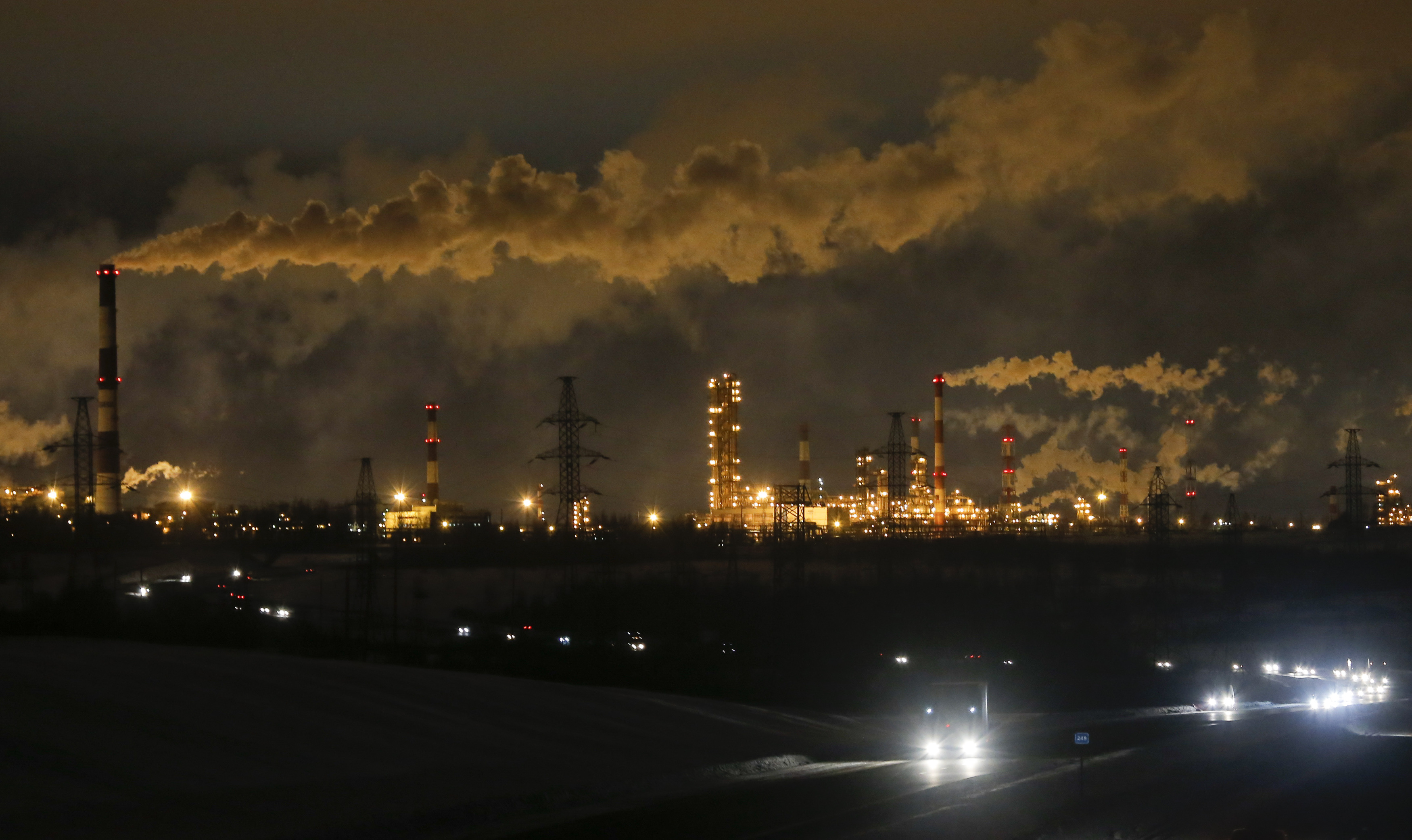
Russia can bring in more gasoline and diesel within weeks, but replacing damaged refinery production is a much slower industrial problem. Actual Russian refining volumes are reported to be about 25-30% below normal as Ukrainian drone strikes combine with restricted access to specialized equipment and catalysts, leaving regional fuel supplies exposed even as imports increase.

The scale is supported by several estimates, although they measure different things and should not be treated as interchangeable. Alexander Shokhin, president of the Russian Union of Industrialists and Entrepreneurs, put refining losses at 25-30%. Ukraine’s General Staff estimated in early July that 42.74% of capacity was out of commission, while the Financial Times estimated at July’s end that 45% was nominally offline but more than 30% was actually idle. The distinction matters: installed capacity affected or listed as unavailable is not the same as the volume of crude no longer being processed.
A September International Energy Agency analysis provides a clearer operating measure. It put Russian refinery throughput at 3.8 million barrels per day in June, the lowest level in more than 20 years and roughly 30% below a year earlier. The IEA also reported gasoline output down 20% from 2025 and estimated diesel production had fallen by nearly 30%.
Imports address volume, not refinery capability
Finished-fuel imports can relieve a shortage without restoring the machinery that converts crude into usable products. Cargoes can be contracted and redirected comparatively quickly; the source assessment says imports and processing arrangements with Kazakhstan could expand within weeks. Russia has also received products from Belarus and seaborne suppliers in Asia and elsewhere.
That buffer is already growing. The Centre for Research on Energy and Clean Air reported that Russia imported 172,000 tonnes of oil products in August, more than seven times the previous monthly high recorded since the full-scale invasion began. Yet that volume does not recreate domestic refining flexibility. Imported gasoline or diesel arrives as a specific product in a specific place, while an operating refinery can continuously adjust its product mix and supply surrounding distribution networks.
Geography therefore becomes a reliability constraint. Major cities with multiple routes and suppliers are better positioned to absorb disruptions than remote communities or regions dependent on one refinery or transport corridor. The reported effects have included purchase limits and tighter availability for motorists, aviation users and other fuel-dependent services. Moving replacement fuel across Russia also adds rail, port, storage and scheduling demands that do not disappear merely because supply exists abroad.
Complex equipment sets the repair clock
Refineries are interconnected processing systems, not collections of easily swapped tanks and pipes. The IEA says limited damage to a basic crude-processing unit can sometimes be repaired in one or two weeks, while serious damage to more complex conversion and fuel-treatment equipment can require six to eight months. Those systems are needed to increase gasoline, diesel and jet-fuel yields and meet fuel specifications.
Sanctions add a second delay by restricting access to some specialist vendors, replacement equipment and catalysts. Alternative supply routes may be developed, but dependable channels for primary refining machinery and catalysts could take years rather than weeks. One complex-unit repair at a large refinery is estimated to cost $50 million to $100 million, before considering repeated inspections, deferred maintenance or the reliability consequences of accelerated work.
This is also an industrial-capacity contest. Russia has 32 major refineries and cannot concentrate limited air-defense and electronic-warfare resources around every facility at once, according to the assessment. That does not establish the outcome of any individual attack, but it does create continuing readiness pressure across a geographically dispersed network. At the same time, refiners have postponed scheduled maintenance, restarted mothballed equipment and accelerated repairs to preserve output. Those measures can recover near-term production, but they consume maintenance margin rather than replacing damaged capability.
Lower output may become the stable condition
The projections remain conditional. If strikes remain effective and equipment restrictions persist, nominally unavailable capacity could approach or exceed 50% during autumn, with scheduled maintenance adding pressure around seasonal demand. The assessment’s more likely scenario is partial adaptation: imports increase, Kazakhstan processes some Russian crude, and Asian equipment channels expand, but nominally idle capacity settles around 30–40% instead of returning to normal.
Even under a more favorable path in which strike intensity declines and repairs advance, estimated refining volumes would remain 10–15% below their 2020–2024 level through year-end. Pre-crisis processing of 5.3–5.5 million barrels per day is not restored in any of the three year-end scenarios presented.
Keeping retail prices and producer economics stable is expensive as well. Fuel-price support and subsidies have exceeded 1.2 trillion rubles, about $14 billion, since the crisis began. The central constraint is therefore not whether Russia can purchase emergency cargoes. It is whether a fast import response can cover a refining system whose specialized repair cycle, replacement supply chain and reliability recovery are measured in months or years.
| More aerospace and engineering stories, right in your MSN feed. Follow AMI on MSN |
By Stephen Wallace — Editor for AMI’s aerospace integration and unmanned mobility coverage, focused on drone manufacturing, VTOL systems, autonomous networks, and air-ground mobility links.