U.S. Aircraft-Parts Slowdown Clouds China’s Prospective 200-Jet Boeing Deal
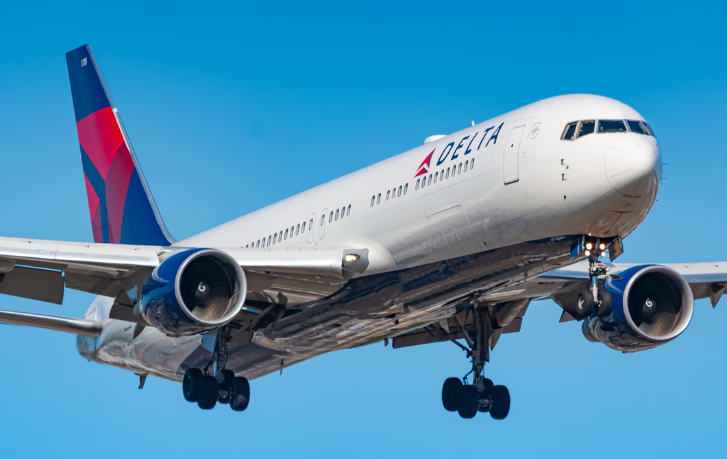
A prospective Chinese purchase involving 200 Boeing jets now carries a condition extending well beyond delivery: access to several years of spare parts. Reuters reported on October 2 that the U.S. Commerce Department had slowed aircraft-parts export approvals for China in recent weeks, leaving long-term supply certainty entangled with broader trade negotiations.
The reported slowdown could reach across Chinese airlines operating Boeing and Airbus aircraft, Boeing’s potential sale and COMAC’s effort to increase commercial-jet production. Commerce has also reportedly limited quantities of parts licensed for COMAC to prevent stockpiling. Boeing said it remains committed to providing Chinese airlines with needed parts and services, “consistent with US export requirements.” The status of China’s request for spares supporting the 200 aircraft remains unclear.
Why parts access matters beyond the initial aircraft sale
A commercial jet is not a self-contained product after delivery. Its continued operation depends on a supply system covering replacement hardware, approved materials, technical support and equipment with different service lives. That makes a promise of future parts materially different from permission to export a completed aircraft at one point in time.
The systems reportedly under discussion illustrate the breadth of that dependence. Officials have considered a regulation that could facilitate restrictions on landing gear and other aircraft components, while one reported draft included a licensing requirement for U.S.-supplied aviation hydraulic fluid. Engines and navigation systems are also relevant because temporary restrictions in 2025 covered GE Aerospace engines, Honeywell Aerospace navigation equipment and other products destined for COMAC.
These categories are not interchangeable. Hydraulic fluid is a recurring maintenance material, while landing gear, engines and navigation equipment are durable systems supported through inspections, repairs, replacements and component supply. A delay affecting one category may therefore create a different planning problem from a quantity limit affecting another. The common issue is predictability: airlines and manufacturers need confidence that approved parts will remain available over the operating life of an aircraft or through a planned production increase.
That distinction is especially important for the proposed Boeing transaction. Several years of spares for 200 jets would represent a substantial support commitment, not a minor addition to an aircraft order. Without a dependable licensing path, a buyer cannot treat the aircraft purchase and its long-term support package as entirely separate decisions. Boeing, meanwhile, faces the challenge of supporting established airline customers while complying with export requirements that can change the timing or quantity of shipments.
COMAC faces a different version of the same constraint
For COMAC, restricted quantities can affect production planning even when exports are not prohibited outright. The Chinese manufacturer relies on American engines, navigation equipment and other components as it seeks to raise commercial-aircraft output. Limiting licensed quantities to prevent inventory accumulation constrains how much supply can be held against future production uncertainty.
That policy design turns inventory itself into a control point. Manufacturers commonly value buffers because production schedules depend on many suppliers delivering in sequence. A licensing process that approves smaller quantities or takes longer does not prove that production has stopped, but it can reduce the certainty needed to plan higher output. It can also make the timing of each approval more consequential to suppliers and final-assembly schedules.
The exposure is not limited to COMAC. U.S.-manufactured aerospace products also support Boeing and Airbus aircraft operated by Chinese carriers. Export controls aimed at industrial leverage can consequently affect three distinct groups: a domestic Chinese manufacturer increasing production, foreign aircraft makers seeking sales and support revenue, and airlines maintaining fleets already in service.
Reported proposals are not yet established rules
The current policy picture has important boundaries. The licensing slowdown and COMAC quantity limits were reported as actions already occurring, but broader regulations involving landing gear, hydraulic fluid and other components remain under discussion. There is no confirmation that those proposed rules have been issued, and the Commerce Department, White House and Chinese embassy did not immediately comment on the latest claims.
The precedent from 2025 also argues against assuming that every restriction will be permanent. Licenses for GE Aerospace engines, Honeywell navigation systems and aviation hydraulic fluid were suspended only for a few weeks. At the same time, Chinese controls on rare-earth materials have delayed producers of thermal coating sprays used to protect jet engines, showing that aerospace dependence runs in both directions.
The United States and China have extended their trade truce until January 10, 2027, but the aircraft-parts issue shows what that truce does not guarantee: predictable access to specialized industrial inputs. Until the licensing path and China’s multi-year spares request are resolved, the prospective 200-jet Boeing purchase remains tied not only to aircraft availability, but to confidence that the parts supporting those aircraft will keep moving for years afterward.
| More aerospace and engineering stories, right in your MSN feed. Follow AMI on MSN |
By Thomas Caldwell — AMI’s senior editor for mechanical and mobility engineering, covering vehicle electronics, systems integration, electrification, chassis systems, propulsion, and safety policy.