American Airlines Restores Flights After IT Outage Halts Nationwide Departures
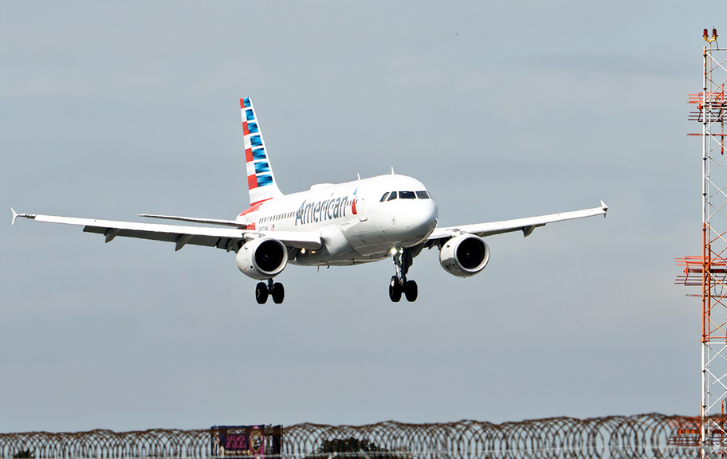
American Airlines restored system connectivity and resumed departures after an information-technology outage held its flights on the ground nationwide for about 45 minutes. The recovery was relatively quick, but the disruption showed how an unspecified technology problem can stop one major airline from launching flights across the country.
The Federal Aviation Administration identified an IT outage as the reason for the departure hold. American said a technology issue had briefly affected connectivity for some systems and later confirmed that connectivity was fully restored. Flights already airborne were not reported as grounded or otherwise affected by the restriction.
A ground stop keeps covered aircraft at their departure airports rather than allowing additional flights to enter an operating network during a disruption. In this case, American flights that had not taken off were held at their origins until the connectivity problem was resolved. No flight-safety failure was reported by the airline or federal officials.
A short interruption with nationwide reach
The outage separates two measures that can look similar to passengers but mean different things operationally: duration and scope. Forty-five minutes is a short restoration interval compared with an all-day failure, yet the hold reached American departures nationwide. Even a brief loss of connectivity can therefore become a network-level constraint when operators cannot reliably support or verify the functions required to release more aircraft.
American has not identified the affected systems, the initiating fault or whether an outside technology provider was involved. It also has not disclosed whether a redundant connection failed, whether several platforms lost a shared service or whether the nationwide hold was imposed broadly while technicians determined the extent of the problem.
Airline operations depend on connected systems supporting functions such as dispatch, crew coordination, reservations, communications and maintenance records. The information released does not tie this event to any one of those functions, so assigning the outage to a specific platform would be speculative. The nationwide response describes the operational boundary selected during the disruption, not the physical location or architecture of the fault.
The airline also did not provide totals for delayed or canceled flights, affected airports or inconvenienced passengers. Without those figures, the full operating cost cannot be measured, and the event cannot be compared quantitatively with other airline outages. Departures restarting also does not show whether aircraft and crews required later schedule adjustments.
Redundancy depends on independent failure paths
A separate FAA telecommunications failure in September 2026 illustrates why the architecture behind a connectivity loss matters. In that event, a primary circuit serving an air traffic control facility in Philadelphia failed, while a backup fiber line had been severed. According to Reuters, the resulting disruption affected major Northeast airports for hours, contributed to about 7,000 delayed or canceled flights and forced more than 100 diversions.
That regional FAA failure and American’s nationwide airline outage were separate events, with different disclosed effects and no established common cause. The comparison nevertheless highlights a general systems principle: redundancy provides meaningful resilience only when backup paths are sufficiently independent of the failure affecting the primary service. American has not released enough technical information to assess how that principle applied to its outage.
The September FAA incident also shows why recovery time alone is an incomplete reliability measure. Its effects persisted for hours because communications infrastructure serving air traffic control was unavailable. American restored its connectivity in about 45 minutes, but during that shorter interval the operating restriction still extended across the airline’s national departure network.
American credited employees with bringing the systems back online quickly and apologized to customers. No corrective action, technical review or resilience milestone has been announced. A complete engineering account would identify the affected components, root cause, behavior of backup services and measures intended to reduce recurrence. Until those details emerge, the firmest conclusion is operational: an unidentified connectivity interruption was enough to suspend American Airlines departures nationwide, even though technicians restored service in less than an hour.
| More aerospace and engineering stories, right in your MSN feed. Follow AMI on MSN |
By Thomas Caldwell — AMI’s senior editor for mechanical and mobility engineering, covering vehicle electronics, systems integration, electrification, chassis systems, propulsion, and safety policy.