F-22 Pilot Directs YFQ-44A Drone, Autonomy Chooses How to Respond
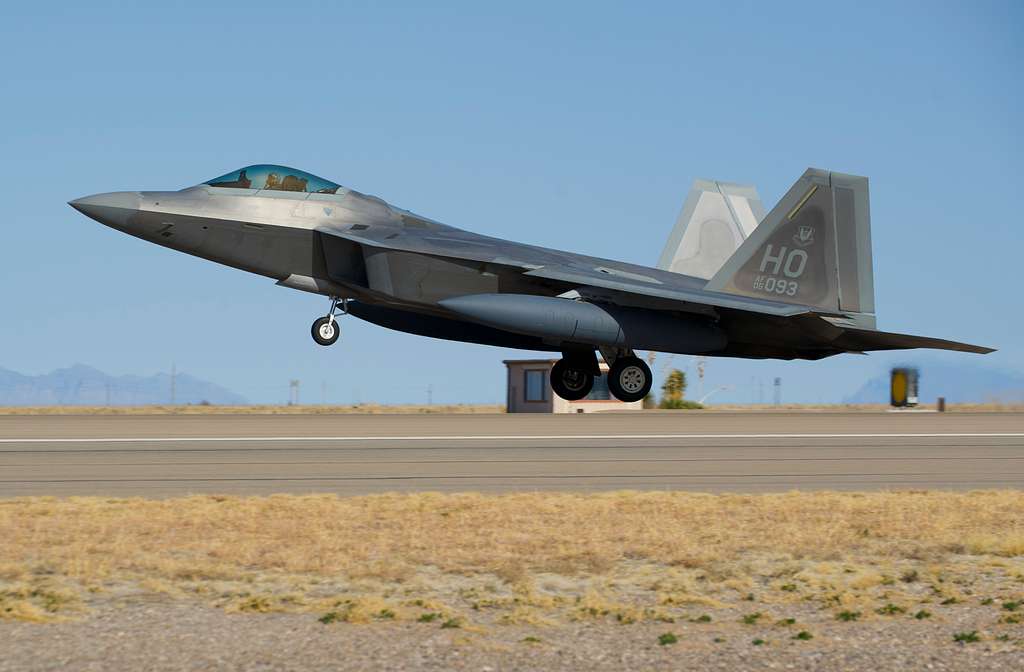
The F-22 pilot did not remotely fly the uncrewed aircraft through every turn. Instead, the pilot issued mission-level directions, and software aboard the YFQ-44A Fury determined how to carry them out. That division of work defined an Air Force demonstration conducted in early October 2026, the first time an F-22 directed the purpose-built autonomous aircraft in flight.

The Air Force described the F-22 pilot as an airborne “quarterback” who sent high-level tactical directives to one YFQ-44A. The aircraft’s onboard autonomy interpreted those commands in real time and translated them into dynamic flight maneuvers and simulated combat tasks. The pilot selected what the uncrewed aircraft should do; the YFQ-44A handled how to execute the request.
Commands without direct remote piloting
That control boundary is the central engineering point. A conventional remotely piloted aircraft depends on a human operator for continuous or frequent flight inputs. In this demonstration, the F-22 pilot supervised the mission at a higher level rather than functioning as the YFQ-44A’s second set of flight controls.
The architecture separates two related jobs. Platform or flight autonomy manages safety-critical aircraft functions such as maneuvering. Mission-autonomy software sits above that layer, allowing the aircraft to receive, interpret and execute directions from a human operator. This arrangement is intended to keep the fighter pilot focused on mission decisions instead of forcing that person to manage another aircraft’s basic flight path.
It also places substantial responsibility on software integration. The command issued in the F-22 must be transferred, interpreted and converted into behavior the uncrewed aircraft can execute within its operating limits. Anduril said the control system progressed through hardware-in-the-loop, software-in-the-loop and aircraft testing before the airborne demonstration. Those stages allow developers to evaluate software and physical components before placing the complete control chain in flight.
A step beyond flying in formation
Crewed fighters had already flown alongside the YFQ-44 and General Atomics’ YFQ-42 during summer 2026. In those flights, however, the fighter crews did not control the autonomous aircraft. The October test added an active command relationship: an F-22 pilot assigned tasks and the Fury’s autonomy responded.
An F-22 had also controlled an MQ-20 Avenger in earlier crewed-uncrewed teaming work. The Avenger served for more than five years as a surrogate for the collaborative-aircraft concept. Directing the YFQ-44A moves that work onto an aircraft designed specifically for the Air Force’s Collaborative Combat Aircraft program rather than a stand-in test platform.
The F-22 is the program’s initial, or “threshold,” crewed aircraft. The Air Force is considering eventual connections with the F-16, F-35A, F-15E and F-15EX, but the October flight centered on one Raptor and one Fury. Expanding from that controlled pairing to additional aircraft types or more uncrewed teammates would increase the demands on cockpit interfaces, communications, software assurance and pilot workload.
Flight data now feeds the next tests
Personnel from Air Force flight-test, operational-test, software-engineering and program offices participated in the demonstration. The service said data from the flight will inform continued software integration, developmental testing and future operating concepts.
The Experimental Operations Unit has also received YFQ-42A and YFQ-44A aircraft for continued evaluation. Its role extends beyond checking whether the airframes can fly: operators are examining the manpower, maintenance, command-and-control procedures and support equipment needed to use autonomous aircraft repeatedly. Those practical requirements will influence whether a successful demonstration can become a reliable fielded system.
The October result remains a test milestone rather than evidence of operational deployment or combat readiness. The Air Force still must build confidence that the autonomy will behave predictably, that pilots can supervise it without excessive workload and that software updates can be integrated without undermining reliability.
A larger test is already approaching. Collaborative aircraft are scheduled to join a large-force exercise in December 2026, moving the evaluation from a one-fighter, one-drone control demonstration toward broader force integration. The October flight established the key relationship that future testing must now scale: the human gives the direction, while the autonomous aircraft decides how to fly it.
| More aerospace and engineering stories, right in your MSN feed. Follow AMI on MSN |
By Stephen Wallace — Editor for AMI’s aerospace integration and unmanned mobility coverage, focused on drone manufacturing, VTOL systems, autonomous networks, and air-ground mobility links.