US Army Orders Javelin Launchers 25% Lighter With Twice the Detection Range
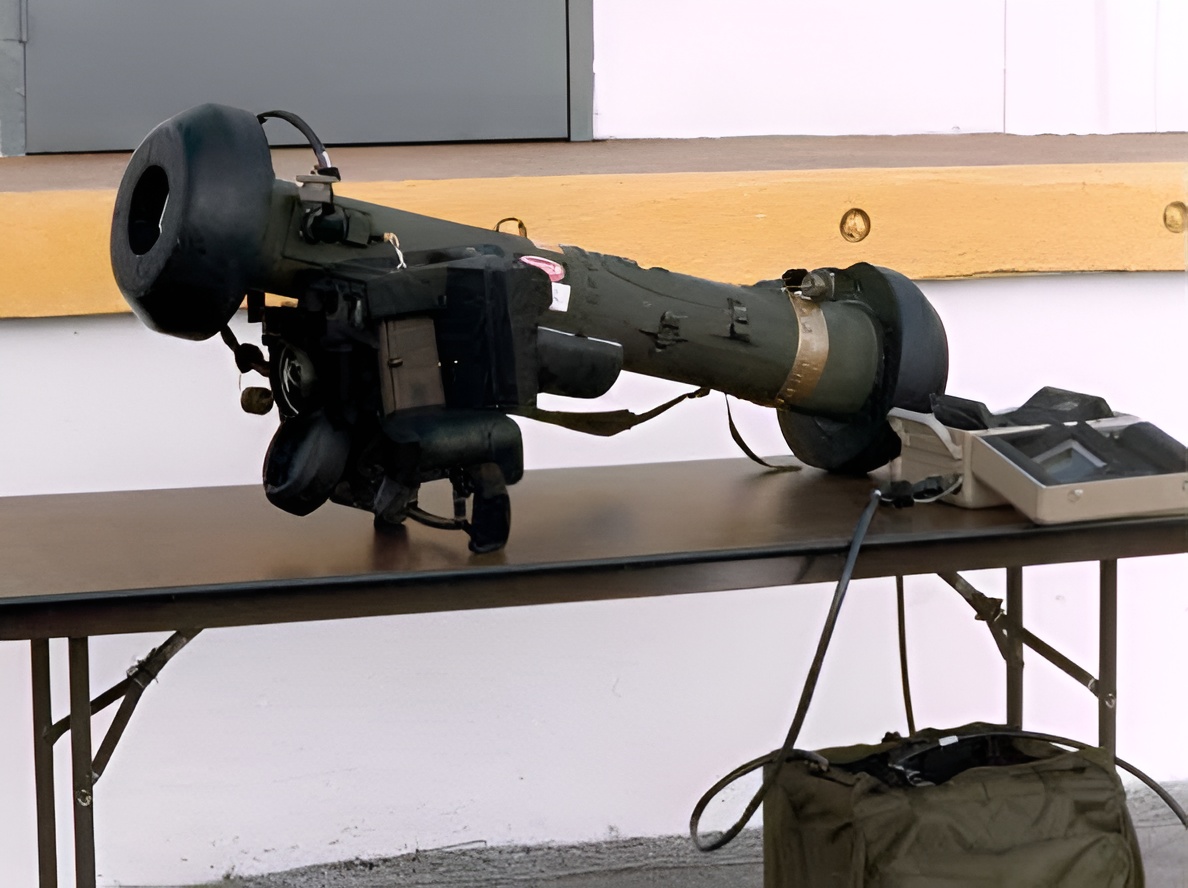
The US Army has ordered a Javelin launcher that its manufacturers say is 25% lighter, 30% smaller and able to detect and recognize targets at twice the range of the legacy Block I unit. The $215 million production contract, announced on October 19, 2026, went to the Javelin Joint Venture formed by Raytheon and Lockheed Martin.
The comparison is significant because the Lightweight Command Launch Unit changes the reusable sensing and fire-control equipment rather than introducing a replacement missile family. It is designed to work with past, current and future Javelin missile variants, allowing the Army to improve what a soldier carries and sees while retaining compatibility with its established missile inventory.
A lighter launcher, not a lighter missile
A Javelin system consists of a reusable command launch unit and a separate missile in a launch tube. The command unit provides the optics, displays and controls used to observe, identify and prepare to engage a target. After launch, the missile uses an imaging infrared seeker to guide itself rather than requiring the operator to steer it continuously. The missile family supports top-attack and direct-attack modes.
The new hardware concentrates its changes on sensing, processing and packaging. Updated sensors, displays and image processing are intended to produce clearer imagery and improve recognition during both day and night operation. Raytheon and Lockheed Martin have not disclosed the new unit’s absolute detection and recognition distances, so their claim is properly understood as a twofold improvement over the Block I launcher rather than a published range figure.
Nor does twice the detection range automatically mean twice the missile engagement range. Detection, recognition and missile employment are different system limits. The immediate engineering benefit is that the operator receives a longer-reaching observation and identification tool, with the potential to make decisions from farther away where conditions permit.
Why 25% less launcher weight matters
Reducing launcher weight addresses a persistent mechanical constraint in dismounted systems: every component competes for the same human carrying capacity. A smaller reusable unit takes less space and removes weight each time it is carried, without requiring the missile family to be replaced.
Research on 831 US Army infantry soldiers illustrates why load reduction has practical value. A 2017 study of road-marching injury risks found that higher combined marching distance and carried weight was associated with greater injury risk. The study did not examine the Javelin launcher, but it supports the broader design logic of reducing equipment mass where capability can be retained or improved.
The Army’s first lightweight units arrived five months before the latest contract announcement. Moving from initial deliveries to a $215 million production order indicates that the launcher is progressing beyond a limited hardware handover and into wider manufacturing. The available contract information does not disclose the number of units or a delivery schedule.
Compatibility limits the disruption
Backward and forward compatibility may be as important as the improved sensor package. The joint venture reports that it has produced more than 55,000 Javelin missiles and over 12,000 reusable command launch units. A launcher that accepts existing missile variants avoids dividing that large installed base between incompatible generations of sighting and fire-control equipment.
That approach also helps explain why the upgrade has attracted attention among those following Javelin’s prominent role in military aid to Ukraine: a familiar anti-tank system is continuing to improve without abandoning its established missile family. The production decision is an industrial and equipment-modernization development, however, rather than a new claim about battlefield results.
Manufacturing has already required additional investment. Raytheon said in May that it spent $22 million modernizing its Lightweight Command Launch Unit factory in Tucson, Arizona, to increase production speed and capacity. Lockheed Martin also manufactures Javelin equipment in Orlando, Florida.
What the figures do not establish is that the lightweight launcher is cheaper. The $215 million award covers production, but no unit quantity or comparable per-launcher price has been disclosed. Dividing the contract value by an unknown production total would therefore be meaningless. The supported practical case is narrower and stronger: soldiers receive a launcher that is smaller, 25% lighter and claimed to see twice as far, while the Army preserves compatibility with the missile family it already operates.
| More aerospace and engineering stories, right in your MSN feed. Follow AMI on MSN |
By Jonathan Barrett — Editor for AMI’s future mobility and autonomous systems section, with two decades covering robotics, e-mobility, drone-vehicle convergence, and transport mechanical systems.