East-West Transit Closes Latvian Depot After Two Drones Crash There
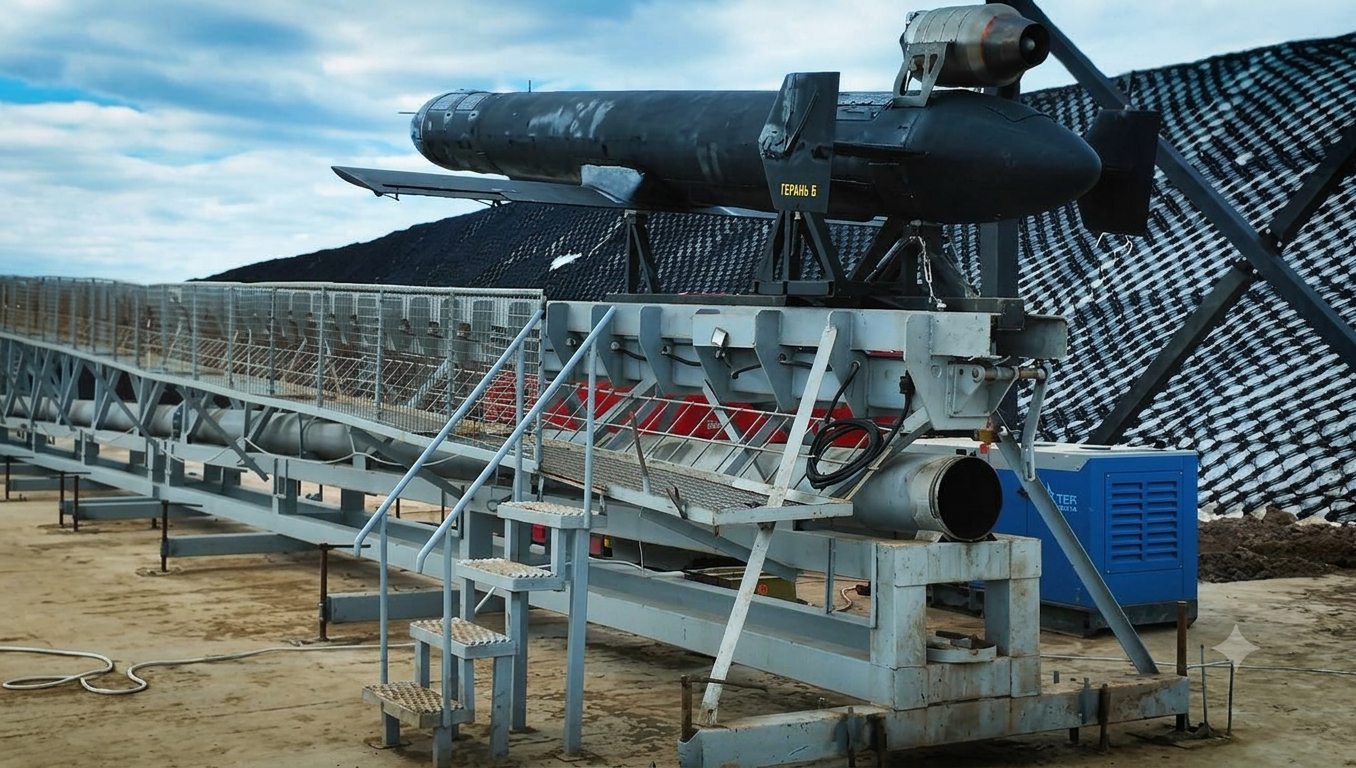
An oil depot can be physically intact yet no longer be operable. East-West Transit has decided to cease operations at its facility in Rēzekne, Latvia, after two drones crashed there on the night of May 7. The company reported only minor losses and said the oil tanks were empty, but concluded that it could not ensure employee safety if work continued.
The closure turns a limited-damage incident into a concrete energy-logistics consequence. East-West Transit has not specified whether the shutdown is permanent, quantified the depot’s storage or distribution role, or estimated an effect on regional fuel supplies. The drones’ operator and intended destination also remain unresolved publicly.

Why empty tanks did not remove the operating risk
Empty storage tanks reduce the immediate inventory exposed to an incident, but they do not resolve the central problem identified by the operator: whether people can safely return to the site. A depot depends on employees, vehicle movements, inspection routines and supporting equipment. If management cannot establish acceptable working conditions, limited physical damage does not automatically translate into a quick operational restart.
That is the key tension in Rēzekne. East-West Transit characterized its direct losses as minor, without detailing their monetary or physical extent, yet the safety judgment was serious enough to remove the facility from operation. For industrial operators, availability is determined by both equipment condition and confidence that personnel can perform their jobs without unacceptable exposure.
The shutdown therefore represents a loss of operating capacity even though no stored fuel was reported lost. Its wider importance cannot yet be calculated: there is no published figure for the volume previously handled at Rēzekne, the customers served there or the amount of work that must move elsewhere. Without those numbers, claims of a regional fuel shortage or major distribution disruption would be premature.
A safety decision intersects with changing logistics
The tanks may already have been empty for commercial reasons. Ojārs Karčevskis, a board member of the Latvian Fuel Traders Association, suggested that logistics changed following a merger involving the Kool group and that the depot was no longer necessary. East-West Transit has not confirmed that explanation.
There is some supporting business context, although it does not establish why the Rēzekne tanks were empty. In October 2023, Latvia’s Competition Council authorized Estonia-based Aqua Marina, the parent of fuel retailer Kool Latvija, to acquire and manage more than 50 assets belonging to East-West Transit and SIA Naples. Those assets were primarily filling stations operating under the Latvijas nafta brand.
If Rēzekne had already become less important to the network, the drone incident may have changed the calculation between retaining optional capacity and accepting the cost of continued operation. If it remained an active logistics node, closing it would require some combination of rerouting, replacement capacity or reduced service. East-West Transit has not disclosed which condition applies.
The readiness issue extends beyond damage prevention
Latvia’s subsequent military review shows that the incident also created institutional pressure. According to an officially described internal review reported by LSM, the armed forces identified shortcomings but imposed no disciplinary sanctions. The Defence Ministry directed responsible units to implement proposals covering response procedures, information exchange, interservice cooperation and public awareness. The underlying report remains classified.
Those categories point to a broad airspace-integration problem rather than a single piece of damaged infrastructure. Civilian operators make staffing and continuity decisions using the warning, coordination and response environment available to them. When multiple unmanned aircraft cross borders and two reach the same civilian facility, even an incident with minor reported losses can alter whether management considers routine work sustainable.
This is also where drone scale matters. Relatively small unmanned systems do not have to destroy a large industrial site to impose a larger operational cost. Repeated or uncertain aerial exposure can suspend work, trigger inspections, redirect logistics and consume military and civilian response capacity. Those second-order effects can exceed the immediately visible repair bill, although no total cost has been published for Rēzekne.
Latvia has emphasized continuity of essential services through cooperation among government, municipalities and private infrastructure operators. The Rēzekne decision exposes the limit of that model when the company responsible for the workplace concludes that employee safety cannot be assured. The tanks were empty and the reported losses were minor, but the depot is leaving operation the most consequential verified result of the two crashes.
| More aerospace and engineering stories, right in your MSN feed. Follow AMI on MSN |
By Stephen Wallace — Editor for AMI’s aerospace integration and unmanned mobility coverage, focused on drone manufacturing, VTOL systems, autonomous networks, and air-ground mobility links.