Reported Taman Substation Attack Brings Recurring Blackouts Across Occupied Crimea
Electricity returned to parts of occupied Crimea, according to Russian-installed authorities, but the restoration did not hold everywhere. Residents in Simferopol, Yalta and Alushta subsequently reported renewed blackouts after a reported Oct. 23 attack damaged the Taman substation, a major connection between Russia’s power grid and the peninsula.
The disruption extended beyond electric service. Sevastopol and Yalta were among the cities reported without power, while internet-monitoring organization NetBlocks detected widespread connectivity outages across Crimea. The full extent of the blackout and the reported attack had not been independently verified at publication time, but Russian proxy authorities acknowledged power failures before claiming that service had been restored in several cities.
A major connection with peninsula-wide importance
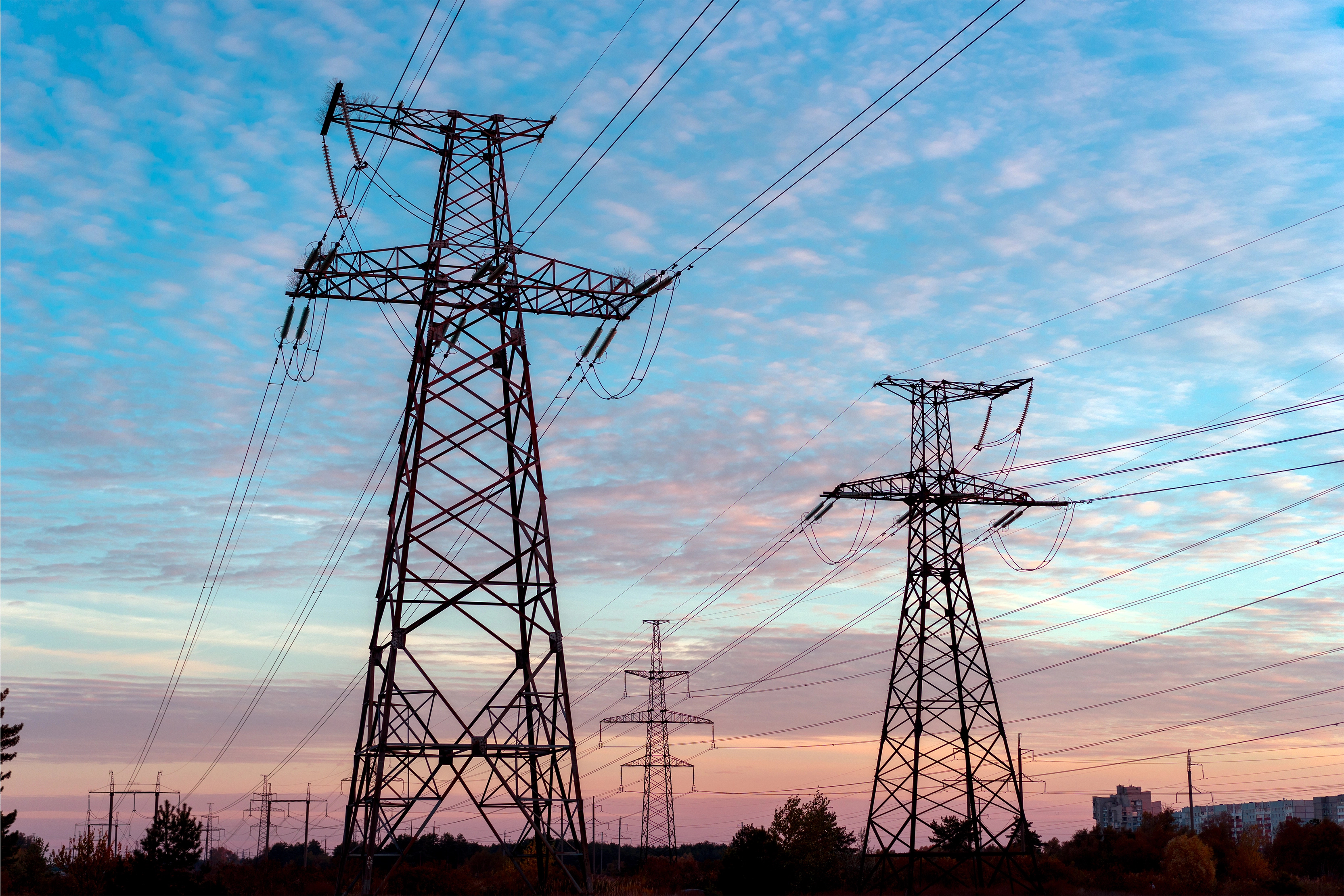
Taman is significant because it forms part of the power bridge built across the Kerch Strait to connect Crimea with Russia’s unified electricity system. When the first stage opened in 2015, an official description of the project identified the Taman substation, underwater cables and receiving infrastructure in Crimea as central components of the new connection.
The completed bridge was designed around four underwater cable lines with a combined planned capacity of just over 800 megawatts. Its first 200-megawatt circuit entered service after transmission lines from Ukraine were cut in November 2015, an event that had left Crimea without electricity. The bridge shifted the peninsula’s external supply dependence from mainland Ukraine toward Russia’s Krasnodar region.
That history helps explain why a reported failure at Taman could coincide with disruption across distant Crimean cities. A high-voltage transmission node does not serve only the homes immediately surrounding it; it transfers large blocks of power into the wider network. Losing or constraining such a connection can create a system-wide imbalance between available supply and demand, requiring grid operators to disconnect loads while they stabilize the remaining network.
The reports do not establish which specific equipment failed or how much transfer capacity remained available. They do show a geographically broad service consequence associated with reported damage to a major external supply node. Exilenova+, a monitoring channel drawing on satellite data, online monitors and local accounts, reported on the evening of Oct. 23 that the entire peninsula is without electricity. NASA’s fire-detection satellite data was also cited as indicating damage at the substation.
Why restored power can disappear again
Restoration is more involved than energizing every disconnected circuit at once. Operators must match generation and imported power with demand, verify that transmission paths can carry the load and reconnect sections without producing another destabilizing imbalance. Limited transfer capacity can force electricity to be returned in stages or rotated among service areas.
Demand also rebounds when a dark area is reconnected. Thousands of appliances, pumps, heating or cooling systems and other loads may restart within a short period. If available supply or transmission capacity remains constrained, that returning load can exceed what the recovering system can support. Protective equipment may then disconnect circuits again, or operators may reduce service deliberately to preserve overall grid stability.
The renewed outage reports from Simferopol, Yalta and Alushta therefore indicate that initial re-energization had not yet become stable, continuous service in every reported location. They do not identify whether the renewed losses resulted from automatic protection, controlled load management, incomplete repairs or another network condition.
Internet disruption is a related public-service consequence. Communications networks typically have backup power at important facilities, but local access equipment and customer hardware still depend on electricity. As outages continue or recur, batteries can be depleted and more connections can disappear even if the underlying telecommunications links remain intact. That can make a power interruption appear broader over time through connectivity measurements.
A separate outage was reported during the same overnight period in Russia’s Rostov region. Governor Yury Slyusar claimed that drones damaged a transformer substation in the Myasnikovsky district, cutting electricity to nearly 130 homes. That incident was geographically distinct from the Crimean disruption.
Crimea, occupied by Russian forces since 2014, has experienced major electricity failures before. The latest reports place the immediate engineering focus on whether damaged or constrained connections can carry enough power for sustained service not merely whether individual cities can be switched back on temporarily. Renewed blackouts after the restoration announcement show that, as of the latest resident accounts, stable recovery had not yet been achieved across all affected areas.
| More aerospace and engineering stories, right in your MSN feed. Follow AMI on MSN |
By Stephen Wallace — Editor for AMI’s aerospace integration and unmanned mobility coverage, focused on drone manufacturing, VTOL systems, autonomous networks, and air-ground mobility links.