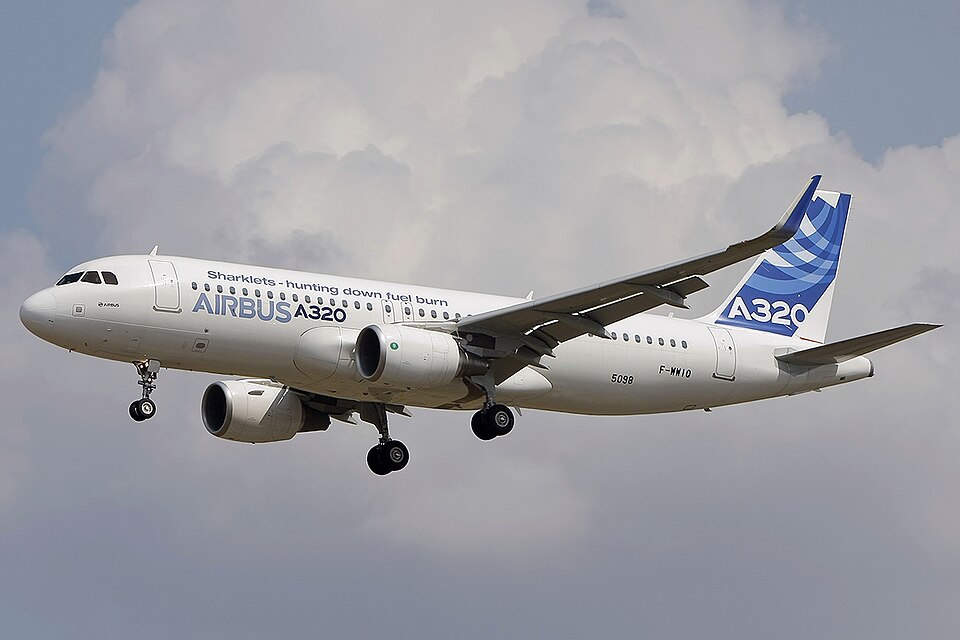
Airbus Will Match 2027 Jet Output to Engines, Limiting Undeliverable Aircraft
Airbus has thousands of commercial jets on order, but demand alone cannot set the pace of its factories. In 2027, the manufacturer plans to match aircraft production more closely to the engines Pratt & Whitney and CFM International can supply, rather than deliberately completing more jets that cannot fly or be delivered.

The policy addresses an unusual but increasingly visible inventory problem. Reports in July put the number of otherwise-completed Airbus aircraft awaiting engines at nearly 60, up from 40 only a month earlier. Known in the industry as “gliders,” these aircraft occupy factory space while producing no delivery for an airline customer.
Chief executive Guillaume Faury outlined the approach during Airbus’s third-quarter and nine-month earnings call on Oct. 28. The company’s corresponding nine-month results show the scale of the competing pressures: Airbus delivered 547 commercial aircraft in the first nine months of 2026, while its backlog reached 9,310 aircraft at the end of September.
That gap between strong demand and constrained output illustrates why the engine has become a pacing component for the entire production system. An airframe can advance through much of final assembly without its engines, allowing Airbus to keep some stations and workers active despite late hardware. But a completed airframe without engines cannot proceed to flight testing, customer acceptance and delivery.
Building ahead transfers the bottleneck
Producing airframes before engines arrive can preserve assembly momentum for a limited period, but it does not create additional deliverable aircraft. Instead, the shortage moves downstream. Airbus must store the unfinished jets, protect them while they wait and later return each aircraft to the production flow for engine installation and remaining work.
That creates a systems-integration penalty. Factory space, handling capacity and labor must be allocated twice: first when the airframe reaches the end of its planned assembly sequence, and again when the missing engines become available. A growing queue can also complicate production scheduling because each delayed aircraft has its own customer configuration and delivery sequence.
Airbus’s 2027 plan is therefore a capacity-control measure rather than a declaration that the engine shortage will be over. The company intends to set output around credible supplier delivery profiles. If Pratt & Whitney and CFM provide assurances that more engines will be available, Airbus can prepare to build and deliver additional aircraft. Without those assurances, airframe output will remain constrained even with a substantial backlog.
The identity of the tightest supplier has shifted. CFM represented a larger share of Airbus’s engine delays earlier in the year, while Faury identified Pratt & Whitney in October as the primary constraint on production ramp-ups. Engine manufacturers have been dealing with parts shortages, production difficulties and repair-shop demand that exceeded earlier expectations.
A production target with a supply boundary
Airbus continues to expect A320-family production to reach 70 to 75 aircraft per month by the end of 2027, then stabilize at 75 from 2028 onward. That target is not determined by final-assembly capacity in isolation. Engines, other components, workforce performance and the orderly movement of aircraft through testing and delivery all have to support the same rate.
Synchronizing airframe and engine schedules could reduce factory congestion and the amount of capital and work tied up in undeliverable inventory. The tradeoff is that Airbus may build fewer aircraft than its assembly system could otherwise support if engine output remains lower. For waiting airlines, a slower but more executable schedule may provide a clearer delivery picture than a higher production count padded by aircraft that cannot leave the factory.
The plan also changes what counts as meaningful production progress. A nearly finished aircraft may look close to delivery, but without its propulsion system it remains an incomplete product outside the certification and customer-acceptance path. Airbus’s 2027 rate will increasingly be set by the number of complete, deliverable aircraft the supply chain can support not by how many airframes its factories can assemble ahead of the missing engines.
| More aerospace and engineering stories, right in your MSN feed. Follow AMI on MSN |
By Thomas Caldwell — AMI’s senior editor for mechanical and mobility engineering, covering vehicle electronics, systems integration, electrification, chassis systems, propulsion, and safety policy.