Ram’s 12-Month Resale Rule Can Void 2027 TRX SRT Factory Warranties
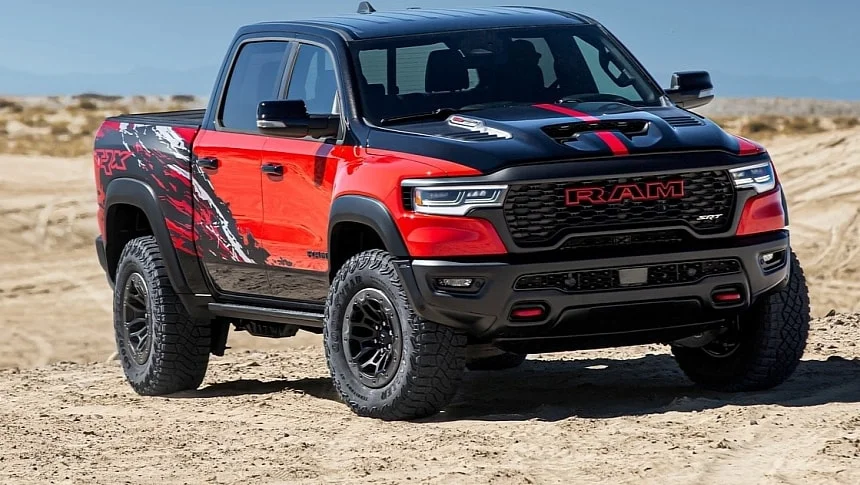
The warranty clock on a 2027 Ram 1500 TRX SRT now depends on more than time and mileage. If the original purchaser sells or transfers the performance truck within 12 months of delivery, Ram can terminate its remaining basic and powertrain warranty coverage where permitted by law. A buyer paying a premium for a nearly new TRX could therefore acquire a truck without two major forms of factory protection.
The mechanism begins at delivery. Ram dealership staff will review the ownership terms with the original customer, who will be asked to sign an agreement to keep the truck for at least 12 months from its delivery date. Ram also plans to contact purchasers who do not confirm that the dealer explained the policy.
The consequence of an early transfer is substantial. Every 2027 TRX SRT starts with a three-year or 36,000-mile Basic Limited Warranty and a five-year or 60,000-mile Powertrain Limited Warranty. Selling the vehicle before the 12-month ownership period ends can void whatever coverage remains under both warranties.
Resale is allowed, but warranty transfer is at risk
Ram is not prohibiting an owner from selling the truck during its first year. Instead, it is using the transferability of valuable warranty coverage as leverage against brokering and speculative resale. The original purchaser may complete a sale, but must tell the next owner that the basic and powertrain coverage has been lost.
That structure shifts risk to both sides of the transaction. The first owner may find an early-resale truck less attractive to buyers because it no longer carries the ordinary balance of its factory warranties. The second owner may become responsible for repairs that otherwise could have qualified for manufacturer-backed coverage, even though the truck remains within the original time and mileage limits.
The policy also does not prevent dealers from charging above the manufacturer’s suggested retail price. Its reach is narrower: it targets an original purchaser’s transfer during the first 12 months. The approach therefore discourages flipping through a service-coverage consequence rather than through a direct resale ban or price control.
Recall and emissions protections remain
An early transfer does not erase every obligation associated with the truck. Ram’s terms state that the provisions do not affect recall work or applicable emissions warranty coverage. An eligible recall repair would remain available, as would emissions-related protection that applies to the vehicle.
Those exceptions should not be confused with the broader basic and powertrain warranties. Recall service addresses a defined safety or compliance campaign, while the basic and powertrain warranties cover qualifying defects under their respective terms. A second owner could retain access to recall and emissions work yet have no remaining factory coverage for another repair that ordinarily would have fallen under the basic or powertrain warranty.
Other protections can also depend on the seller, transaction and state. A dealer-provided warranty, a service contract and state-law implied warranties are separate from Ram’s factory coverage. They should not be treated as automatic replacements for the terminated basic and powertrain warranties.
What an early secondhand buyer should verify
The critical date is the original vehicle-delivery date, not merely the model year or the date of the second sale. A prospective buyer should establish that date, review the ownership history and obtain confirmation of the truck’s current warranty status using its vehicle identification number.
For a dealer sale, the Federal Trade Commission says the required Buyers Guide must indicate whether a used vehicle is offered with a warranty or “as is.” Its used-car guidance also recommends obtaining the warranty documents and verifying the coverage, expiration limits and necessary paperwork with the dealership. The Buyers Guide applies to dealer sales; a private transaction calls for direct scrutiny of the title history, signed disclosures and warranty status.
Getting the answer in writing is particularly important here because low mileage alone will not demonstrate that coverage remains. A 2027 TRX SRT could sit comfortably below 36,000 or 60,000 miles and still have lost both factory warranties through an early transfer.
The policy applies to a 777-horsepower truck producing 680 pound-feet of torque, built at the Sterling Heights Assembly Plant in Michigan as the first off-road vehicle from the relaunched SRT Performance division. For its earliest used examples, however, one date in the ownership record may matter as much as the odometer: whether the original buyer kept the truck for the full 12 months.
| More aerospace and engineering stories, right in your MSN feed. Follow AMI on MSN |
By Thomas Caldwell — AMI’s senior editor for mechanical and mobility engineering, covering vehicle electronics, systems integration, electrification, chassis systems, propulsion, and safety policy.