Samsung Expands Texas Factory but Says 2027 Advanced-Chip Demand Will Exceed Capacity
Samsung Electronics is preparing its new Taylor, Texas, factory for production, but the added plant will not eliminate the capacity gap it expects next year. During its third-quarter earnings call on Oct. 29, Samsung said customer demand in 2027 would exceed its production capacity across every foundry process below 8 nanometers.
The company projects utilization above 100% for those processes, led by demand for artificial-intelligence and high-performance-computing chips made with its 4-nanometer and 2-nanometer technologies. In this context, utilization above 100% represents demand beyond available production capacity rather than factories physically operating beyond their limits.
“In 2027, demand is expected to significantly exceed production capacity across all sub-8nm processes, and utilization rates will surpass 100%,” said Kang Seok-chae, vice president of Samsung’s Foundry Business.
Taylor adds output, but fabrication capacity takes time
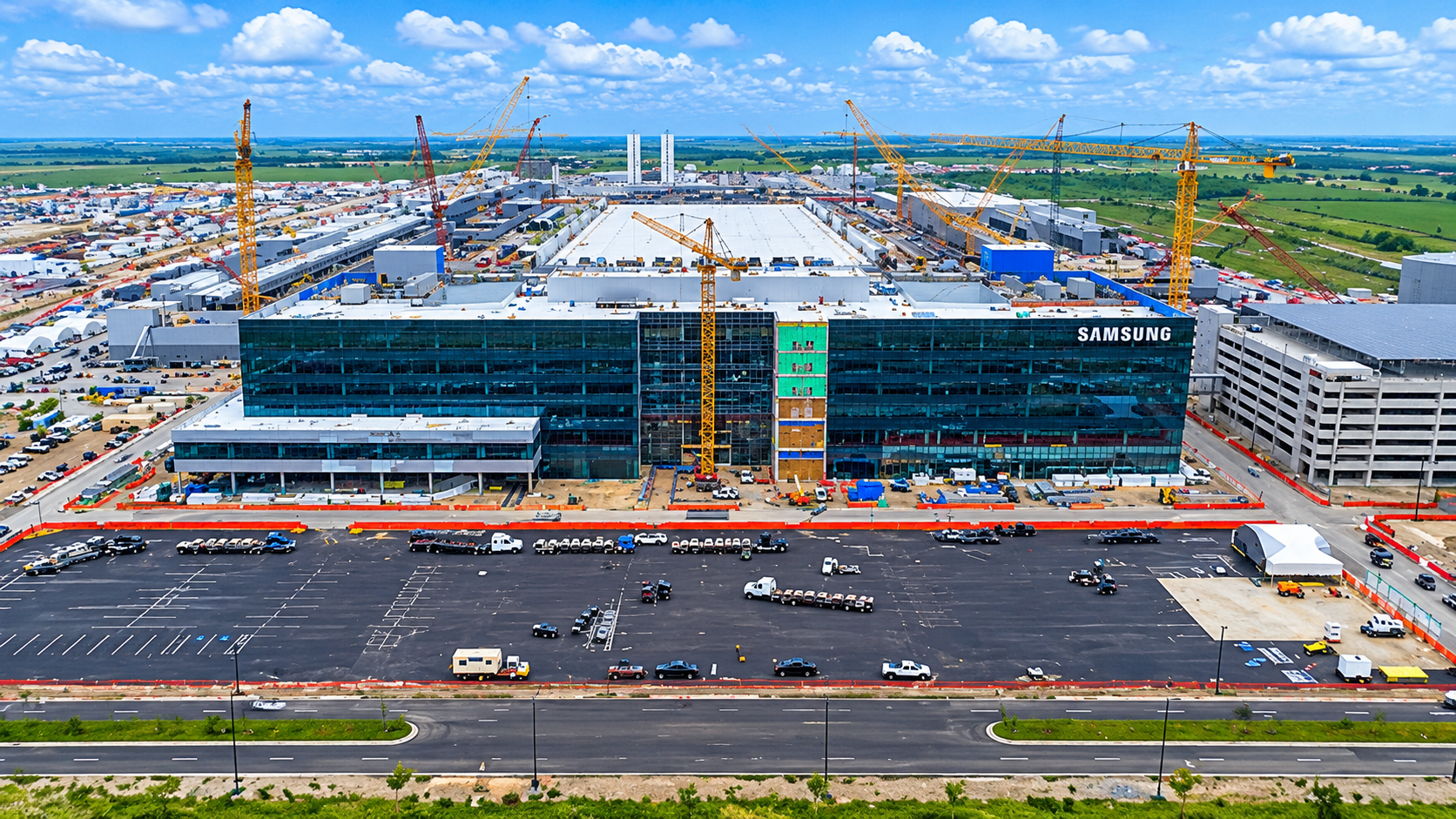
Samsung’s first Taylor fabrication plant has reached important physical milestones. Cleanroom activation and equipment move-in are complete, and the company has started setting up production lines for wafer input. Samsung plans to begin full-scale mass production of 2-nanometer AI and high-performance-computing products there in 2027.
That ramp is central to Samsung’s response because the company expects advanced-node growth to concentrate on its 4-nanometer and 2-nanometer processes. Its number of 2-nanometer project orders in 2026 is expected to more than double from the previous year, with new business coming primarily from high-performance-computing customers, including large cloud operators.
Samsung is continuing to expand capacity for its 8-nanometer, 4-nanometer and 2-nanometer processes. It is also evaluating additional fabrication plants and advanced-packaging capacity in the United States and South Korea. The constraint is that a factory building alone does not produce chips: cleanrooms must be completed, specialized equipment installed, production lines configured and manufacturing yields stabilized before dependable volume output is available.
That sequence makes semiconductor capacity resistant to rapid correction. Samsung can raise capital spending and secure more factory space, yet equipment lead times and the interval between construction and wafer production delay the resulting increase in saleable chips. The company specifically identified yield stabilization as a continuing priority for its 2-nanometer process.
Memory faces a separate physical bottleneck
The capacity pressure extends beyond Samsung’s contract-manufacturing business. The company said its available 2027 supply of high-bandwidth memory, used alongside advanced processors in AI systems, is already sold out at agreed target prices. Customers are continuing to request additional supply.
Samsung reported that third-quarter revenue from its HBM4 generation more than tripled from the previous quarter. It plans to expand HBM4 sales and begin mass production of the succeeding HBM4E generation in the first half of 2027, followed by a larger ramp in the second half.
Newer memory does not automatically translate into proportionally more usable capacity. Samsung said HBM4E and HBM5 require larger dies and additional metal-processing layers. Larger dies mean fewer individual chips can fit on a wafer, while extra process steps keep each wafer in production longer. As more conventional memory capacity shifts toward these complex products, the number of memory bits produced from a given volume of wafer input can fall.
Samsung therefore expects tight memory supply to continue through 2028 despite substantially higher industry capital spending in 2027. Higher construction and equipment prices absorb part of that spending, while long equipment-order times restrict how quickly production can expand. Some investment also pays for future cleanroom space rather than machinery capable of generating immediate output.
The Taylor ramp will give Samsung another major source of advanced logic-chip production and bring 2-nanometer manufacturing closer to large US customers. Its immediate role, however, is to narrow an expanding gap rather than create surplus capacity. Samsung’s forecast is that even with Taylor entering production and further expansion under review, demand will still outrun every one of its sub-8-nanometer foundry processes in 2027 and memory scarcity could remain in place a year longer.
| More aerospace and engineering stories, right in your MSN feed. Follow AMI on MSN |
By Thomas Caldwell — AMI’s senior editor for mechanical and mobility engineering, covering vehicle electronics, systems integration, electrification, chassis systems, propulsion, and safety policy.